Thanks to the hint of a friend, I was again aware of the rare constellation of the approach of the two planets that I had observed during the summer. The 21st by December, Jupiter and Saturn were to be only 6 arc minutes apart. Unfortunately, the weather forecasts are not favorable, which is why I hardly figured out a chance to see anything about it at all.
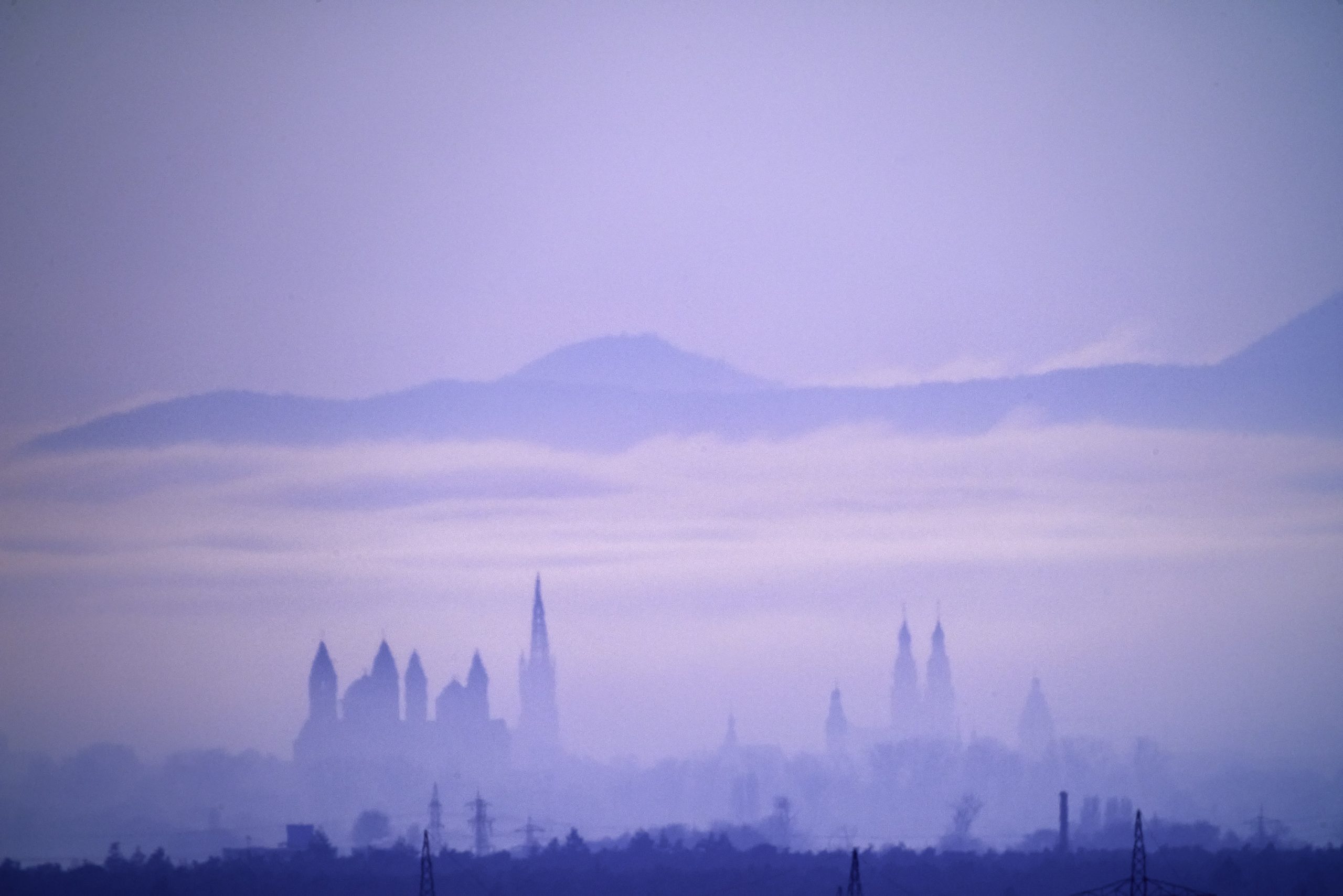
Unexpectedly, the clouds disappeared during the day to retreat th the edge of the Rhine Rifle, where we were allowed to see them in the evening. At the beginning of our photo session we watched the Rhine Valley with our bright and long reaching optics.
Finally we managed to take pictures of the crescent moon with the the planets Jupiter (the brighter and bigger one of both) and Saturn close to each other before the increasingly yellow moon disappeared in the dark clouds. There was even a little of the ashen moonlight to be seen. Wonderful.
Yesterday was a chance to buy flowers for my lightbox before a new virus induced „lockdown“ takes place. Flowers on a lightbox exhibit an illusion of transparency when photographed either as HighKey image or HDR bracket sequence.
I prefer to process my bracketed photographs manually, because there is no possibility to learn how automated HDR software really works. On top of my layer stack I put one up to three HDR software results to layer them in if appropriate.
Photographing flowers is a way to cope with the situation being locked in in a house instead of traveling or meeting friends. Our house looks like a flower store, every now and then we find new compositions. At the end, there is a print.
A composition of flowers often suggests something, not with the eye, but with the inner vision. That’s the fun of it. There are so many compositions yet undone.
My friend Harold is using petals for compositions. I often shy away from cutting off the flowers or tearing out the petals. I was happy to do it today with a fading dark red rose.
Christa, my wife, loves tulips. They may resemble a dream on a lightbox, like balloons taking off for flight. To catch the whole composition I’d either had to climb up a ladder with my 120mm macro lens or change the lens to a 80mm focal length (which I did).
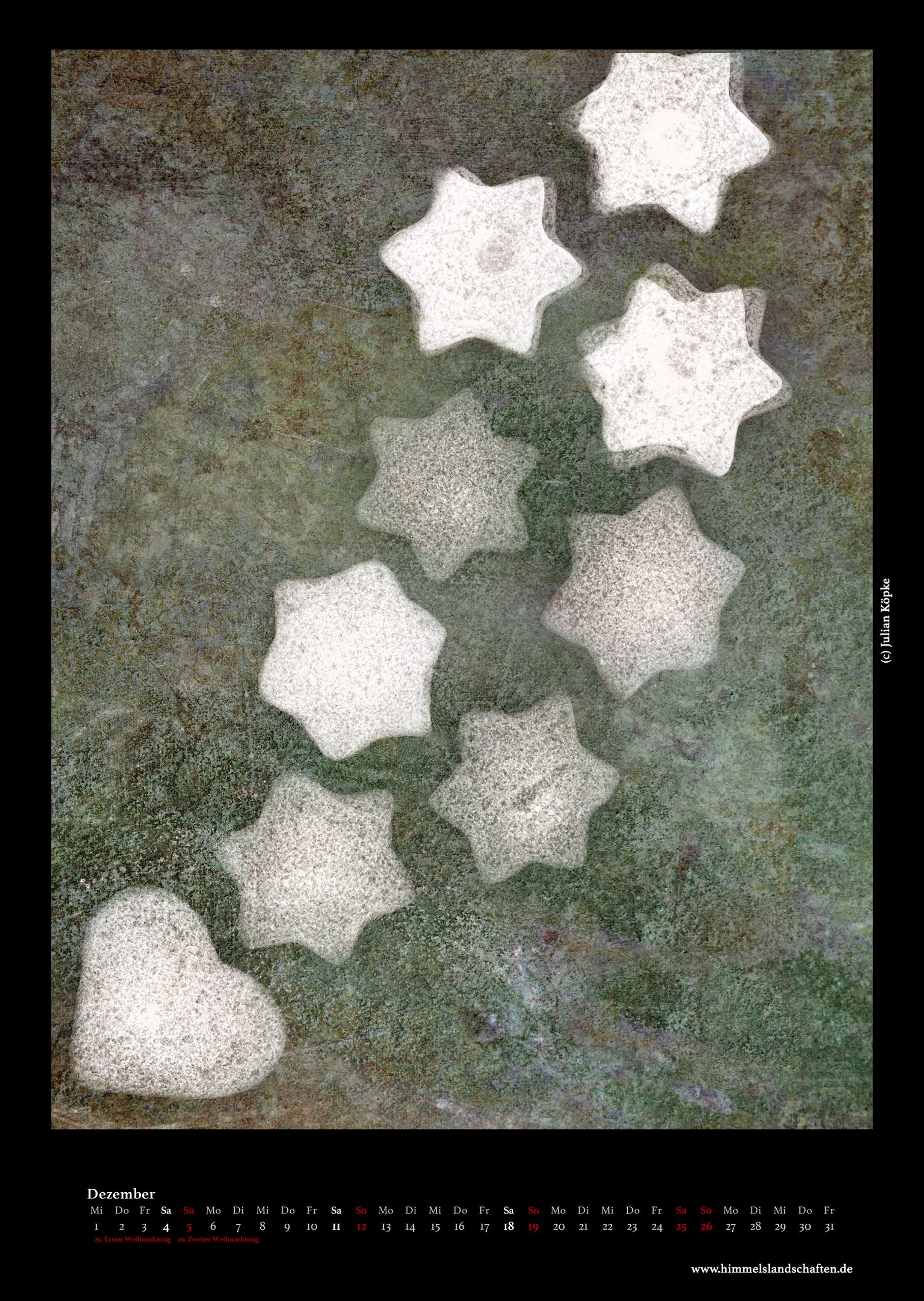
This year there was a complete silence on the part of the equipment manufacturers. That’s too bad. Now the calendar sheets 2021 are finished in own production. This year at the suggestion of or daughter Marlies with the topic food.
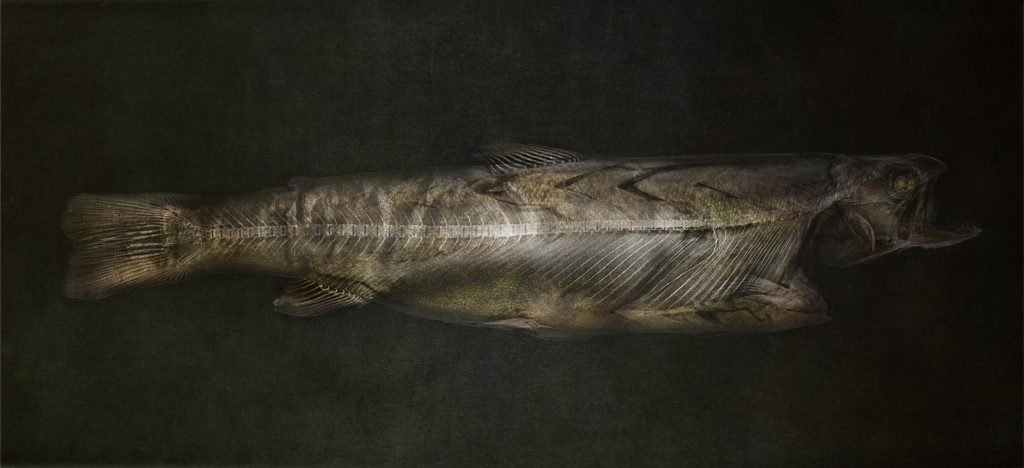
Fusion imaging does not wirk int the same way with food as with transparent flowers. But the deep structure of the food nevertheless leads to interesting results. It worked surprisingly well to depict a smoked trout with its bones. And squashes exhibit nearly artistic features.
It is always overwhelming to be on the road in Yosemite Valley. One is welcomed by silence and forest air. One of the points that provide an easily accessible overview is the former parking area for road construction machinery at the tunnel to the south: Tunnel View.
Everything slows down when you dive in there. The modern distractions are eliminated. The internet connectivity is so slow that you can’t present your pictures to anyone else while you are there. It’s a pity for those being at home.
Native americans lived in this valley and were given plenty of water. That has changed in the meantime. Precipitation is missing. An endangered jewel of this earth. It was a privilege to have been there with a friend and to be allowed to take pictures
We are the end of a year with unexpected restrictions and new dangers. A walk with friends out in the forest with their dog with a lot of distance between them feels uncomfortable. Time puts its stamp on you wether you want it or not. The feeling of an unstoppable acceleration is spreading.
There is a well where the dog finds some fresh water. Behind the well broken stones and an old tree.
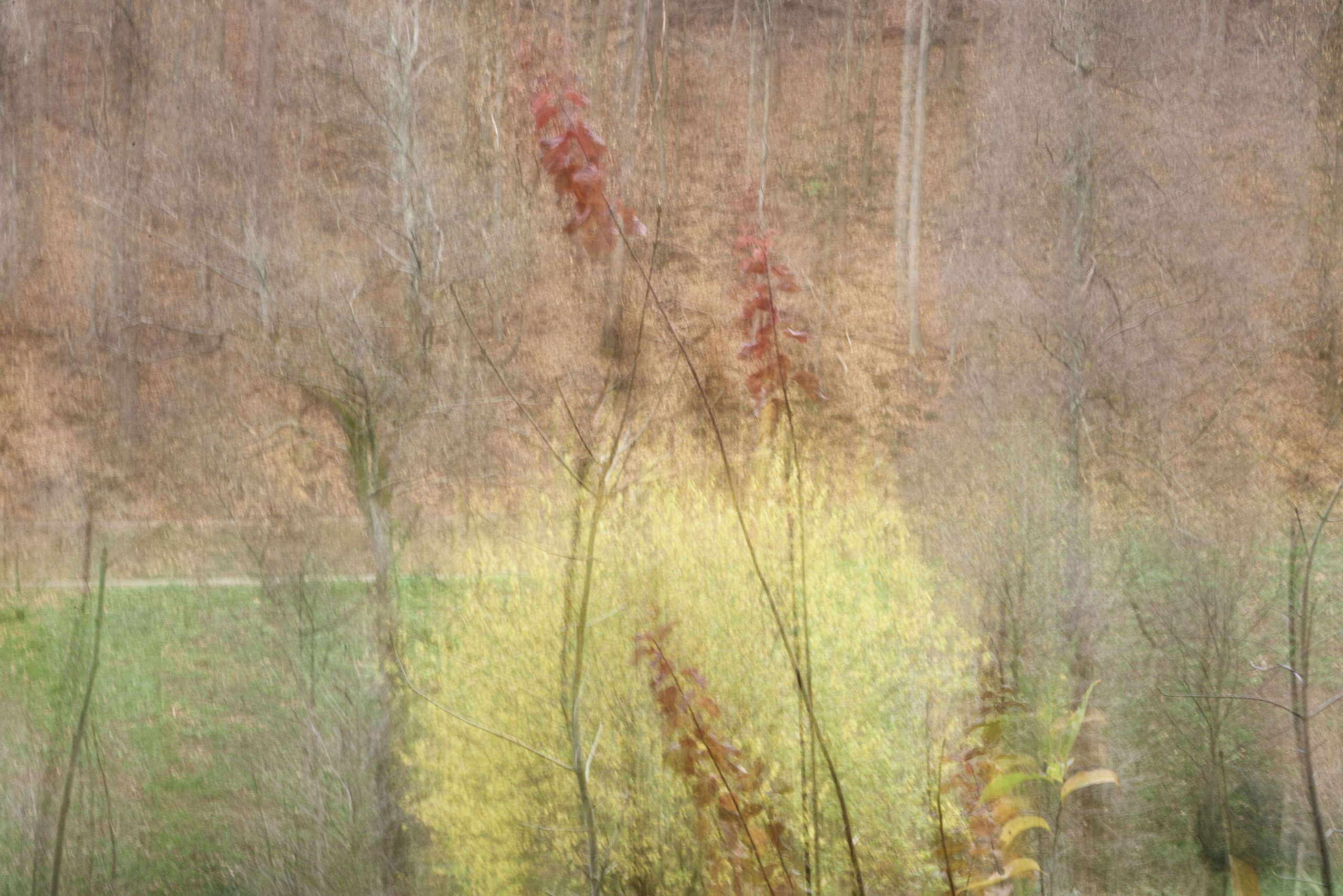
There are less and less leaves on the trees, so that the forest becomes more and more monotous. A few trees and bushes still have yellow, green and even some red leaves. These splashes of colors are are transformed by deliberate camera movement into areas of color and luminous islands that cheer up.
The Old Bridge in Heidelberg has the same attraction to visitors as the Charles Bridge in Prague or th Bridge to the Castel Sant’Angelo in Rome. Not everyone that the connective building between the two white towers houses an apartment. You come to the bridge early in the morning, you’re almost alone. This lonelyness is especially emphasized by a single walker.
The morning calm is reinforced by the fog. Even the car traffic is not so loud as usual. Maybe the noise will decrease even more with electric cars. That would do us good. The view form the bridge downstream shows ships tied up on the shore. Only a few rowers are on the river with trainers whose voices hardly penetrate.
The castle exercises the rule over the city. The strong contrast of the castle ruins over the roofs off the Old Town on the river bank is attenuated by the morning mist.
the Heidelberg Castle is world-famous and famous for the romantic feelings it triggers. Anyone who comes to the city in spring or early summer enjoys a mild warmth and a light wind that flows through the Neckar Valley.
In autumn, the winds that hits the photographer is icy cold and the facial masks that you have recently at hand are a welcome support in taking pictures. The warm colors of the following photographs deceive one of them.
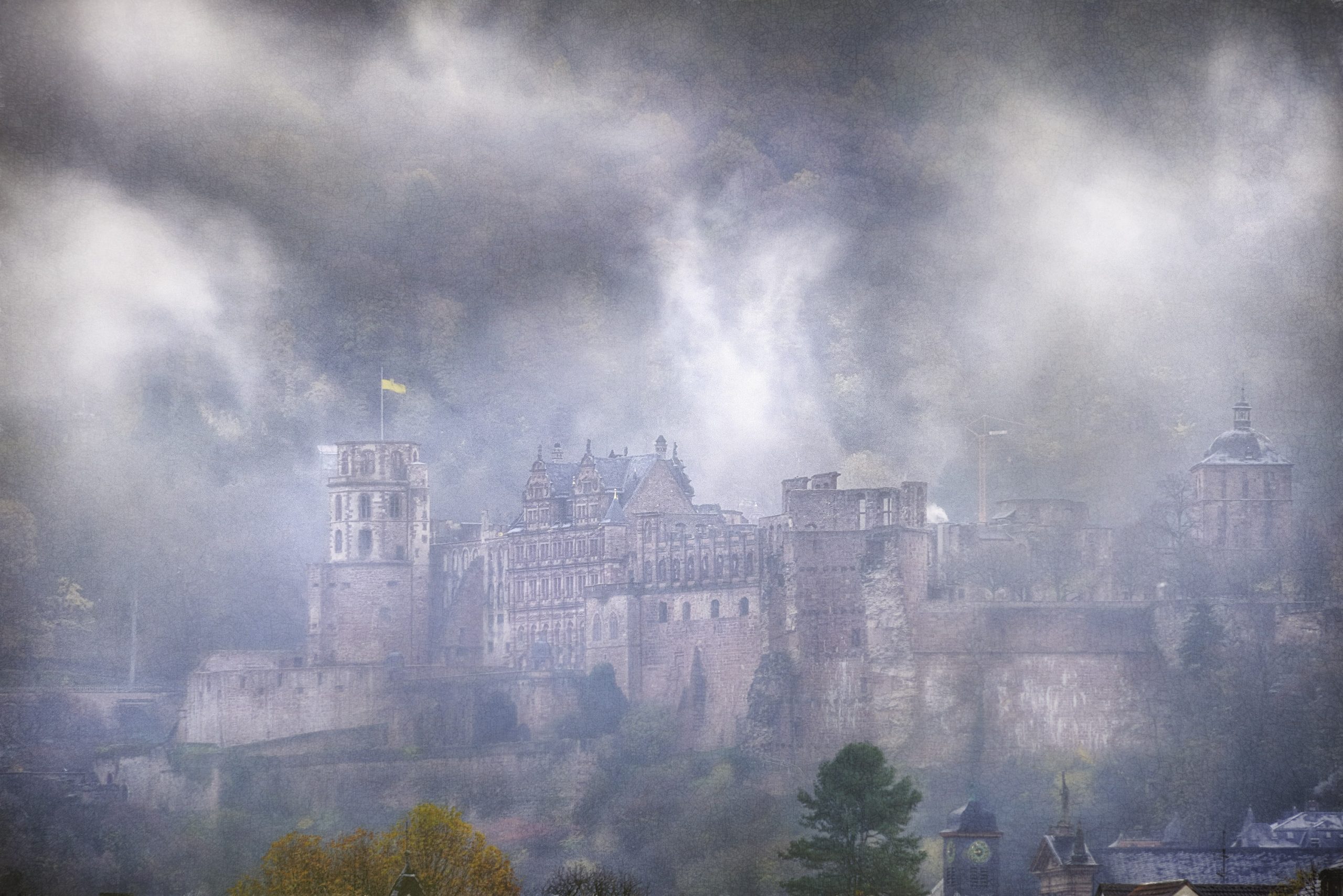
The warmth of the Neckar gives rise to considerable early mist during a cold night, which stretches over the trees to the south and west. The mists also reach the Heidelberg Castle, which subsequently appears a little more romantic and ruined.
Dahlia, my love. Flowers that make us forget the burden of a moment. Photographed each of them alone and as a pair. I tested HighKey shots instead of HDR, in the background different white tones.
The result did not leave me alone. Afterwards I wanted to try my hand at photographing a hen’s egg to study shades of different white (basically grey and yellow) tones. Unfortunately this did not happen today due to an emergency examination.
In our vicinity there is a quarry that shone over to us in the afternoon with its warm colors. Loading the car with the heavy photo equipment, I drove there to try a few shots. The grounds were not as welcoming a I had imagined. Concrete paths and many closed gates that hindered a free study of light conditions. A remarkable amount of people on the road, often with dogs.
The quarry named Referenz was used to mine for quartz porphyry, a red stone similar to granite, either used for road construction or e.g. statues. One rock formation was outstanding, with trees on it and a warm and yellow surface.
On a mountain north of river Neckar through Heidelberg that was used spiritually by different subsequent cultures, there is a ruin of the monastery St. Stephan, with an arch that has probably bee reconstructed. It was already pretty dark when I got there. For the following shot it took me 2 minutes exposure time and 2 more minutes for noise reduction. You don’t see it.
The Heidelberg Castle is always a great sight. It was almost too late to find a balance between the decreasing daylight and the electrical illumination. Nevertheless, with a single 90s shot at ISO 400and f/8, the basis for this image, which is a kind of negative, was achieved. The dark Heidelberg Castle dominates the scene.
Most of what we do see with our eyes is a reflection. Any light from a bouquet of flowers is just reflection. Looking through a bottle shows beside reflection some refraction. The only exception, where we don’t see reflected light is e.g. offered by an open fire or a light bulb. The sight of a star also shows direct light, which is usually subject to refraction due to the atmosphere.
Our eyes seem to absorb the light when we see. In fact, they can also reflect the incident light. We know this phenomenon from cat images that we have mistakenly photographed with a flash light.
Sitting in front of me my right eye is on the viewers left side and the left eye is on its right side. The instrument uses a red and a green laser at a harmless energy dose.
With different wave lengths of a laser an ophthalmologist is able to see different structures of the fundus and uses this property for diagnostic purposes. Looking at the green color only that stems from the green laser, the result is a monochrome image that shows vessels of the surface of the retina and smalls nerves joining the papilla.
Beside the medical point of view there is an aesthetic one, too. Dr. Gösele, to whom I owe these beautiful pictures, confirmed to me the impression of an astronomical night shot, which other viewers also feel. With a courageous crop you get there:
This is how the central part of my sensor looks like when creating photographs or X-rays. My wife immediately urged me not to fall into a narcissistic trap ….