-
Landscape
11. Februar 2023 /Piz Ridl Alpe di Siusi © Julian KöpkeSasso Lungo Alpe di Siusi detail © Julian KöpkeAt San Gimignano © Julian KöpkeComing down from Rocca Maggiore © Julian KöpkeMountain chain Eiger Mönch Jungfrau. There will be a weather change. © Julian KöpkeGodafoss at sunrise © Julian KöpkeWaves and surf at Reykjanesviti, IcelandThe rocks of Klifatindur (panorama 2 shots). Black sand beach. Vestrahorn. Estrahorn. © Julian KöpkeBlack basalt coast at Hellnar (Arnarstapi), Iceland © Julian KöpkeGlacial flows and patterns on Iceland © Julian KöpkeDettifoss detail western drop edge © Julian KöpkeMount Whitney © Julian KöpkeSunrise Alabama Hills and White Mountains © Julian KöpkeHalf Dome in winter © Julian KöpkeThis is not the first time to take an image of this tree in Yosemite Valley. I like it with autumn colors, too. Half Dome seems to survey the scene in this perspective. © Julian KöpkeI took 9 EVs for this HDR at Tunnel View in Yosemite Valley. No tripod ! You can see here the glacial origin of the U-shaped valley. In former times there was a lake. © Julian KöpkeView of Morsum cliff in eastern direction. © Julian KöpkeMidnight sun at Mortsund, Lofot © Julian KöpkeMidnight sun at Rorbuer, Lofoten © Julian KöpkeMidnight sun at Rorbuer, Lofoten © Julian Köpke -
Animals
11. Februar 2023 /Two giraffes in Berlin zoo. © Julian KöpkeHappy Fish © Julian KöpkeYoung cattle in South Tyrol forest © Julian KöpkeYoung cattle in South Tyrol forest © Julian KöpkeMale tiger Tebo during his morning stroll. Zoo Heidelberg. Photograph taken through a fence. © Julian KöpkePair of lions in the Berlin zoo © Julian KöpkePair of lions. Journey around the world. Photograph through a fence. © Julian KöpkeHappy meal © Julian KöpkeExciting huskies at Birk Husky © Julian KöpkeDaily grooming on a paddock, Iceland © Julian KöpkeA matter of perspectiveThey look so interested. Raudinupur, Iceland. © Julian KöpkeSheep Heligoland © Julian KöpkeSheep Heligoland © Julian KöpkeGreat Titmouse (Kohlmeise) © Julian KöpkeTake off. Storks at Heddesheim, Germany © Julian Köpke -
Portfolio
11. Februar 2023 / -
Blossfeldt studies
11. Februar 2023 /Silver leaf © Julian KöpkeHeucheria leaf © Julian KöpkeFern © Julian KöpkeThuja conifer © Julian KöpkeThuja (Abendländischer Lebensbaum) © Julian KöpkeClematis I © Julian KöpkeTendrils © Julian KöpkePoppy capsule © Julian KöpkeBlooming thistle at the former railroad tracks © Julian KöpkePoppy © Julian KöpkeBlossfeldt Acorn © Julian KöpkeVetch © Julian KöpkeIf you ever have the opportunity to see the work of the photographic pioneer Karl Blossfeldt (1865-1932), then perhaps you will also be as moved and fascinated as I am time and again. In 2014, Taschen-Verlag Cologne published a book about him entitled „Karl Blossfeldt The Complete Published Work“ (ISBN 978-3-8365-5072-7), which I have kept near my bedside table for years.
Karl Blossfeldt was interested in the forms that occur in nature and which he understood as „archetypes“. His main work was published in 1928 under the title „Urformen der Natur“ (translated version as „Art Forms in Nature“, 1928) and became an international bestseller.
On his way to college, he collected plants that he used as a source of inspiration for his work as a professor of decorative arts. His photographic works are monochromatic and usually made by placing the object on photosensitive paper. Technically, therefore, they are actually to be addressed as photograms and not as photographs, because the image was not based on any imaging optics. X-ray images are also photograms, but with a central beam geometry. Therefore, in a very free interpretation, Karl Blossfeldt’s works could be placed in the middle between photography and X-ray images.
The images in this gallery are created with photographic optics and a digital sensor. Photographs of plants or better: parts of plants, which highlight selected structures, are excellently suited for a monochrome presentation. Harold Davis describes one way of creating the look-and-feel of a Blossfeldt image with the help of a photograph. Harold calls the result „The Blossfeldt effect“.
-
Press Releases
11. Februar 2023 /- 2023 06 01 Fusion imaging
- 2023 05 05 Fortschritte Röntgenstrahlung 2023; 195: 341
- 2023 05 04 Foto-Espresso 2/2023
- 2023 02 10 ÄrzteZeitung
Landscape Photography Magazine
- 2024 11 12 Frost Assignment Lonely Island Forggensee, Bavaria
- 2024 06 29 Lonely trees Assignment Deadvlei Trees, Sossusvlei, Namibia
- 2024 06 01 Sea stacks Assignment Pollboy Lookout, Clare, Ireland
- 2024 05 02 Sea stacks Assignment Reykjanesviti
- 2024 03 02 Blue hour Assignment Punta della Dogana
- 2023 08 29 Longtime exposure Selfoss Nordurphing Iceland
- 2023 08 16 Minimalism Assignment Lighthouse Heligoland Dune
- 2023 07 10 Minimalism Assignment List on Sylt
- 2023 07 05 Minimalism Assignment Lighthouse Raudinupur
- 2023 05 29 Moody Weather Assignement Stein am Rhein
- 2023 02 17 Mountain View Assignment Eiger Mönch Jungfrau
- 2023 02 07 Königstuhl Heidelberg
- 2023 01 29 Winter Visions Assignment Breitnau
- 2023 01 29 Villa d’Este Tivoli
- 2023 01 28 Alpe di Siusi
- 2023 01 28 Florence
Berufsverband der Deutschen Radiologen e.V.
- Flyer 2022 Vielfalt, Innovation, Kooperation (PDF)
-
About
11. Februar 2023 / -
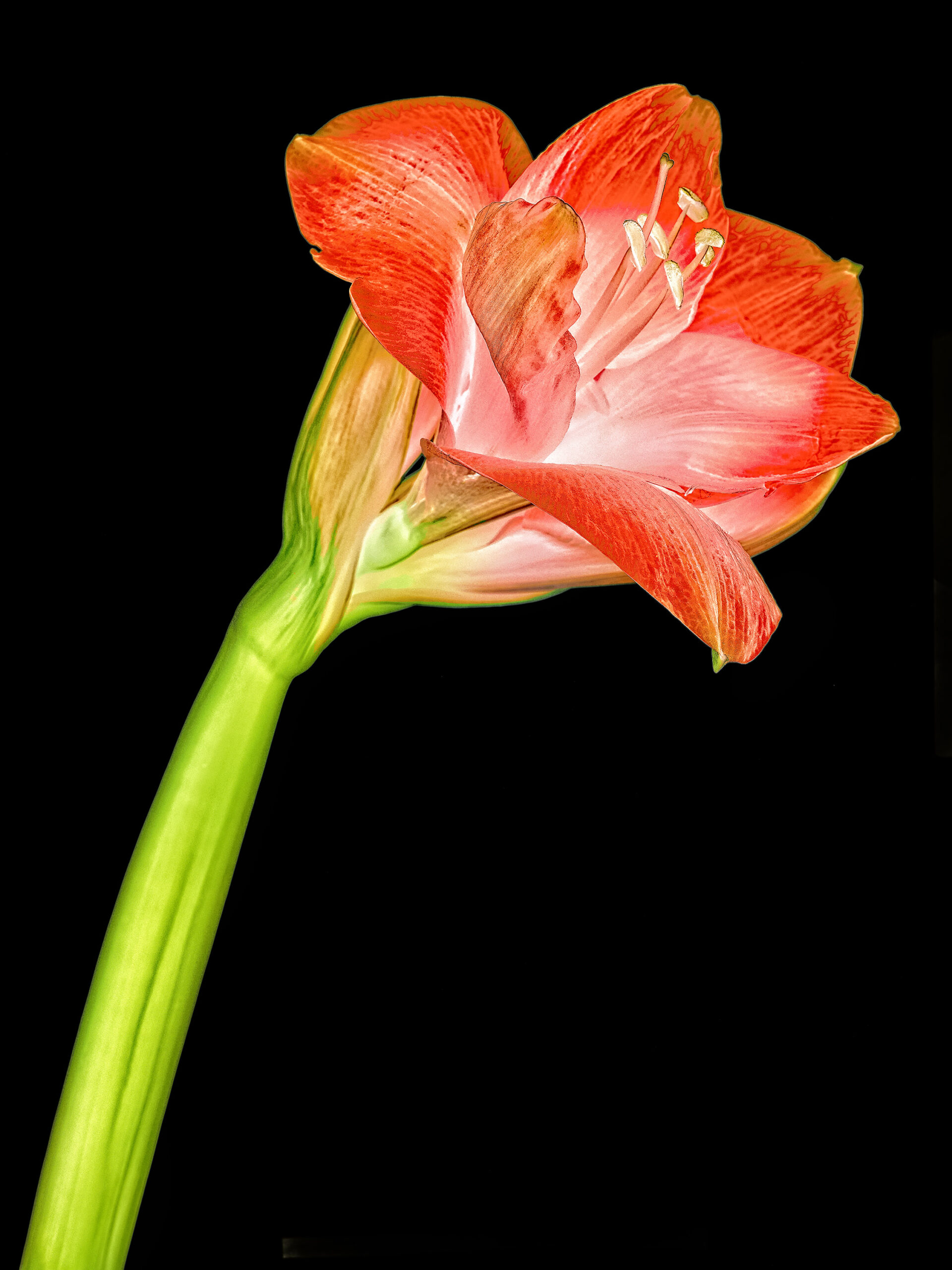
Amaryllis
The format for recording an image can be very variable when fusion imaging is involved. In the example below, the image on the left is taken with a Phase One IQ4. The sensor size is 44mm x 55mm. The X-ray image on the right was taken with a Hologic mammography system with a detector size of 24cm x 30cm. The aspect ratio of both images is 4:5. The pixel size of the IQ4 is 6.5µm, the pixel of the mammography is 70µm long. Nevertheless, the images can be fused well.
I added some texture to the fusion image because it made it more appealing. Due to the fusion of the image from „visible light“ and the image with „X-ray light“, the definition of whether it is a medium format image or a large format image is no longer meaningfully applicable. It is simply an image.
-
Chocolate
4 bars of chocolate were meant as a reward for a calendar of the year 2023. To eat, of course. However, it is a special pleasure to subject them to an X-ray examination with the mammography before opening them. After three attempts, I placed them on top of each other, which is why their penetration with radiation required 20% more energy so that the image was not underexposed.
-
Black Forest
A picture I like turns my gaze inwards and I stop staring at it. It is not possible for me to give the reason why I avert my gaze. For it is no longer my eyes that look.
Is it a spell ? Has a string of my existence been made to vibrate ? Is it a vortex that draws me into its depths ?
The simple shot of a farm in the Black Forest can take on the attractiveness of a shot from the early days of photography by processing the lighting conditions. Immediately, the antennas on the roofs of the farm look like evidence of a long past, although they can be no more than 50 years old.
The first day of the new year ended at the little church of Maria Lindenberg with a warm sunshine that almost protectively enveloped the promenaders. The gaze inwards is lost in the apparent aimlessness of the walking movement.
The forest area, which takes its name from the effect its conifers have on the viewer, has not always been a Black Forest. The visitor becomes smaller to tiny when the fog makes the forest even more impenetrable.
The farm was named after an Ignaz, locally always with the associated diminutive Nazi, but this designation has since been banned from the signs as unacceptable.
-
Snæfellsness peninsula
In the meantime, 0.8TB of photo data has accumulated. It will be a challenge to process all these photos. Fortunately, I am concentrating on a few compositions, each of which will be studied in more detail. The themes of geometry, lines and planes stand alongside the theme of colour contrast, which is easy to focus on in Iceland.
The basalt rocks of Arnarstapi are ideal for this. With moderately homogeneous cloud cover, they lend themselves to long-term studies. The Phase One camera is able to do without the grey filter through frame averaging, which otherwise often leads to slight shifts in the composition.
I’m still not sure whether the basalt rocks of Lóndrangar look better in colour or in black and white. We had drizzle and fog again and again, but also very brief sunny moments. Icelandic weather has returned to normal.