Julian Köpke
I like to make things visible the naked eye isn't able to see. That's part of my profession as a radiologist, too.
-
Port cranes in Heilbronn
Cranes have always fascinated me. When I was a little boy, I could watch her work for hours. When I arrived at the garden exhibition in Heilbronn, I initially only had eyes for the two harbour cranes that were unloading the cargo of sand from a ship.
The old cranes look historic, but were still in service. I especially liked their green and yellow and the many ropes with which the shovel from the boom reached into the ship to pack the goods.
-
Heucheria leaves
Backgrounds create a new image impression. Sometimes you need a background to add to the picture some more pizzazz. In these pictures I use the background to simulate a photographic base as I saw it in Karl Blossfeldt’s pictures.
The starting point is always a color image. With a background named „Aged Board“ the color image already shows an attractiveness of its own.
The Black & White conversion enhances the contrast a bit which is why I’m adding a little glow.
From another Heucheria leaf, which shone in a wonderful red, I show here only the black and white conversion with background. This makes the reproduction of its structure much better.
-
A rose is a rose is a rose
Just photograph a rose and show its beauty – how wonderful that would be. Is the light right ? Do false shadows emerge ? Is the structure correctly reproduced ?
Again and again I have to go through our garden and look at the flowers. Yesterday was it again. The sun had just set and the full moon should have decreased a little later.
I tried it with all f-stops the camera and lens gave to me. To my surprise the aperture 32 at ISO 50 with 45s exposure speed was my favorite. Only at the edge the picture had to be darkened and desaturated. Post-processing can be as simple as that.
-
Partial lunar eclipse
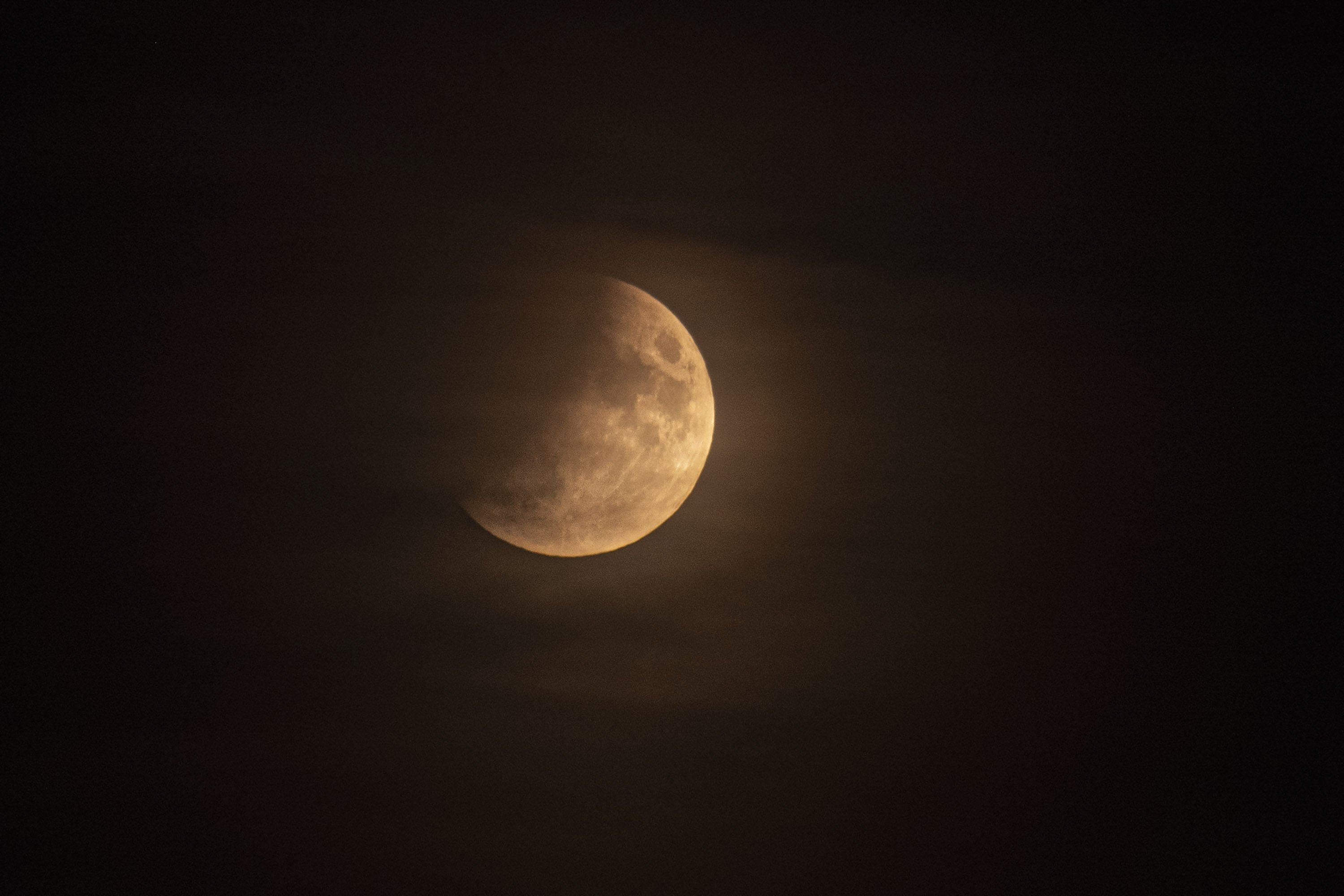
Night clouds may be a creative opportunity, although they generally lead to limitations in the visibility of a celestial event. Last evening was such an opportunity. The proof of the pudding is in the eating.
There is enough structure in the image to please one’s eye. The color of the Moon has a rusty tone outside the central shadow of the earth.
The composite of this capture with a mood picture on site is technically not completely satisfactory. I should have made more different exposures of the night sky.
-
End of the world
On a ball there is no such thing like an end or a beginning. Before the discovery of America the region we traveled to today was called „End of the world“ or „Finistère“ in French. The Atlantic Ocean shows its wild side here.
On our way from Camaret-sur-Mer to Pointe du Raz we came through many old villages of Brittany. St. Nic is such a place, where you can find a pretty church building.
Coming form Douarnenez you first reach Point du Van in westerly direction. The church is consecrated to shipwreckers.
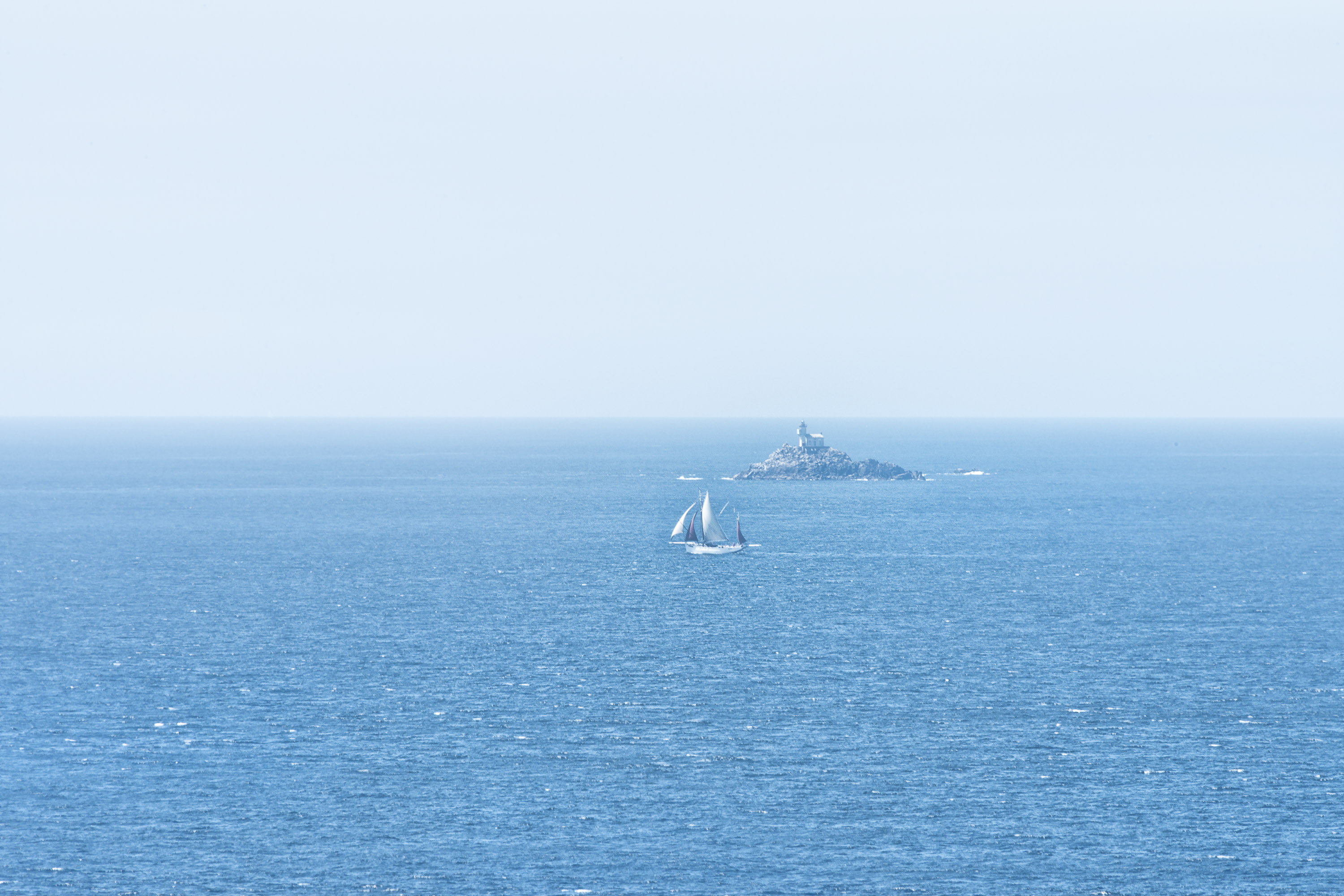
Within sight of the western wall you can perceive a small lighthouse.
After a short drive, first in a southerly direction and then in a westerly direction, you reach Pointe du Raz. At low tide the is a strong current in southern direction. The water is visibly swirled between the rocks. At this point, where the world ended 528 years ago, you can easily imagine a wild Ocean.
Our journey to Brittany now has come to its end.
See more images in my album.
-
Anchor at Camaret-sur-Mer
Camaret-sur-Mer is a place with a long history, which tells the former economic and military importance. Cabaret has been also the most important lobster port in France. The place is located on a peninsula of strategic importance for the security of Brest. The peninsula was therefore coveted by Great Britain and Spain in their fight against France.
The Vauban tower bears witness to France’s fight against the conquerors. I took the following image with my tripod in front an old warehouse of the former shipyard.
The civil shipwrecks show the decline of fishing in the region. You can’t find warships here.
All ships are damaged, by time, by economic ruin. This is where they found their last port.
Where is our final anchor point ? Will it be interesting to look at us ?
See also my album „Camaret-sur-Mer„.
-
Impressions of Brittany
Every morning I photograph the rocks on the beach from our window. The atmospheric conditions change greatly whenever I look outside. The impression made by the rocks changes with the change of the atmosphere.
Only next morning the rocks look completely different. There is alway a painterly impression the light induces.
Higher tide the next morning.
See also my album „Camaret-sur-Mer„.
-
Bonjour Bretagne
Since a car ride from Nantes to Caen more than 40 years ago I associate Brittany with clouds and fog. This time everything is different. The coolness of the country surrounded by the Atlantic refreshes us wonderfully after the heat wave in Heidelberg and Paris.
Traveling and painting was a great pleasure for me back then. How fantastic it is when every morning a painted landscape appears.
See also my album „Camaret-sur-Mer„.
-
Flying into Paris by train
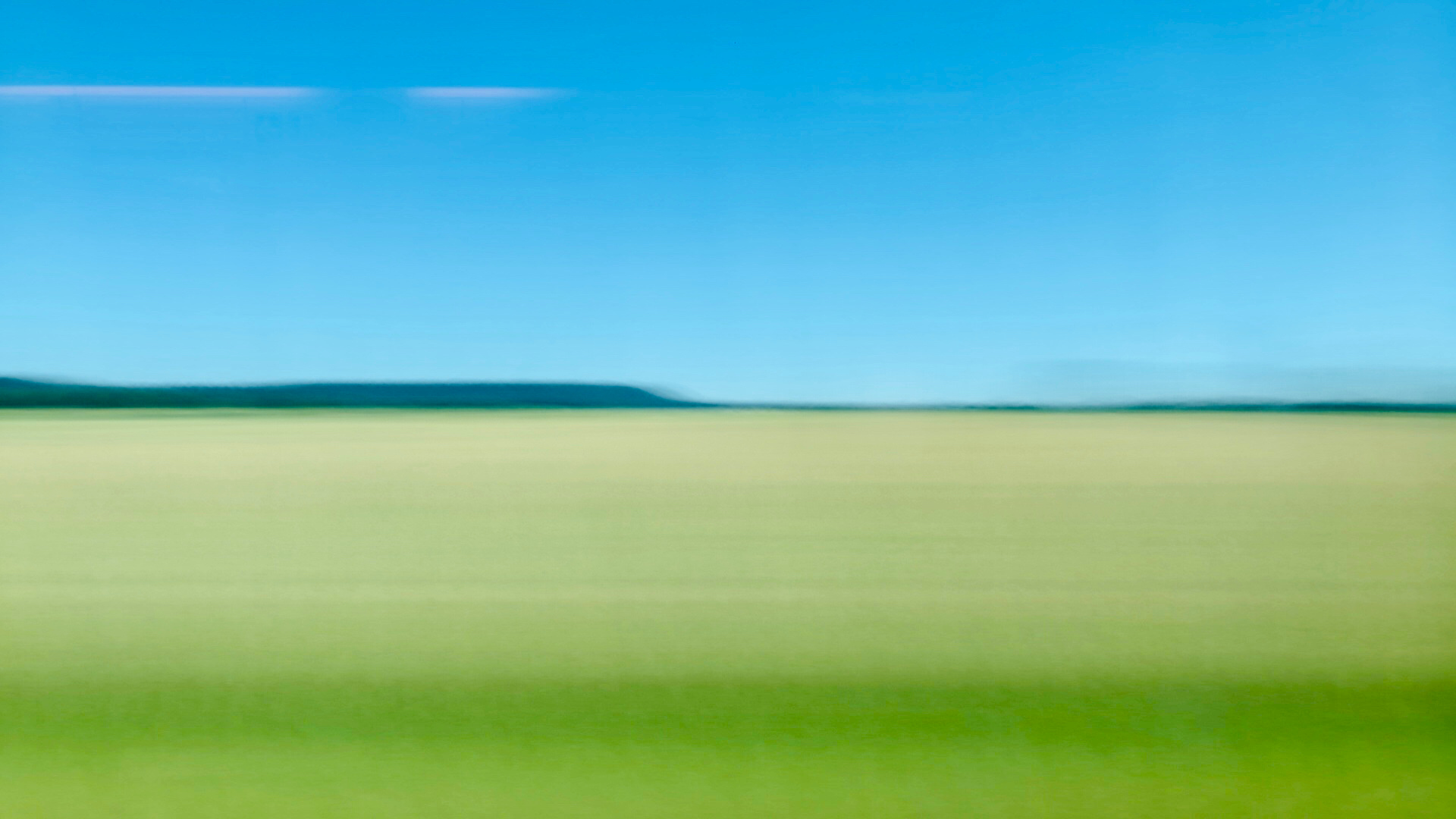
I love to look out of a train window. So many photo opportunities passing by – and no chance to capture one of them.
With my iPhone App „Slow Shutter“ on our way to Bretagne via Paris sitting in a TGV (train a grande vitesse) going at 300 km/h I shot this series of images. The GPS tags are approaching Paris clearly. The result is a motion blur image dominated by horizontal lines.
Oh: above 300 km/h the internet connectivity decreases its speed. What irony !
-
Leipzig 2.0
Second journey to Leipzig. Half way stop at Schloss Seehof in Memmelsdorf. Finest square architecture. Splendid water cascade.
Leipzig has been a town since round about 1200. Many places were reconstructed after destruction during socialist dictatorship. The horrible blast of the Pauliner Church in 1967 lead to a beautiful and appealing reconstruction after 1989.