-
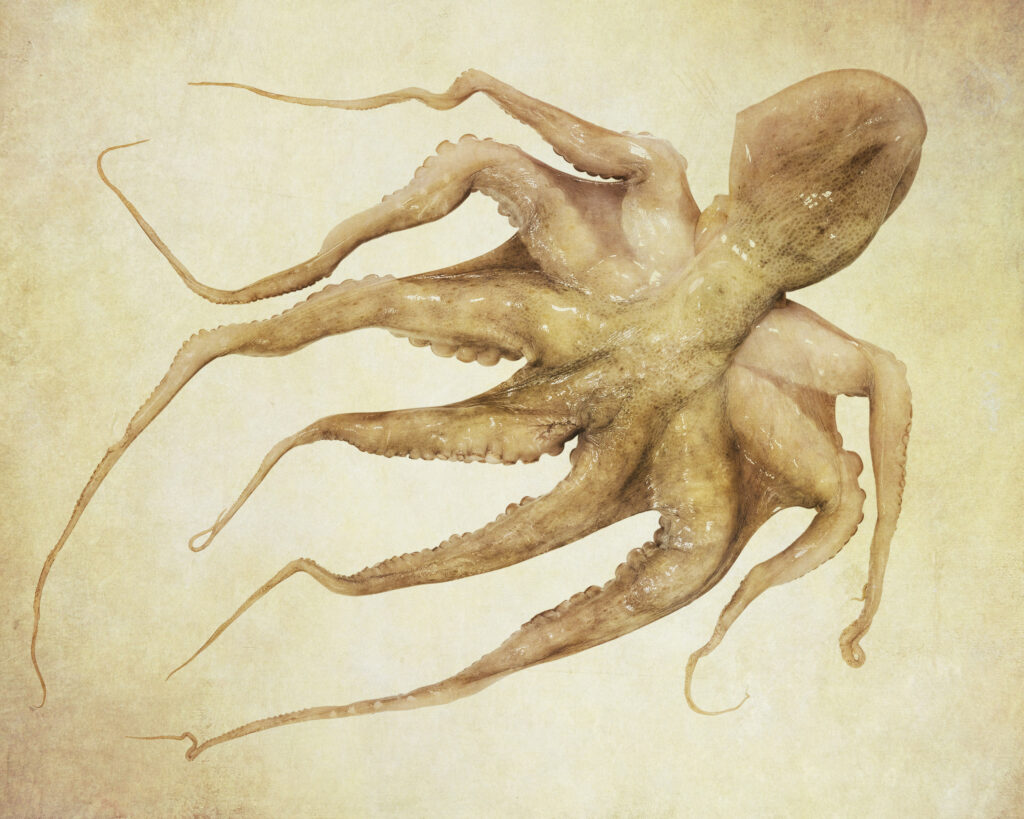
Pulpo
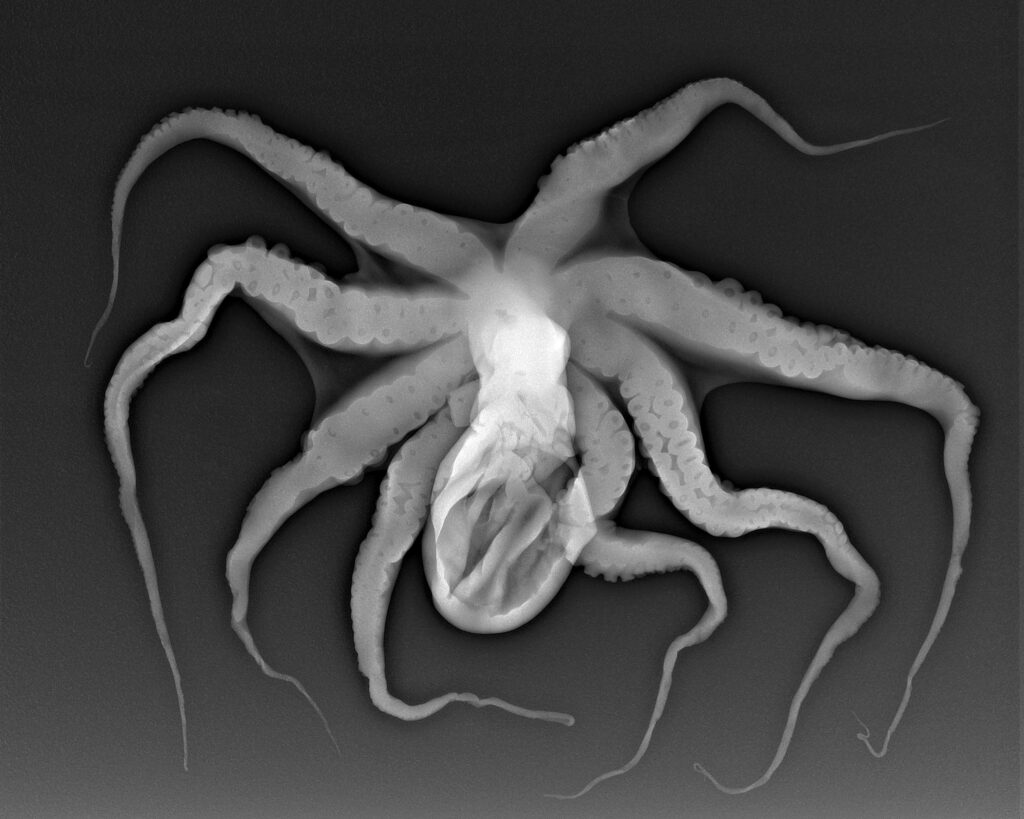
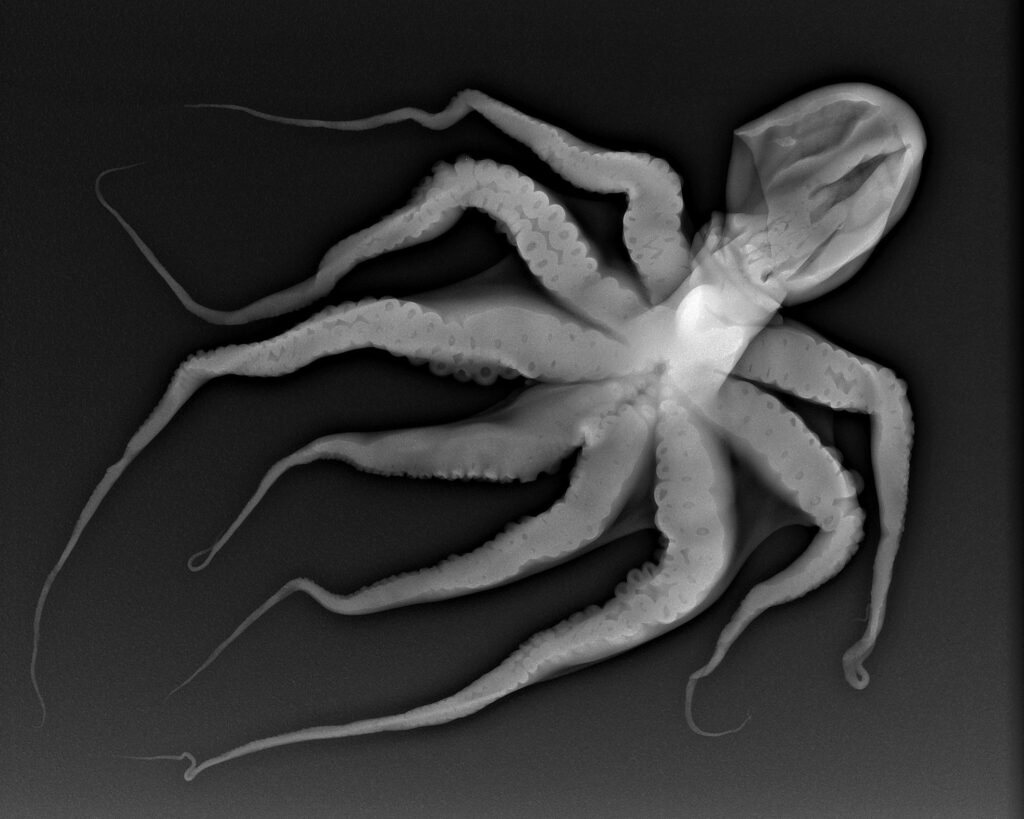
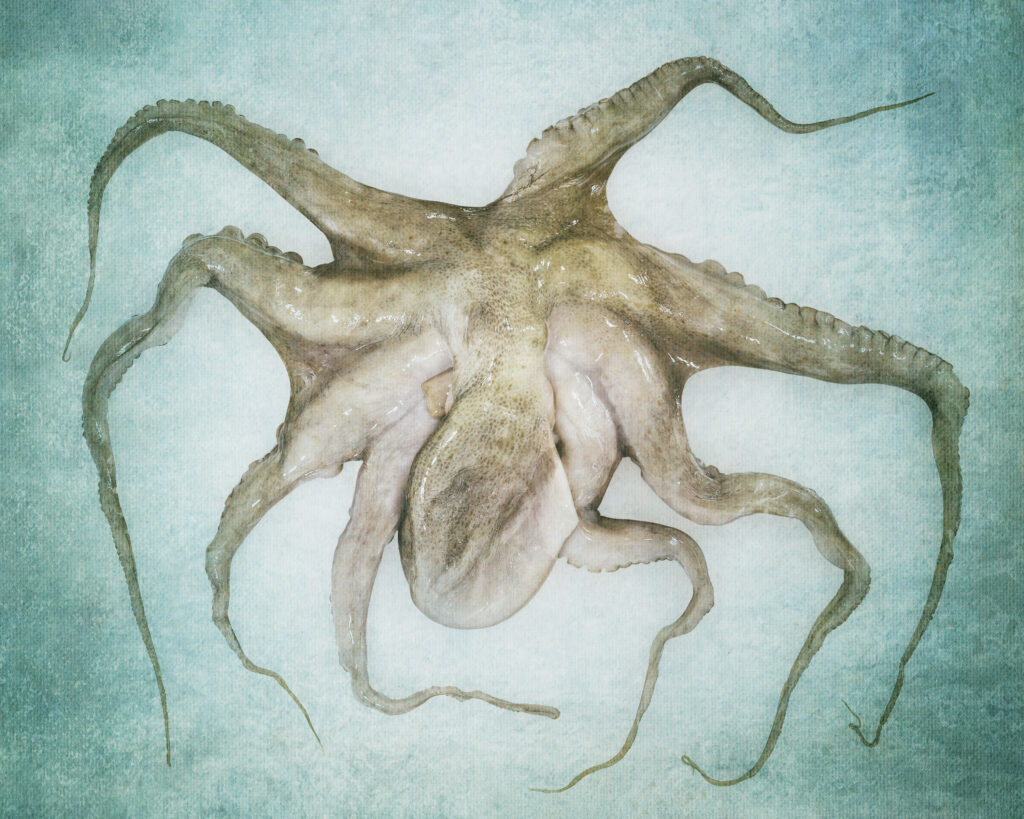
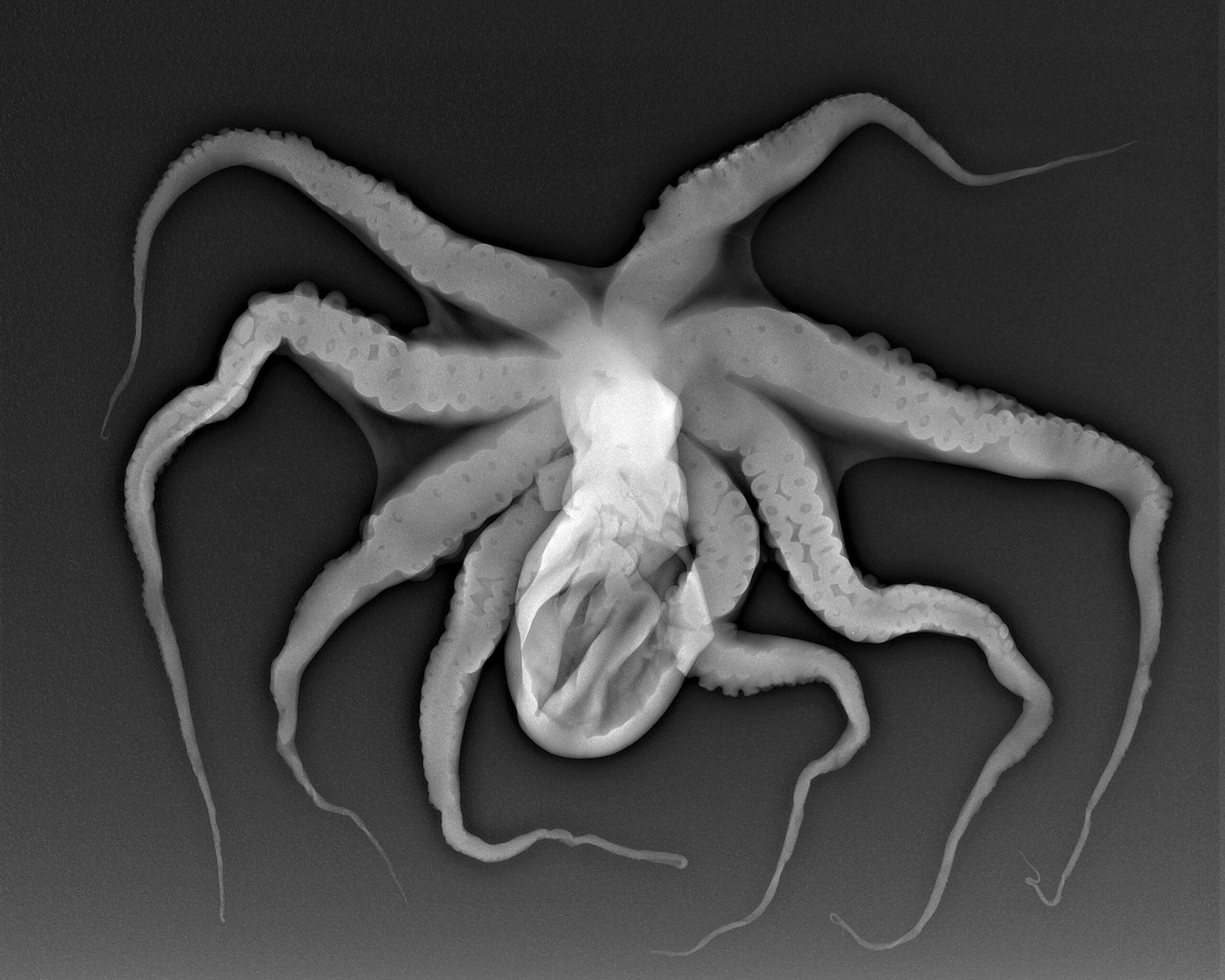
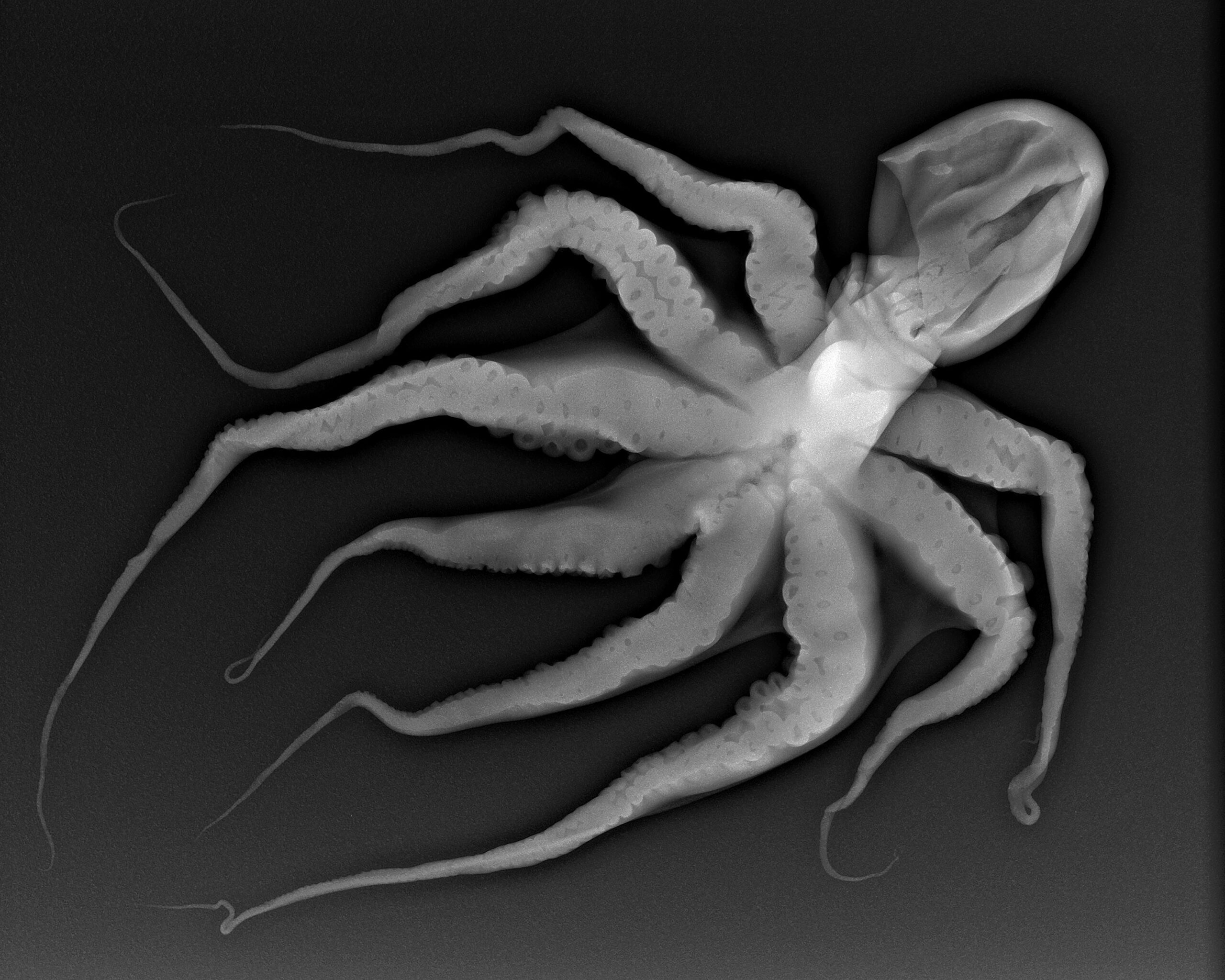
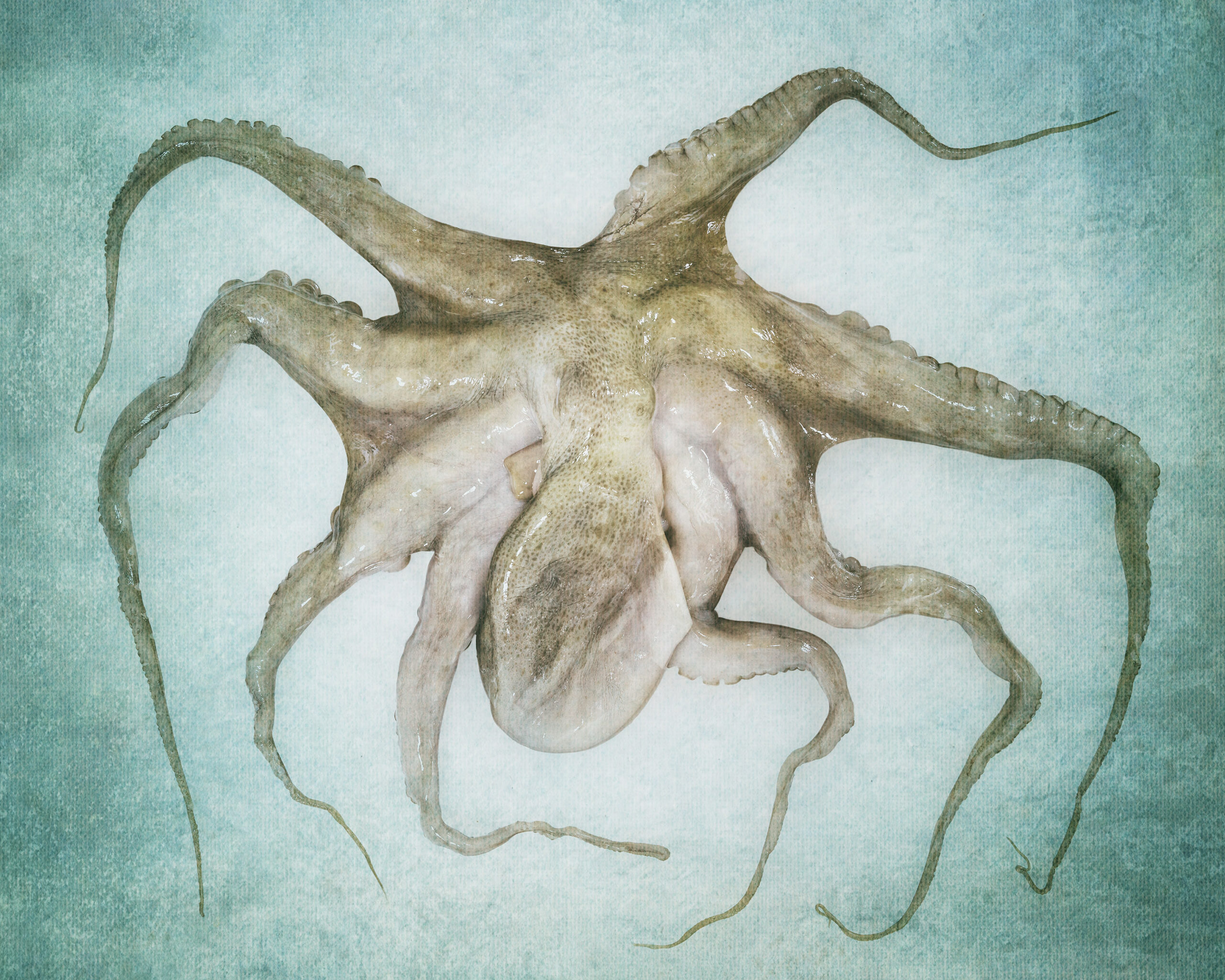
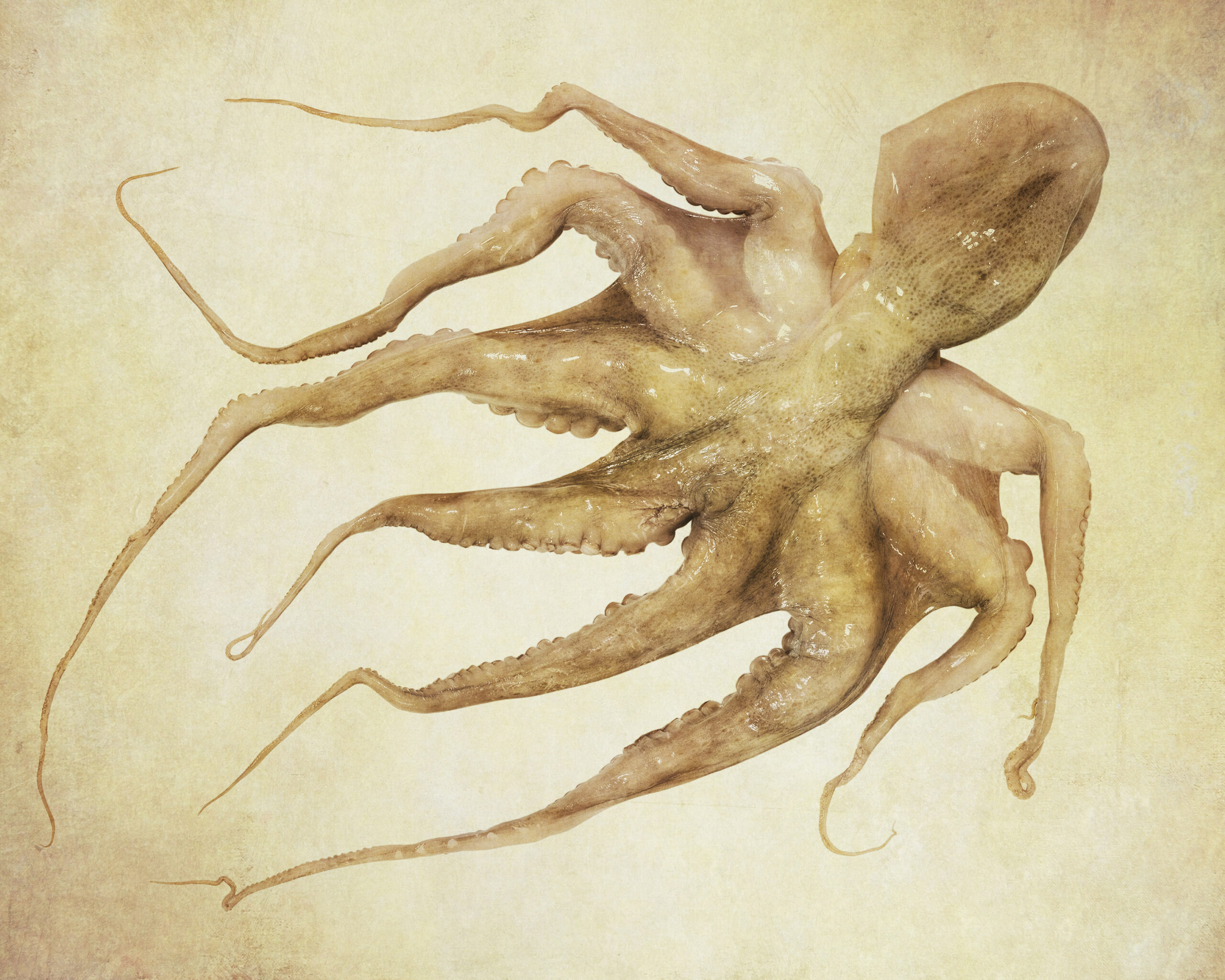
With their appearance and the way they move, octopuses are sure to attract everyone’s attention. Perhaps some people know these cephalopods as a starter. Whilst taking the X-rays, I constantly had in mind the ubiquitous depictions of these creatures in Mycenaean culture.
Her body does not show any strong contrasts on the X-ray. The suction cups still show the strongest contrasts on the X-ray. The composite image with the photograph gives only a faint hint of which images were used as a basis.
-
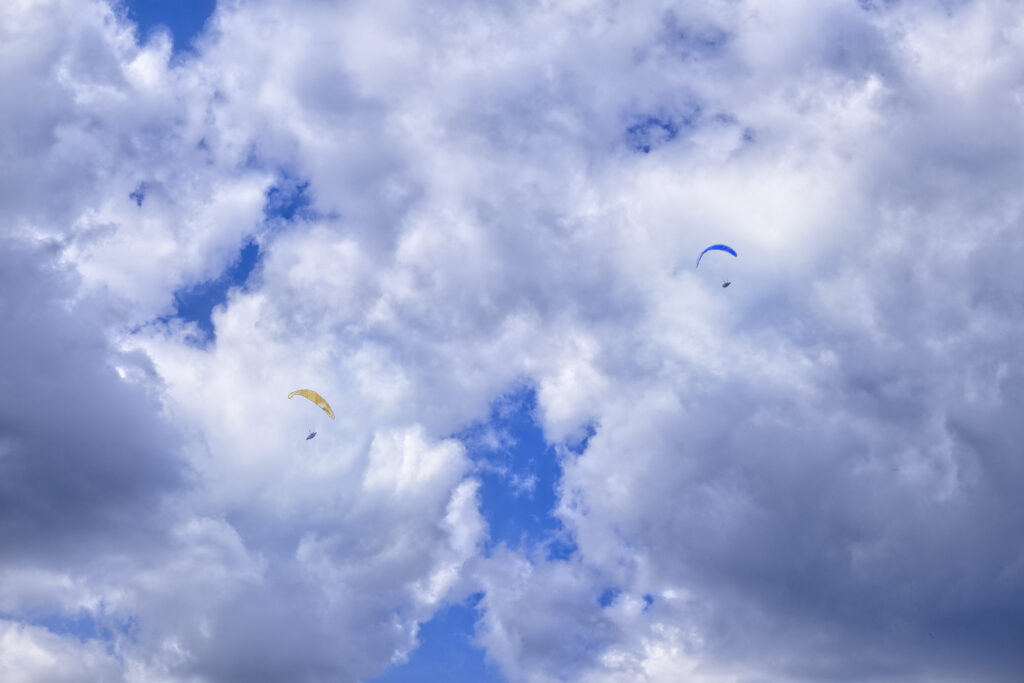
Paragliders
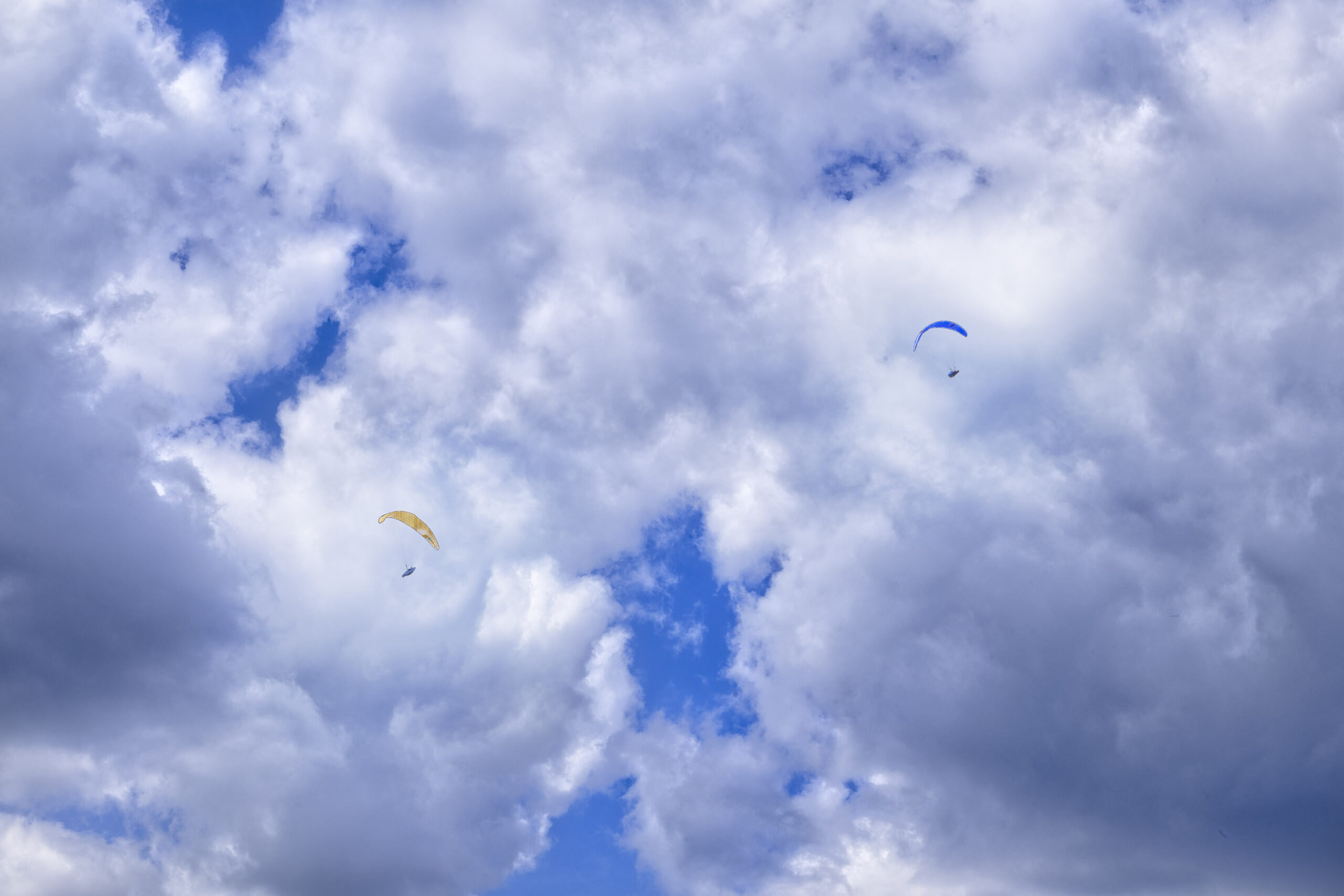
Some compositions simply cannot be planned. A friend and I were sitting near the launch site for paragliders, who were spiralling higher and higher, as if they were circling a central point. Cropping the image helped a little to bring out that impression.
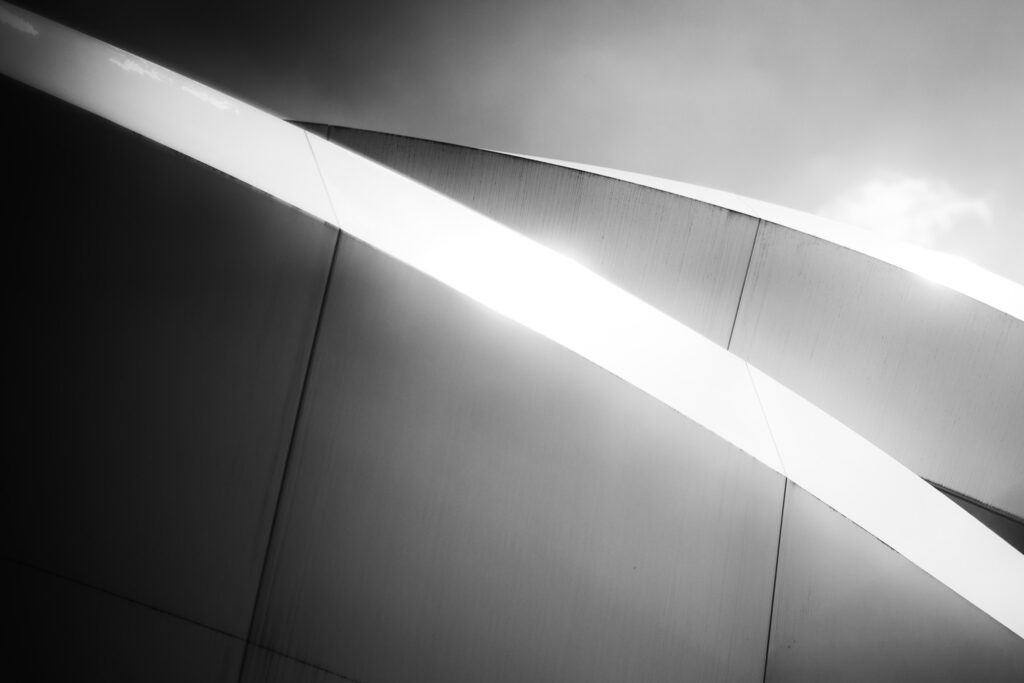
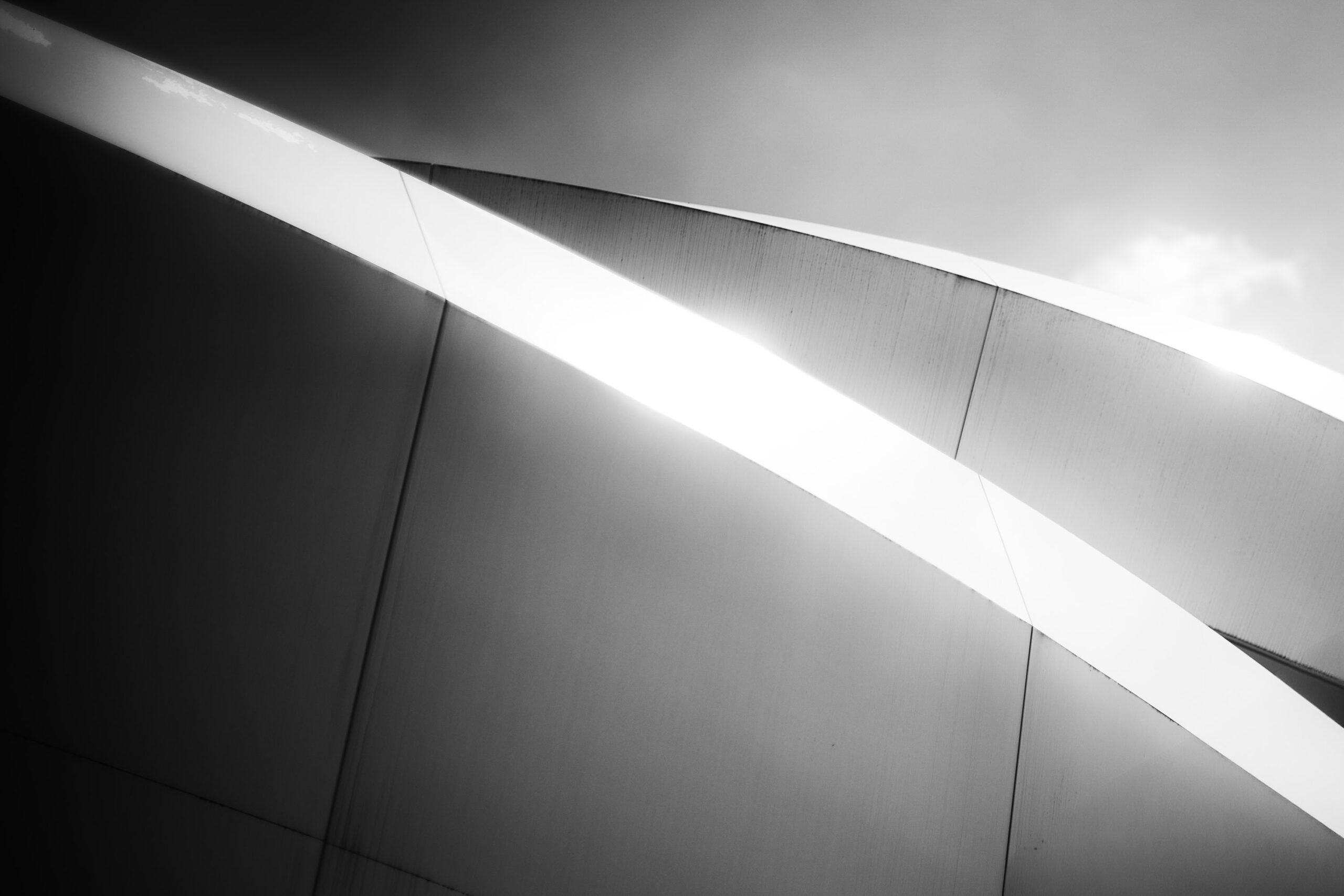
A photograph taken just outside the entrance to the House of Astronomy on the Königstuhl in Heidelberg creates reflections in the midday sun, which appear much more dynamic thanks to cropping.
-
Varieties of fusion images using X-ray
Images produced using visible light and X-rays could not be more different. And not just because of varying the subject. The fusion of these two techniques already makes it possible to present the same source material in vastly different ways.
When I began developing this technique, I drew inspiration from a method of photographing flowers transparently, as practised and published by Harold Davis. My focus was on transparent flower photography and the ability of X-rays to penetrate objects seemingly without resistance.
In the case of the flowers, the fusion of the X-ray image and the photograph reveals the translucency inherent in the photographic process and, moreover, conveys a delicacy—one might almost say a fragility—of the subject.
Using only the approach to depicting flowers derived from photography and the work of Harold Davis, fusion imaging can create a small universe. The fusion of the two types of radiation in the image is by no means straightforward and also depends on the object being imaged.
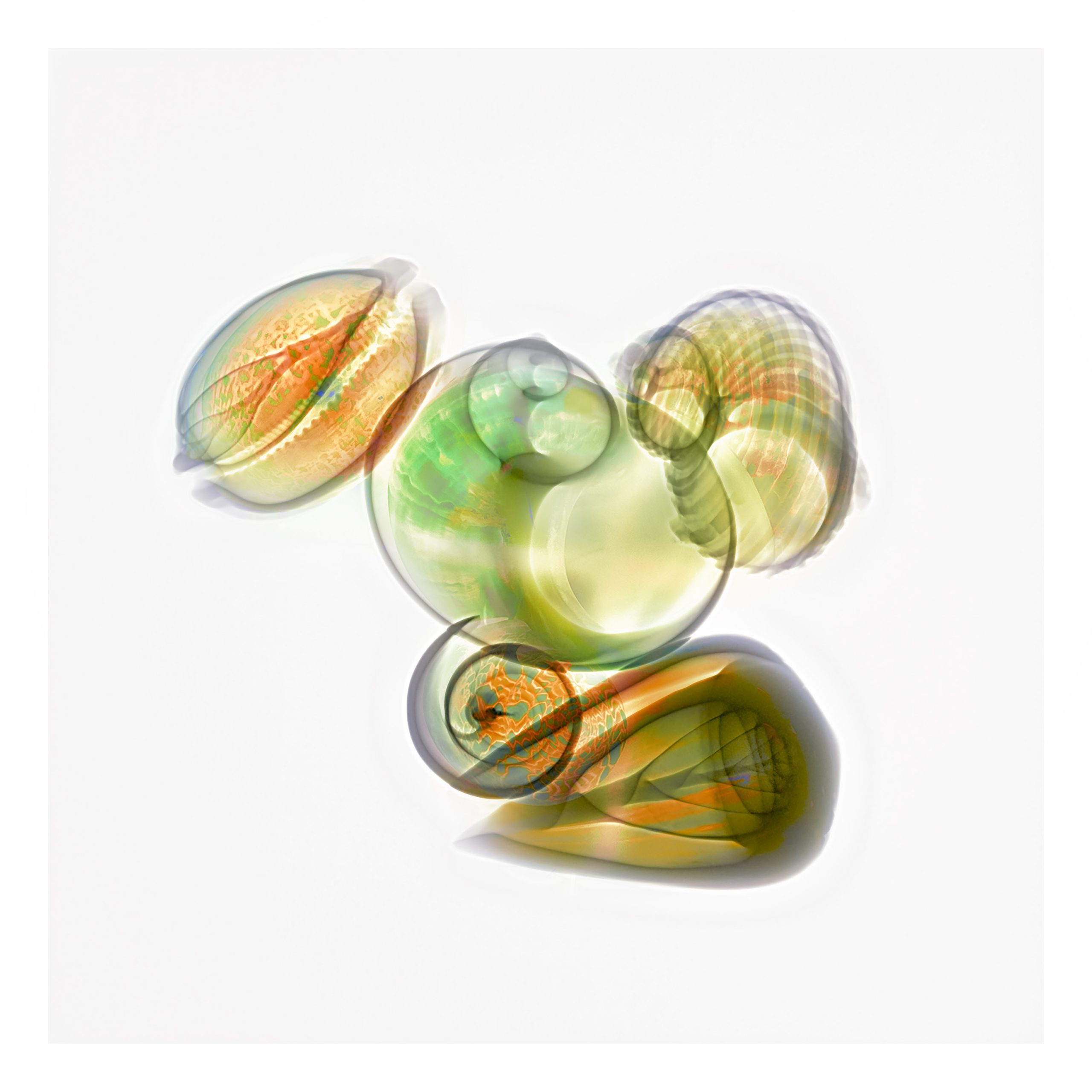
As well as flowers, there are interesting structures that never appear transparent or delicate in ordinary light. Nevertheless, they are well worth a closer look. Take, for example, the shells of snails or mussels. Under X-ray light, these become particularly striking. From the very beginning, I have also experimented with fusion imaging on these objects.
In this context, it is also true that image fusion does not follow a single, clear path, but is guided by artistic criteria. X-rays and photographs can produce vastly different effects, even when depicting the same object, depending on how they are processed.
Only a transparent object can be transformed into an image that appears transparent using a lightbox. This is inherent in the nature of how these images are created using an HDR process. This limitation can be overcome to a certain extent with the aid of X-rays.
Transcending the limits of visible light is not a straightforward process. With objects that become radiographically transparent, transforming them into an interesting composition is a demanding artistic task yielding variable results with no set formula.
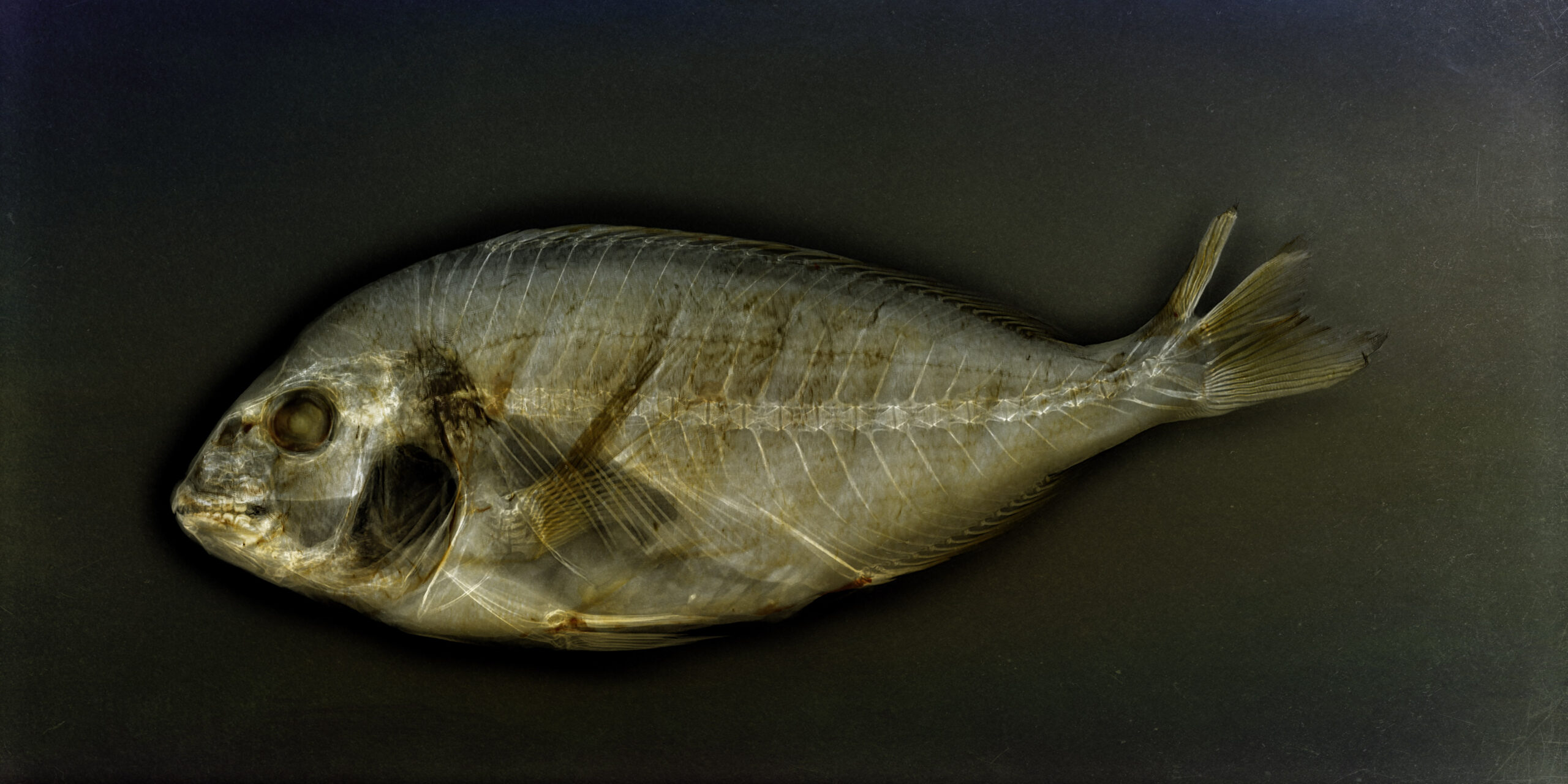
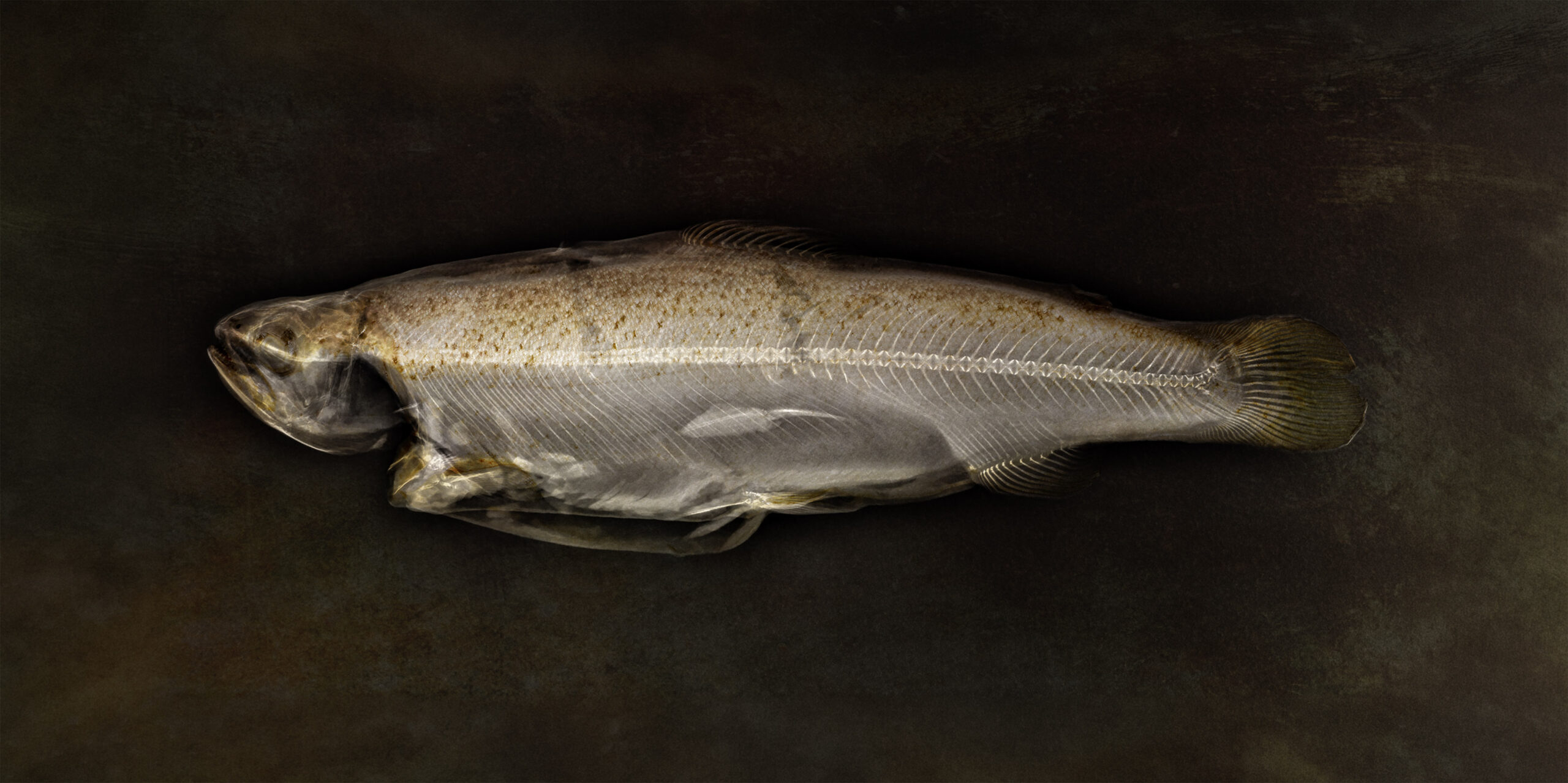
I bought these two smoked fish from a supermarket. On the left is a sea bream and on the right a trout. In this artistic fusion of photography and X-ray imagery, I added a background and some texturing. On closer inspection, you can see small tears in the muscle tissue of both fish caused by the drying out that occurs during the smoking process.
Fusion images can be created using objects that are not themselves transparent. They are visually appealing as a result of the artistic process and can sometimes even be surprising. There is no set method for creating a fusion image; instead, the approach is guided by the subject matter, the characteristics of the object being depicted, and the overall visual effect.
-
Calendar 2026
-
Moody weather
Stein am Rhein is a town with a northern and a southern part on the banks of the Rhine, which here flows west towards Basel. The Rhine does not form the border with Germany here; on the northern side is Swiss territory. A hotel with historic knight’s armour and oil paintings in the corridors is situated directly on the river.
My wife and I arrived in clear, warm weather the day before. But in the early May morning, it became foggy again, and my desire to get up was limited. On the same side of the river next to the hotel is the monastery of Sankt Georgen, which is nowadays only a beautiful museum.
As soon as I stepped onto the bridge that leads between the hotel and the monastery from the north to the south, I saw the sun standing in a cloud over the Sant Georgen monastery. I had to hurry a lot because the fog was beginning to lift. An HDR shot was a matter, of course, to savour all the nuances of the light later.
I did the post-processing of the HDR manually and software-based, so I had all the freedom to process the image.
-
Calendar 2025
-
Lonely tree
How I would love to spend a night in this place: as relentlessly as the sun burns down on us during the day, the starry sky at night is so wonderfully clear and bright in this Namibian place. As an ordinary tourist, you have no chance of being allowed to stay in this part of Sossusvlei before sunrise or after sunset. You arrive in groups after sunrise, in large jeeps through the gates of the national park. After arriving at the Deadvlei dunes at around 9 o’clock, only a few slopes are still in the shade for a short time. These moments are precious and last only a short time.
You have to be quick, follow your intuition, and try it out. The terrain is extremely attractive. The photographers in a group immediately spread out across the plain, as you can easily see in the picture. There are groups of trees, occasionally pairs or single trees, as here. You can’t stand it in the heat for longer than two hours. Afterwards, we had a late breakfast before returning to the hotel and leaving the national park.
The background consists of a band of blue sky without clouds, orange-red sand dunes and the yellowish-white soil of the dried-up riverbed. Rarely does a river die in this depression after a downpour. A long time ago, as evidenced by the dead trees, there was even more moisture here.
I took the picture with my Leica Q without a tripod. This camera has a fixed focal length of 28mm. At f/8 and ISO 200, the exposure time was 1/250s. What was important to me was the completeness of the shadow cast by my lonely tree in the foreground. You can find some of my images published on Landscape Photography Magazine.
-
Flash
I have set up a studio of black surfaces where the light falls on my objects from above. All distractions that could interfere with the view disappear as if by magic. There is only the object.
Every ray of light that does not fall directly into the eye remains invisible. Concentrated light such as laser beams is made visible by introducing vapour from CO2 into the beam path, for example, which provides the necessary deflection into the eye or a photographic lens.
For the same reason, light from above escapes the eye of the observer or the photographic lens when viewed horizontally. Only an object deflects the light from above in the direction of the eye or the photographic lens. This is essentially a reflection. Transmission of reflected light can also occur with objects that are transparent. This is the case, for example, with fine petals or glass. Both phenomena, reflection and transmission, are of great aesthetic appeal and therefore of photographic interest.
In the end, there is only the object – or composition. Photographing colored flowers in a dark room has the effect of an apparition emerging from the darkness. And the picture immediately makes you think. These pictures made me think of a quote by Henri Poincaré, whose exact source („The value of science“?) I have unfortunately not found: „A thought is like a flash of lightning in the middle of a long night, but it is everything“.
-
Emotions
Does the photographer manage to create a feeling with his pictures? To arouse interest ? What feeling do his pictures create ? What does the picture do to the viewer ? More than just: „Oh, someone has pressed the shutter of his camera in a beautiful place !“ ?
The impressions of the country are as changeable as the Irish weather. Time and time again, you see motifs that you would not have expected. They lead to images that you would have placed somewhere else entirely. In the following picture you can of course recognise an Impressionist motif.
I noticed shipwrecks in Galway harbour, which I took as an HDR series and processed in different ways, sometimes in colour and sometimes in black and white. I like the black and white version best, which looks like a photograph from the turn of the 19th and 20th centuries.
The following cloud image loses all reference to Ireland. It could have been taken anywhere. You can recognise a disruption, hard and soft contrasts, an alternation of light and dark clouds, areas with structure and those that look as if they have been painted. Of course, this fits in with Ireland’s changeable weather. The cloud structure in this picture reminds me of interstellar reflection clouds.
Ireland is the marvellous land of hiking opportunities, which we only used in part. We came across many visitors at special attractions such as O’Brien’s Tower above the Cliffs of Moher, most of whom, like us, were certainly not hiking. Integrated in the picture, they look like busy people with a clear goal, which is probably a false impression.
More pictures of Ireland in my Flickr album.
-
Wild Atlantic Coast
The flight to Ireland from Germany is relatively short. On arrival, you feel as if you’ve crossed a bridge: you’re not far from the start of your journey and yet you’ve arrived somewhere else.
Samuel Beckett Bridge, Dublin, crossing Liffey © Julian Köpke People have passed through garden gates in the course of their lives, but on the Irish island they can give the impression of entering an enchanted world. Not many people visit the gardens that are offered to visitors. This may also be due to the tight schedule of guided tours.
I walked through the gate and entered a magical forest. I soon came across a shy deer, which took off in feathery leaps as I emerged. © Julian Köpke We were travelling on a relaxed schedule, with a reasonable vehicle that was suitable for the terrain and our equipment. Exploratory drives and hikes alternated over the course of the day.
The trees often showed a tendency to be overgrown, which is probably reinforced in the German observer by the fact that we have more industrial forests in our country, with straight trees, rarely with branches. In Ireland, there are families who have dedicated themselves to maintaining their park, which virtually excludes straight-grown trees.
Derreen Garden © Julian Köpke Several times we came across walled gardens that had been developed into attractions. In addition to greenhouses, there were continental elements laid out with almost baroque geometry next to sections of park that appeared almost random.
Leaving walled garden of Kylemore Abbey © Julian Köpke The coast in the south-west has the surprise of looking like a lakeshore for newcomers, even though the Atlantic and its tides wash around the hotel every day. There are plenty of rocks to see, lobster traps at low tide when you go for a walk. And rapidly rising water at high tide.
Wild Atlantic Coast at Parknasilla, Kerry, Ireland © Julian Köpke The island’s coasts are varied, often rocky. At Kinard Beach, the sea is coloured red by the rocks that have been eroded there over millions of years. When my friend Harold and I arrived at this place, we didn’t know what to expect. There was a mixture of serenity from the sea and the erratic dynamics of the crashing waves, which turned red near the rocks due to the force of erosion.
Rough and calm sea at Kinard Beach, Kerry, Ireland. Red rocks colour the water red. © Julian Köpke High cliffs play a role, but they have been converted into tourist attractions, with opening hours, entrance fees and security fences. These can make it difficult for photographers to find a good time and a good location to take pictures.
Cliffs of Moher and seastack, Ireland © Julian Köpke Why is the island green? Because it rains a lot. Golden rule for visitors: if you don’t like the weather: wait 5 minutes. That’s almost sufficient.
Seastacks at Dunquin Pier, Dingle peninsula, Ireland © Julian Köpke More pictures of Ireland in my Flickr album.