Colorizing an X-ray
There are famous artists who demonstrate how X-ray images can be coloured. Steven N. Meyers is one of them. The use of colour makes his floral images appear airier and more realistic, with the X-ray aspect receding into the background. Perhaps they appear more realistic for another reason too: the X-ray is a negative and is converted into a positive for the colouring process.
This is how I went about it with a creative image combining flowers, a snail and some plants.
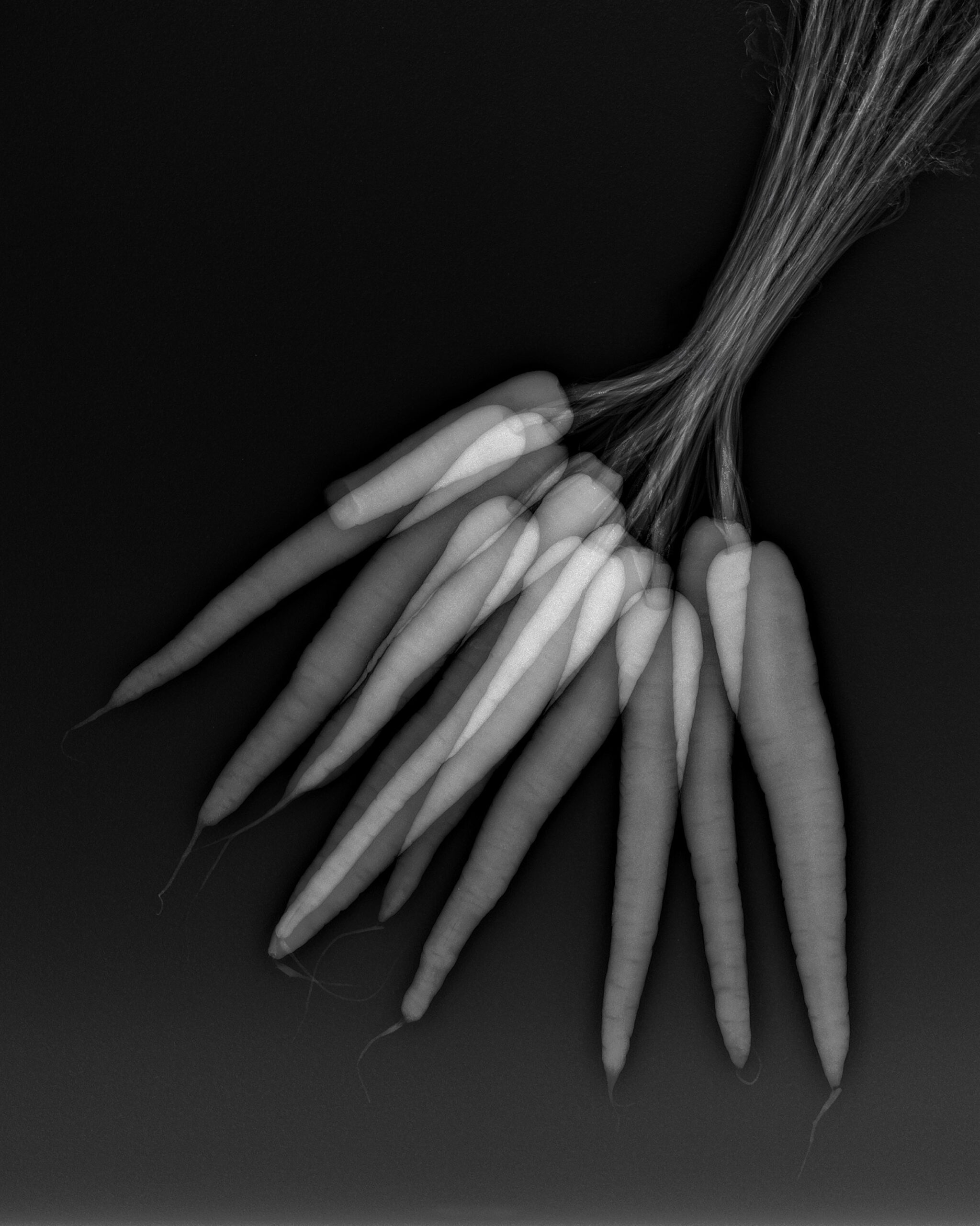
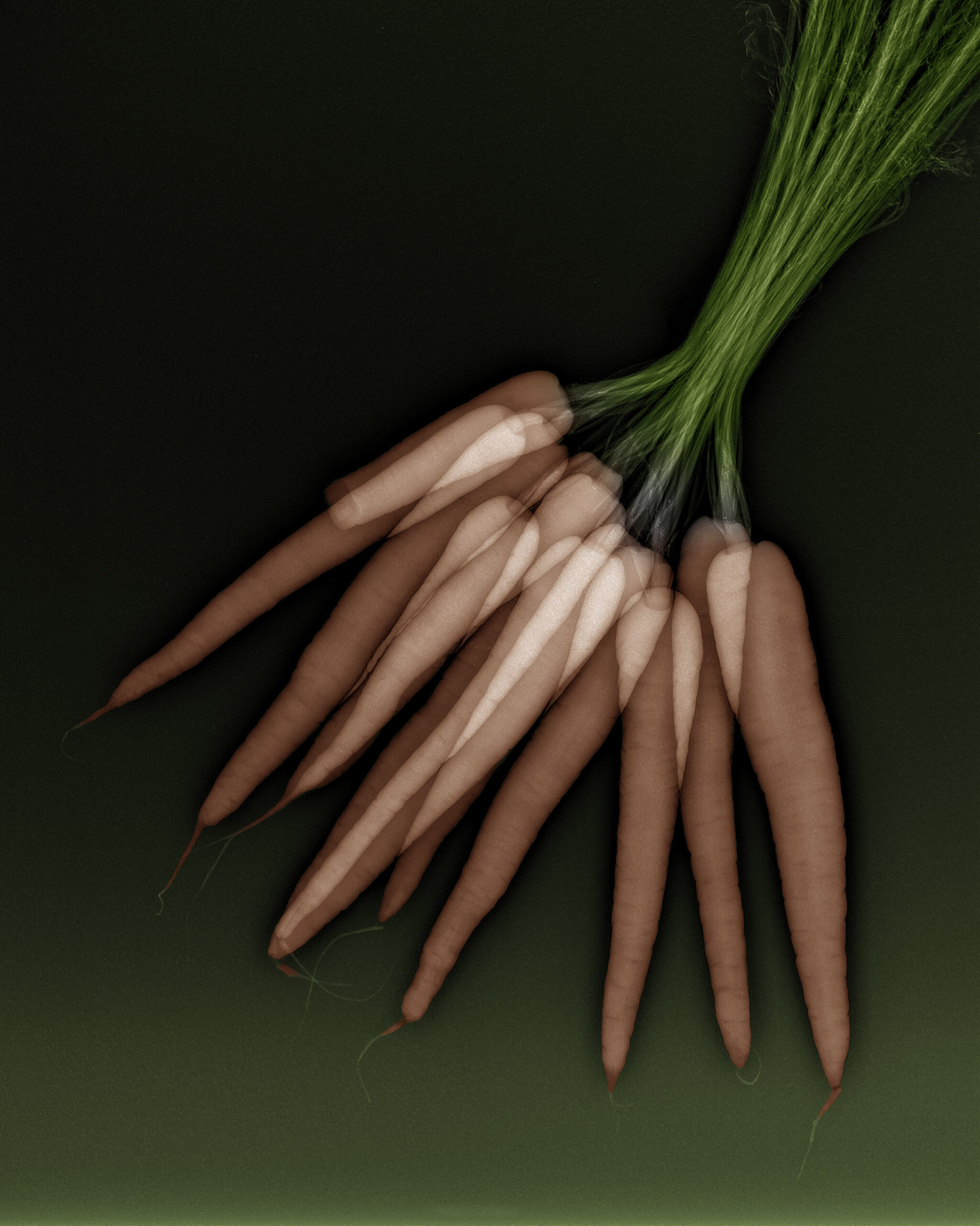
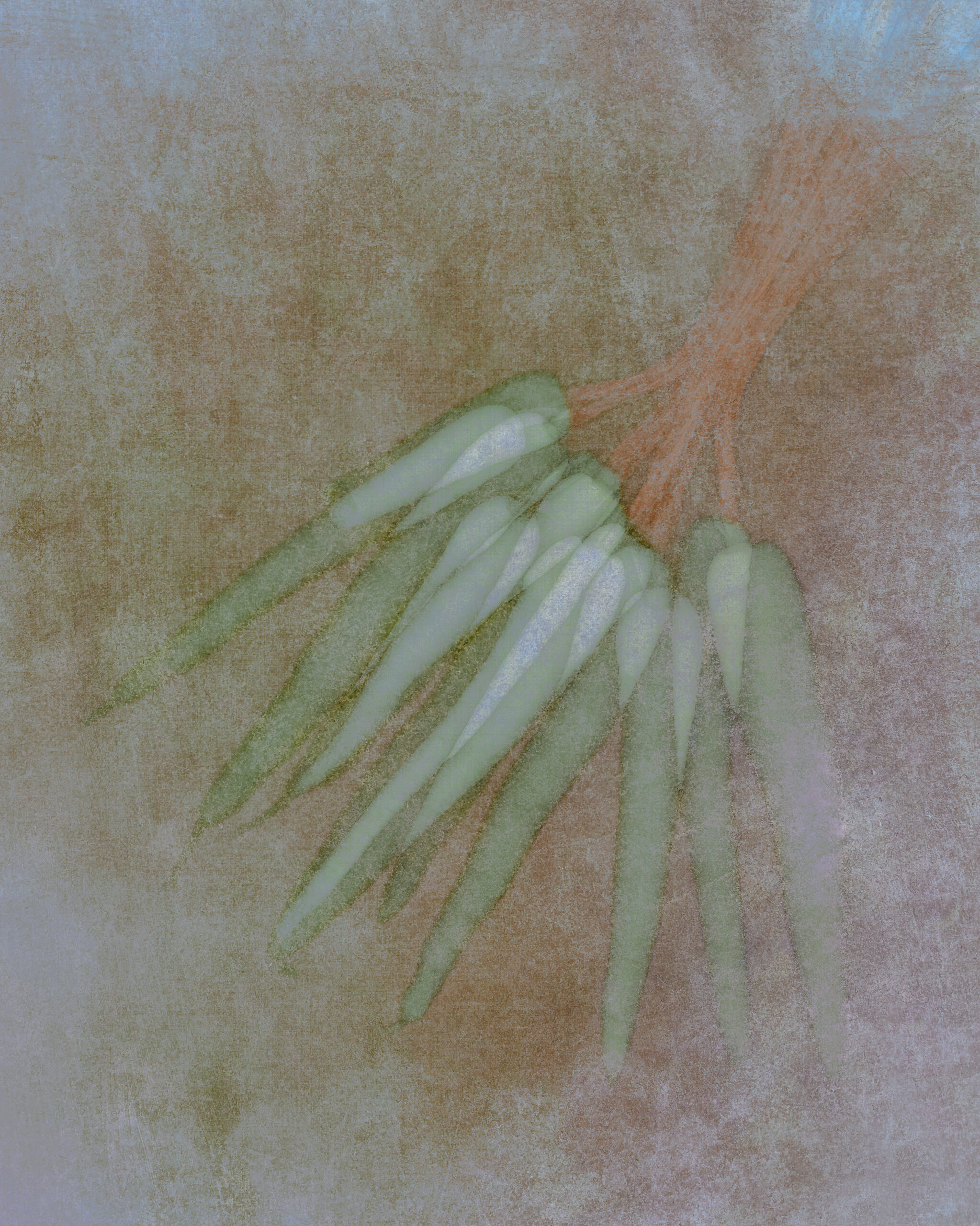
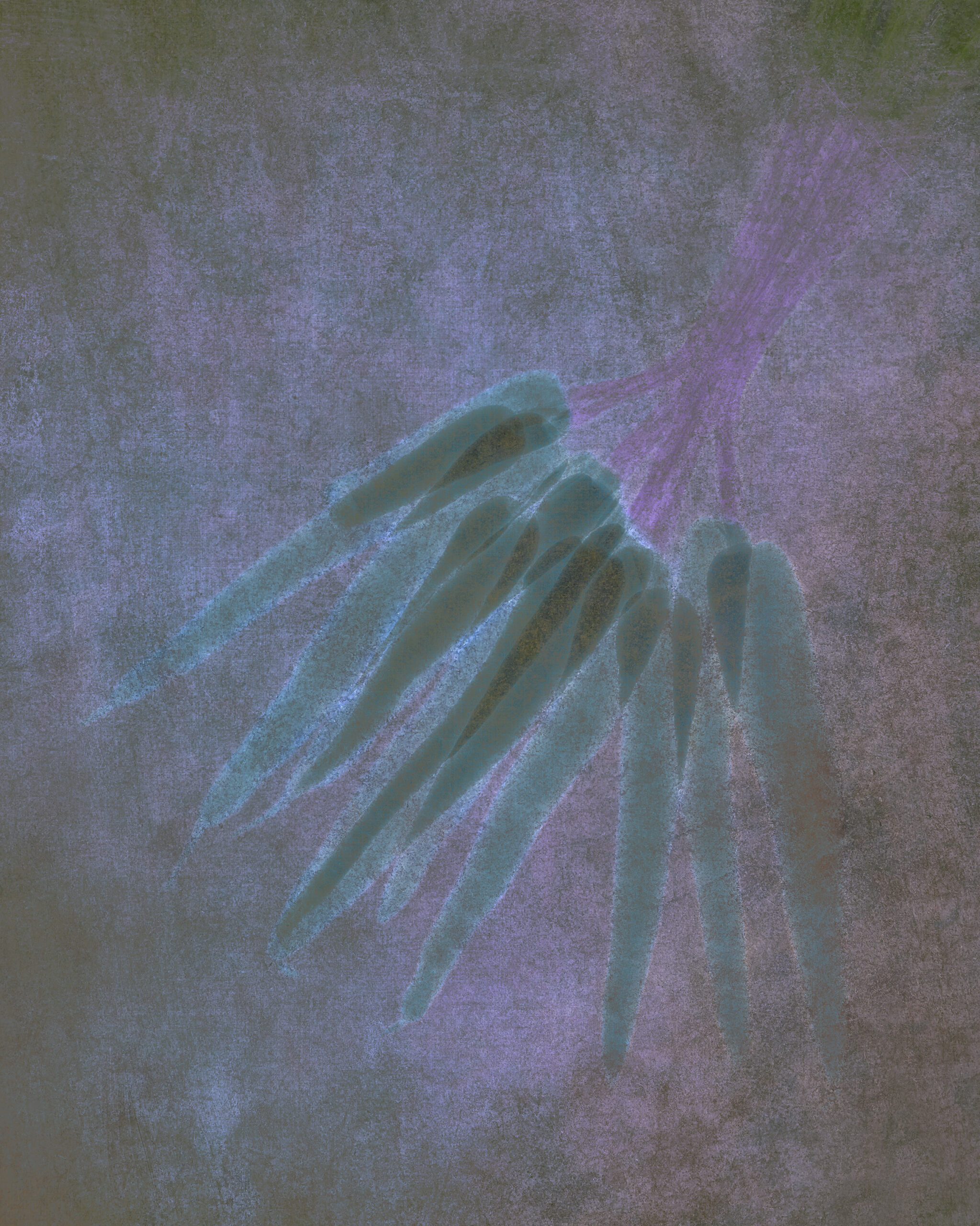
An X-ray image of carrots shows coarse roots with few differences or interesting details. When the carrots are stacked, irregular overlaps appear, revealing areas of increased density. Using simple colouring produces a rather uninteresting image if the colours are kept close to the natural hues.
The example of a bunch of carrots probably just highlights my limited ability to use images creatively in Photoshop. That’s why I’ve included only a few examples of how to take this colouring technique further.
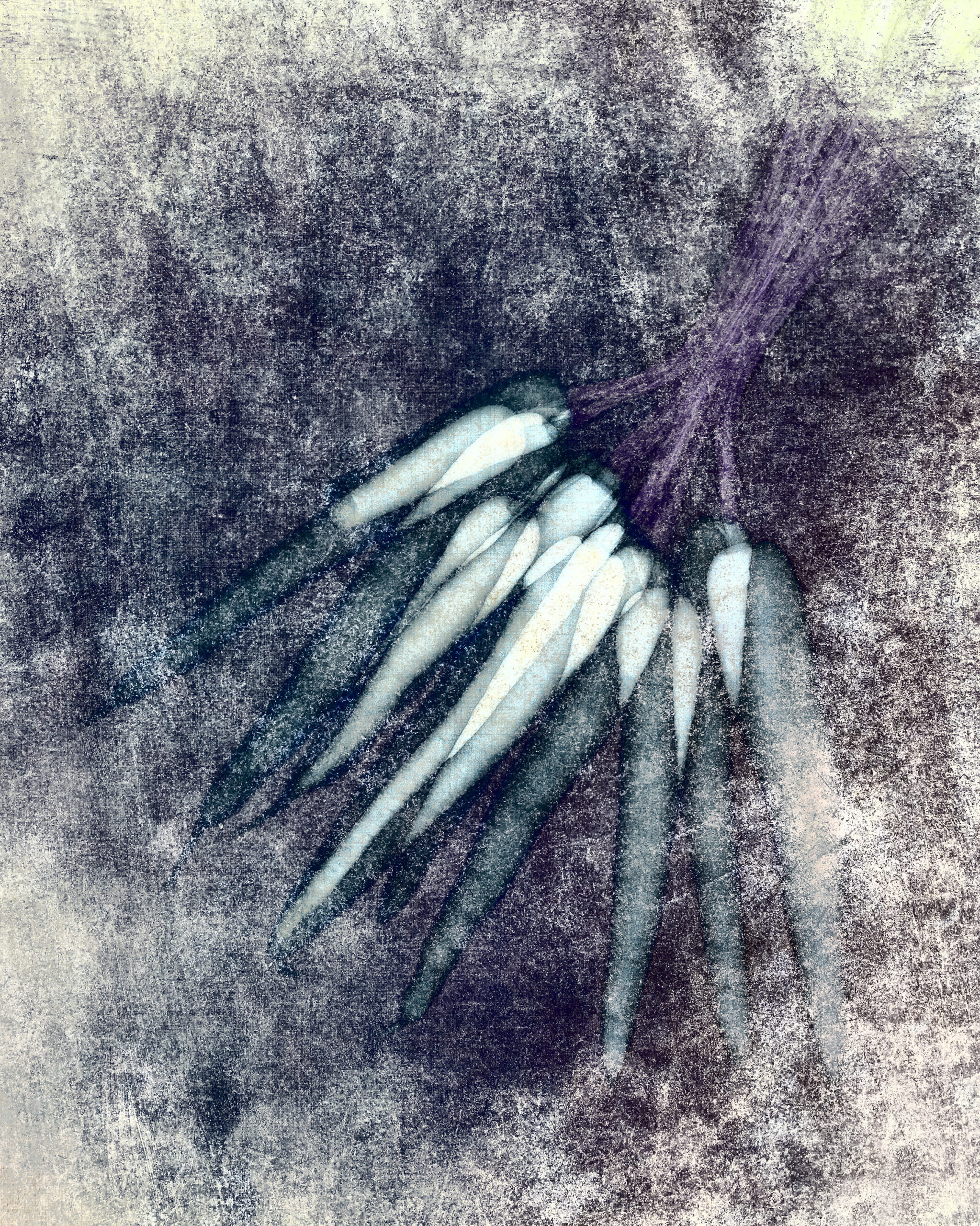
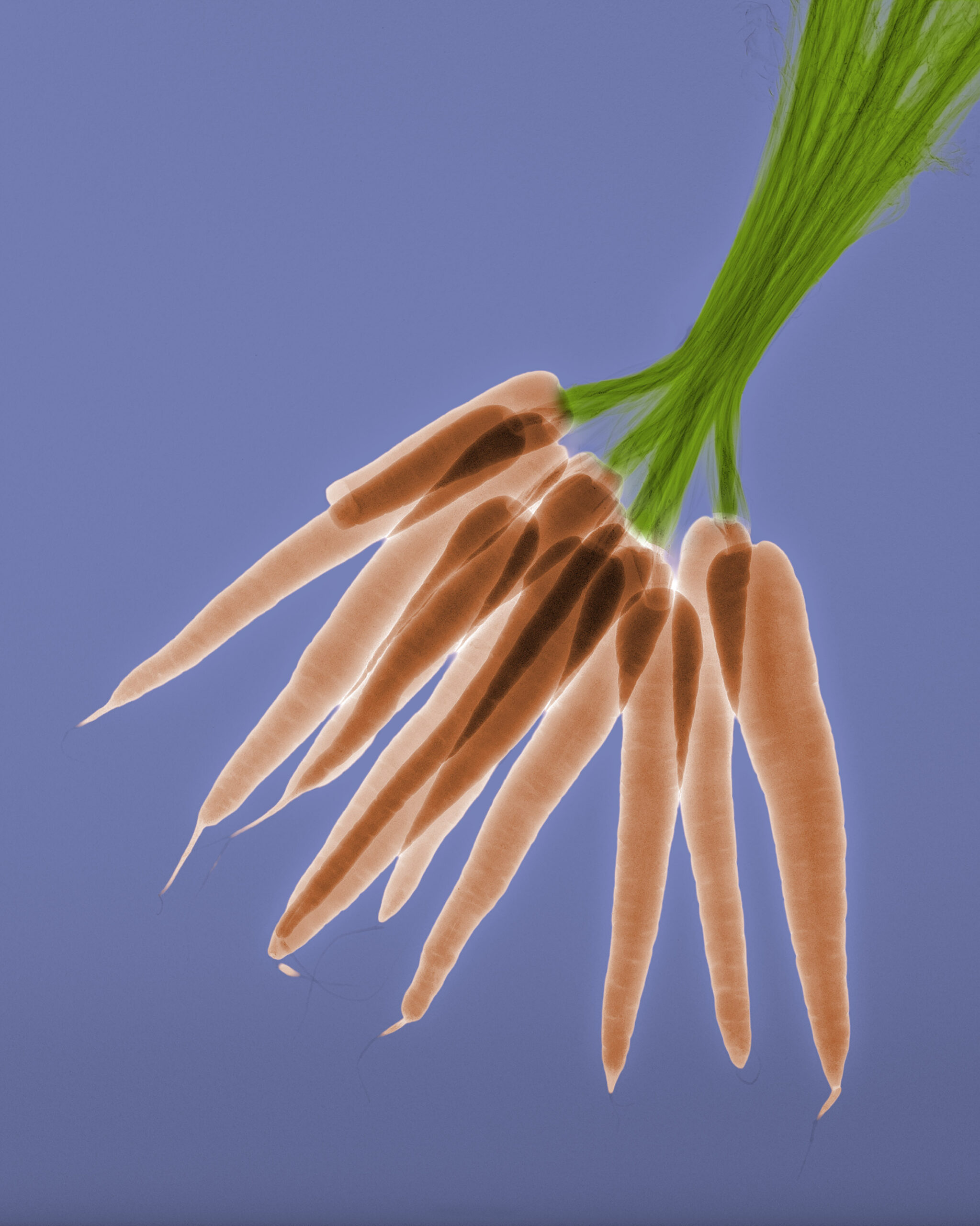
In the image on the left, I’ve used textures and increased contrast. This makes the overall image look quite different from the original – in particular, it appears very restless. In the image on the right, I’ve used colour contrasts to create a look reminiscent of Pop Art.
The Lab colour space overcomes some of the limitations of the RGB colour space. In particular, it is relatively easy to alter or invert the brightness alone without changing the colours. Using this technique, one can create images that appear unusual yet retain a sense of naturalism (left-hand image). Alternatively, one can produce a bold, colourful look with the appeal of an X-ray image (right-hand image).
Julian Köpke
I like to make things visible the naked eye isn't able to see. That's part of my profession as a radiologist, too.