-
Varieties of fusion images using X-ray
Images produced using visible light and X-rays could not be more different. And not just because of varying the subject. The fusion of these two techniques already makes it possible to present the same source material in vastly different ways.
When I began developing this technique, I drew inspiration from a method of photographing flowers transparently, as practised and published by Harold Davis. My focus was on transparent flower photography and the ability of X-rays to penetrate objects seemingly without resistance.
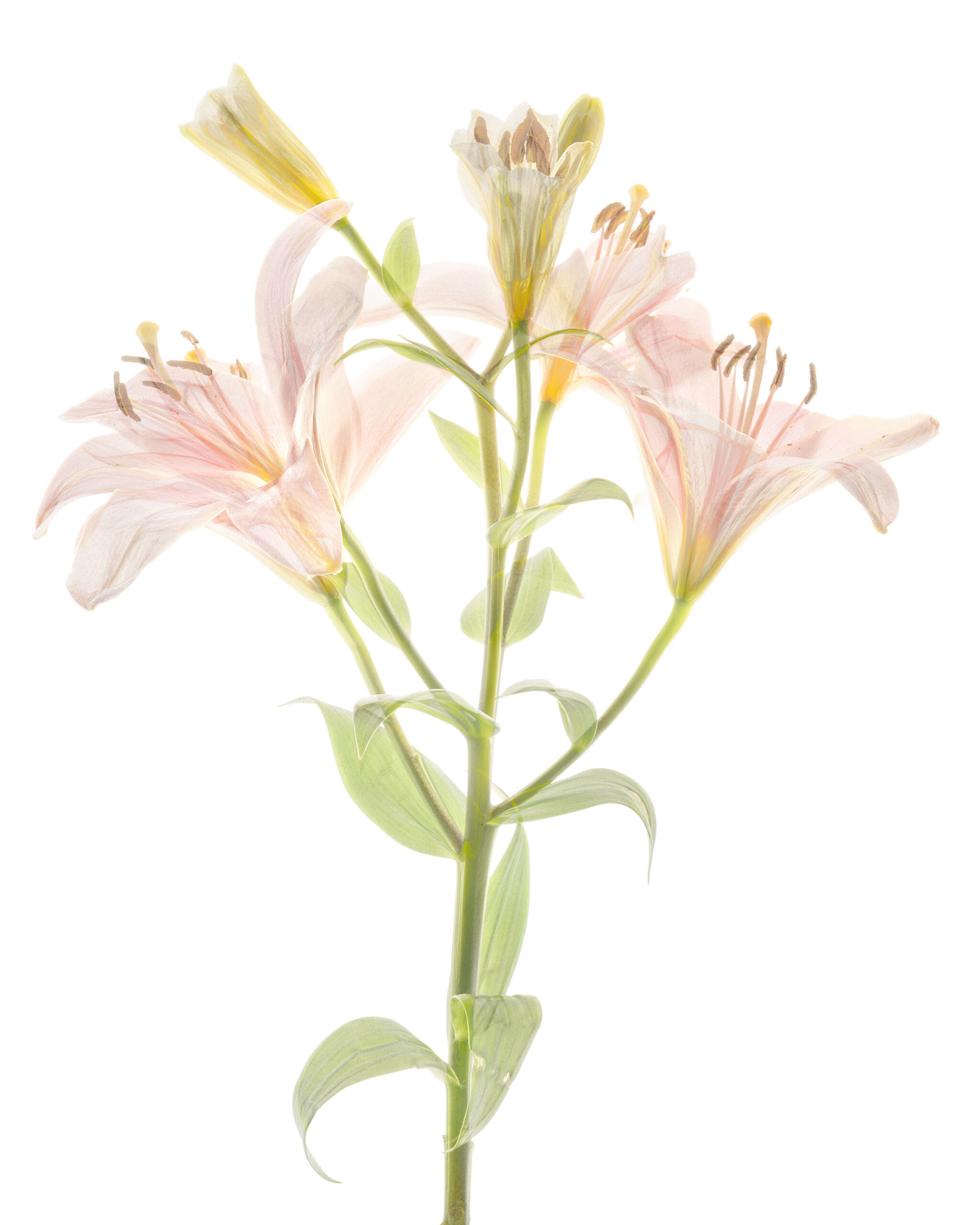
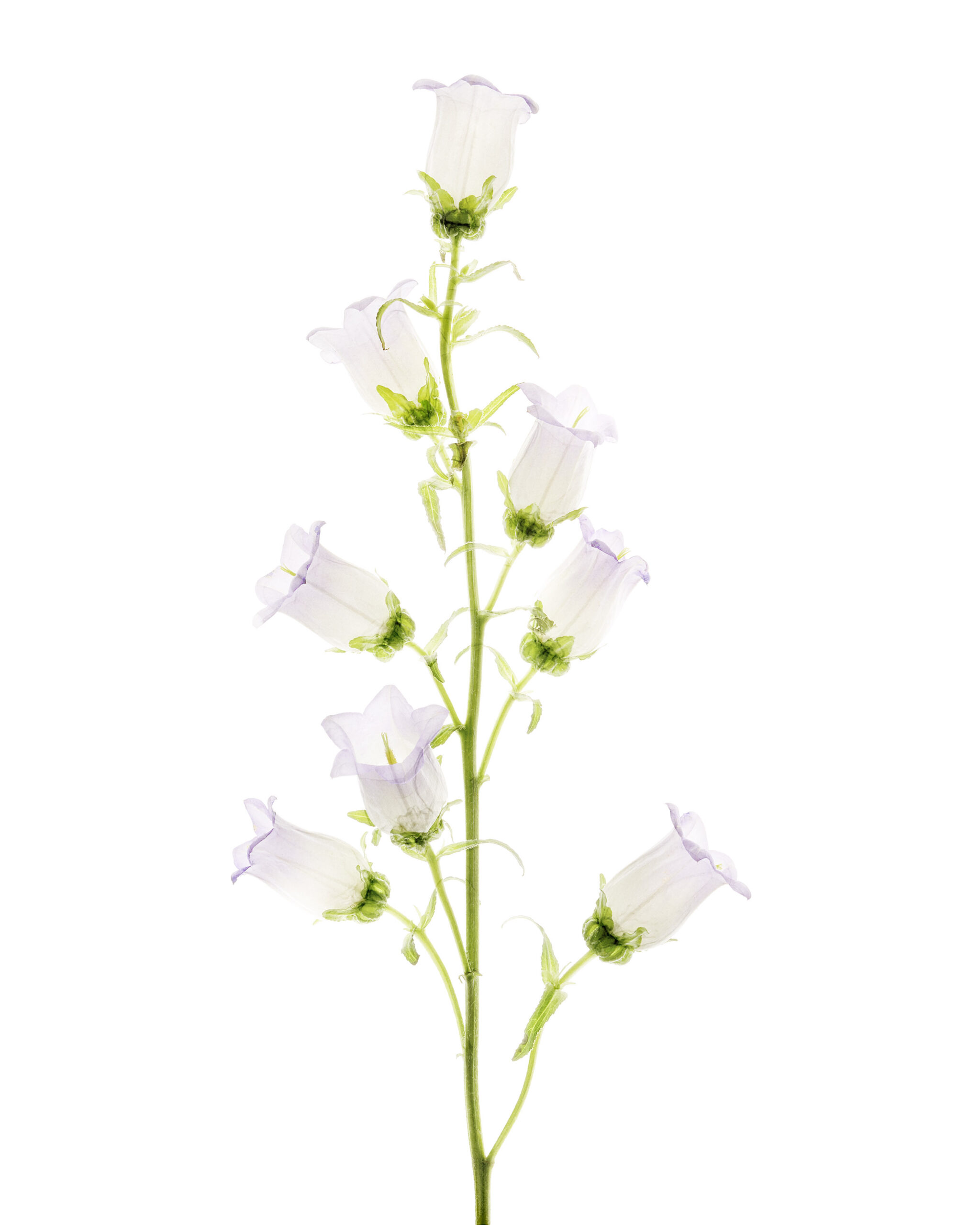
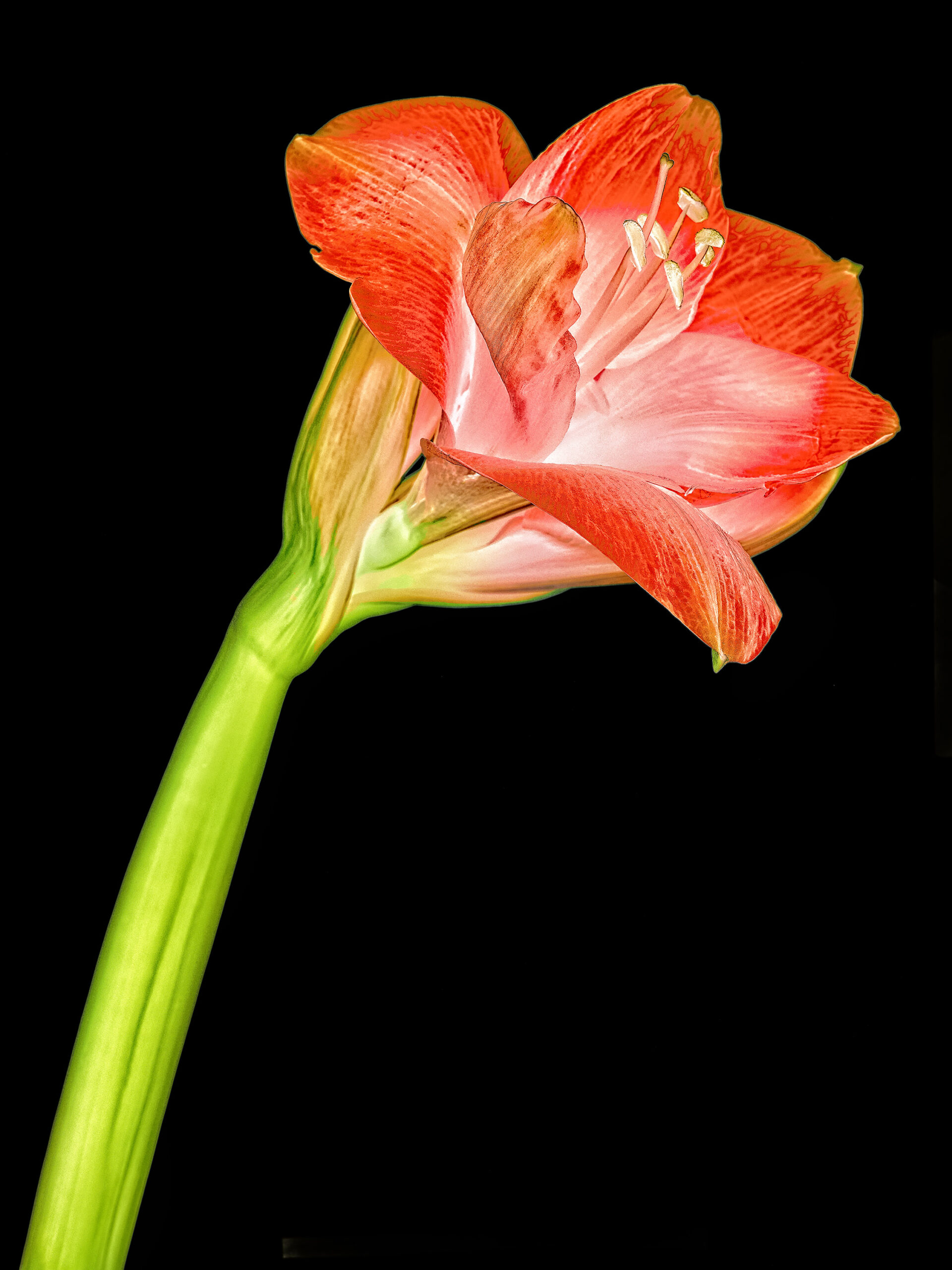
In the case of the flowers, the fusion of the X-ray image and the photograph reveals the translucency inherent in the photographic process and, moreover, conveys a delicacy—one might almost say a fragility—of the subject.
Using only the approach to depicting flowers derived from photography and the work of Harold Davis, fusion imaging can create a small universe. The fusion of the two types of radiation in the image is by no means straightforward and also depends on the object being imaged.
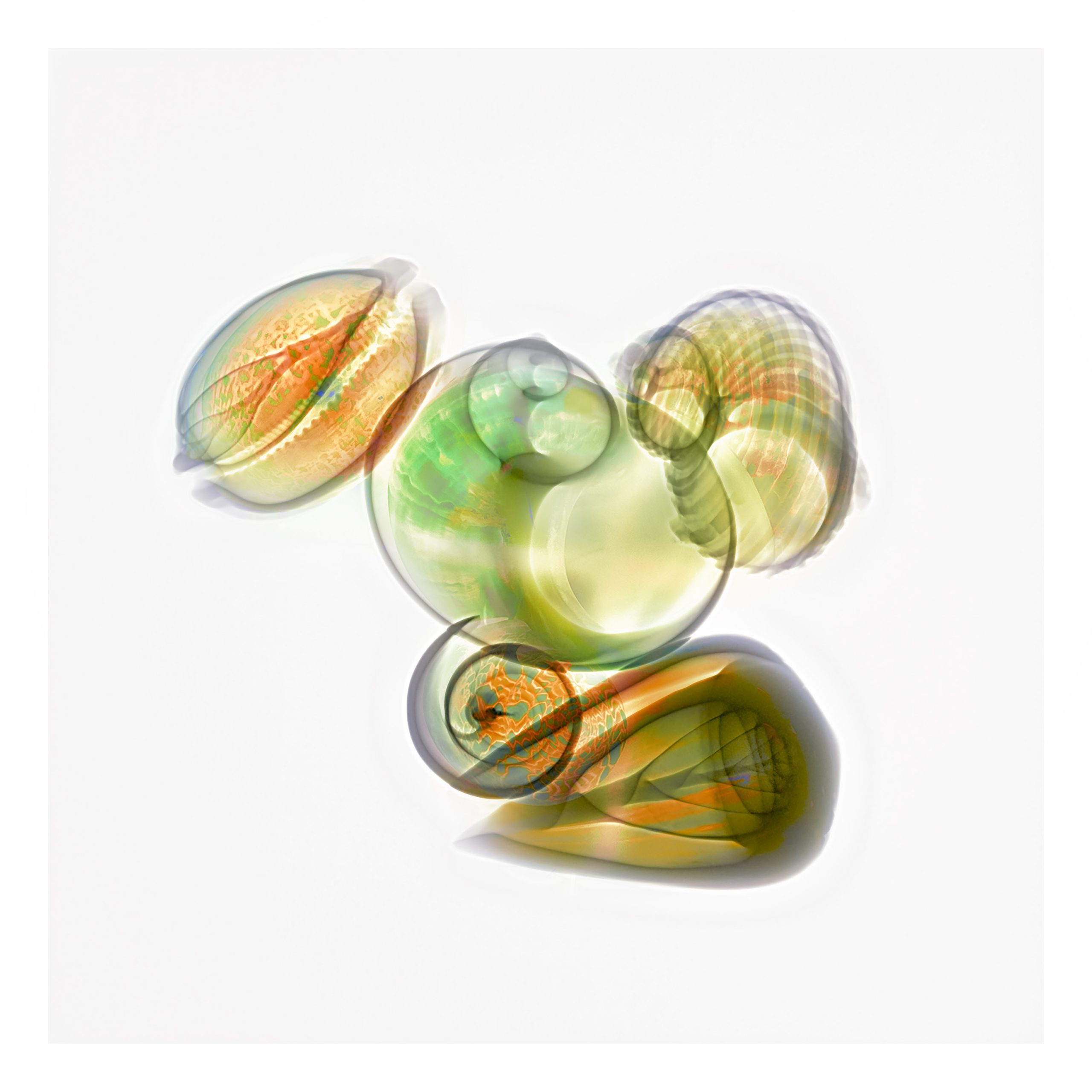
As well as flowers, there are interesting structures that never appear transparent or delicate in ordinary light. Nevertheless, they are well worth a closer look. Take, for example, the shells of snails or mussels. Under X-ray light, these become particularly striking. From the very beginning, I have also experimented with fusion imaging on these objects.
In this context, it is also true that image fusion does not follow a single, clear path, but is guided by artistic criteria. X-rays and photographs can produce vastly different effects, even when depicting the same object, depending on how they are processed.
Only a transparent object can be transformed into an image that appears transparent using a lightbox. This is inherent in the nature of how these images are created using an HDR process. This limitation can be overcome to a certain extent with the aid of X-rays.
Transcending the limits of visible light is not a straightforward process. With objects that become radiographically transparent, transforming them into an interesting composition is a demanding artistic task yielding variable results with no set formula.
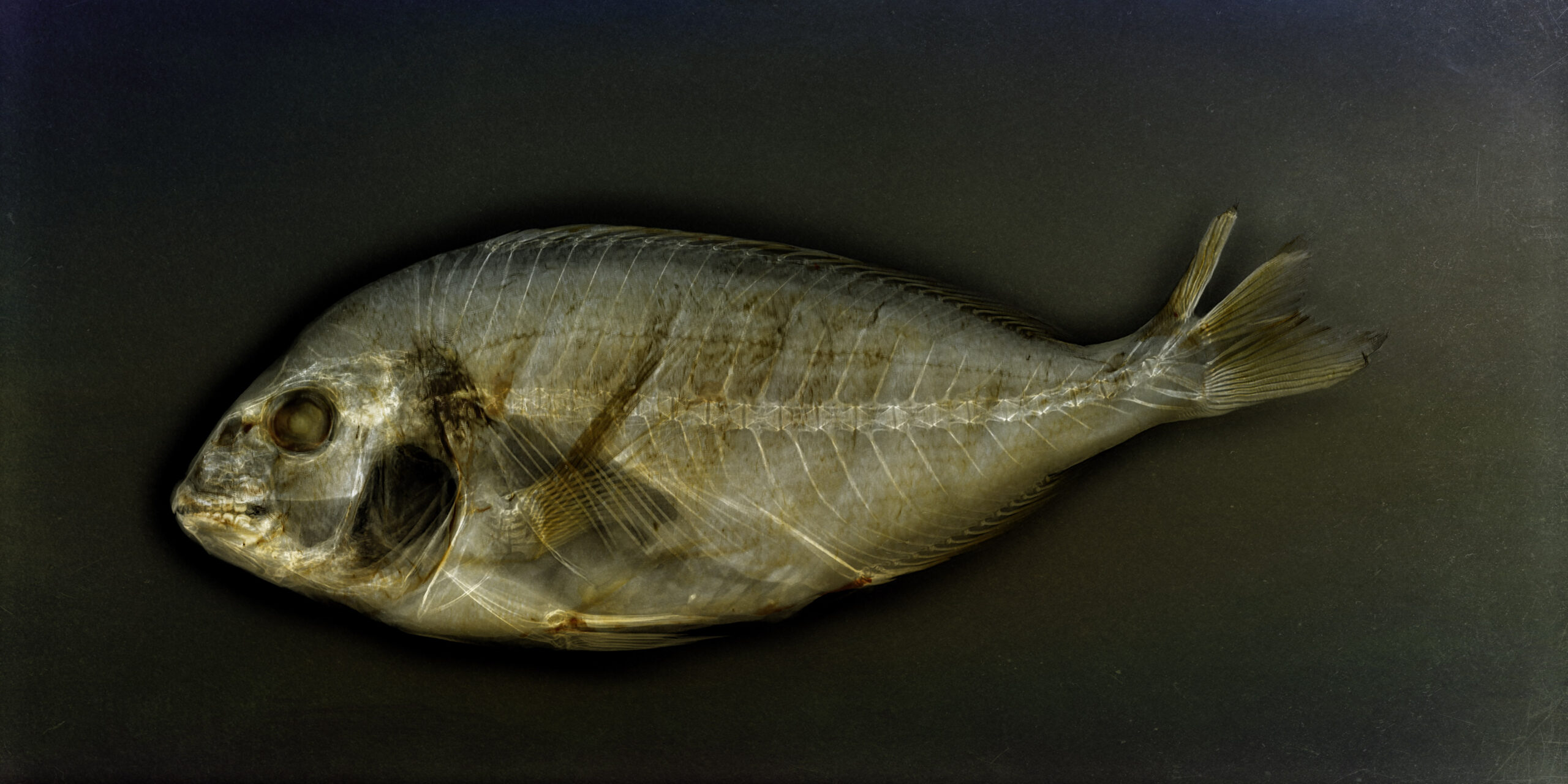
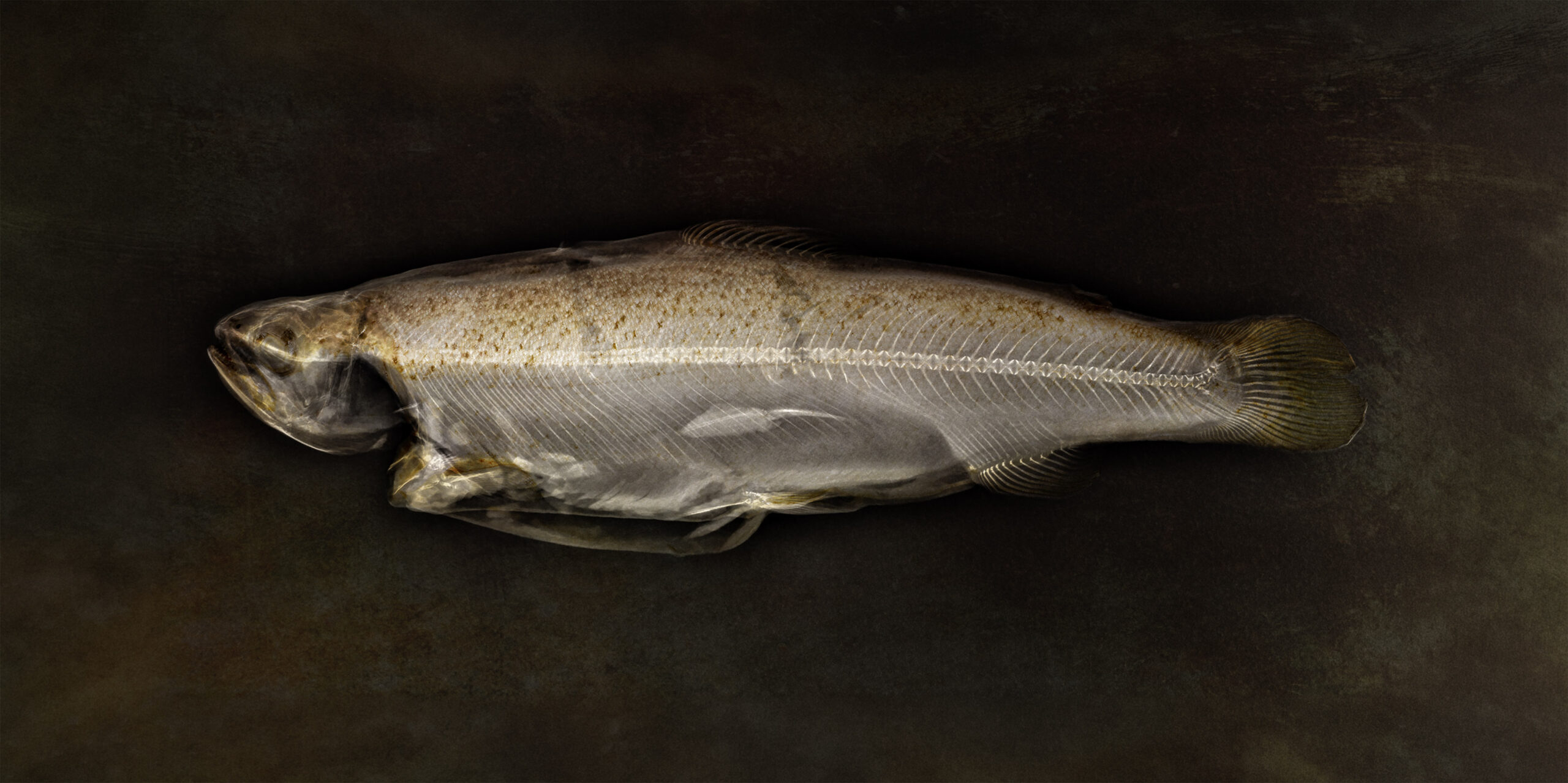
I bought these two smoked fish from a supermarket. On the left is a sea bream and on the right a trout. In this artistic fusion of photography and X-ray imagery, I added a background and some texturing. On closer inspection, you can see small tears in the muscle tissue of both fish caused by the drying out that occurs during the smoking process.
Fusion images can be created using objects that are not themselves transparent. They are visually appealing as a result of the artistic process and can sometimes even be surprising. There is no set method for creating a fusion image; instead, the approach is guided by the subject matter, the characteristics of the object being depicted, and the overall visual effect.
-
Transparencies
HDR photography of flowers with a light box creates the illusion of translucency, which is very attractive in itself. By fusing X-ray light and visible light in flower photography, one expands the photographic possibilities by reproducing the inner structures of the photographed plants or objects. The illusion of translucence is enhanced by the physical transparency of X-ray light. Even photographically non-transparent objects can be given the illusion of transparency by fusing X-ray light and visible light.
A publication by the dPunkt publishing house in „foto espresso“ gave me the opportunity to present this idea in the May 2023 issue.
-
Lilies of the Valley
Yesterday I came across a piece of music through a noble advertising trailer of a French watch company with the wonderful actors Catherine Deneuve and Rami Malek directed by Guy Ritchie. I was almost magically drawn to the film because there was a time when I lived in Paris.
But the most exciting thing was the soundtrack „Lilies of The Valley“, which exuded such an incredible lightness. I hadn’t heard of the composer Jun Myiake before, but I did know Arto Lindsay, who added his inimitable vocals. Perhaps one cannot leave the cosmos of one’s own taste.
That’s why I quickly set off to get some lilies in town. They were to be white lilies, of which I could only get two. Red lilies in all stages of blossoming I then allowed myself to enjoy. So I took some pictures with a mixed bouquet of paradisiacal blooming lilies. -
Spring Dance of Tulips
Today the sun shone warmly, almost too warm for a day in mid-February. A few tulips given as gifts were getting older in the vase and one started to hang its head. They had delighted us with their colourfulness for many days.
So I decided to do a photo series with tulips on my lightbox.
Tulips are best suited for scenic representations because they look like a human person against a light background. Dance is the most obvious association I have then. The leaves become whirling arms. The flower is the head. The legs are not really needed.
If the tulips lie close together, you get the impression of a tapestry. The light from the lightbox penetrates well enough to create an airy effect.
Here they show themselves in a formation like a dance group.
-
Amaryllis
The format for recording an image can be very variable when fusion imaging is involved. In the example below, the image on the left is taken with a Phase One IQ4. The sensor size is 44mm x 55mm. The X-ray image on the right was taken with a Hologic mammography system with a detector size of 24cm x 30cm. The aspect ratio of both images is 4:5. The pixel size of the IQ4 is 6.5µm, the pixel of the mammography is 70µm long. Nevertheless, the images can be fused well.
I added some texture to the fusion image because it made it more appealing. Due to the fusion of the image from „visible light“ and the image with „X-ray light“, the definition of whether it is a medium format image or a large format image is no longer meaningfully applicable. It is simply an image.
-
White and purple orchid
My LED ceiling light, which I use as a light box for flower photography, can be dimmed and the color temperature is adjustable. The cold and extremely bright light can be tamed and turned into faint, warm light. Together with my tent of linen, I manage to control the light.
With LiveView, the composition is created and the focus is worked out. The camera is controlled by cable connection via laptop (tethered shooting) and the recordings are made with mirror triggering. The colors become better and the impression of the picture more natural and vivid. -
Amaryllis
I’ve been experimenting with macro shots or portraits that have a black background. For this I reduce the roomlight with the help of the electric shutters, the exposure time and the ISO value are increased. To improve the quality of the shots, I also used the method of frame averaging to get the RAW image with a single shot and sufficient quality.
Yesterday I was able to admire my friend Harold in a tutorial how he created LowKey HDR macro photographs using an exposure series from -4 EV to 0 EV. I tried all paths today with my Amaryllis, which I had bought 2 days ago.The exposure series can be performed for LowKey pictures and HighKey pictures. Through the systematic under-exposure one can create a beautiful black background. The use of a surface spotlight creates transparencies with HighKey effect.
The LED lightbox can be placed vertically on the wall. With two clamps you attach the black velvet as a background and loosen the clamp gently to create the HighKey image after switching on the lightbox.
A series of exposures with 5 shots between -4 EV and 0 EV is sufficient to capture the set in high quality.
-
Color phantasy
For the first composition today I started with cornflowers on a lightbox. I always have liked cornflowers with their typical cornflower blue. With this composition I wanted to show different stages of cornflower development in one image.
I also liked very much the yellow of a craspedia globosa that Christa bought this morning. To bring out the colors I decided to install them in my „darkroom studio„. I made the image as a frame average of some 15 exposures, 3s each at f/16 and ISO 800.
I developed a combination of colours that the garden offered me with the craspedia globosa to create this picture, in which red, blue, yellow and green play a leading role.
-
Callas and pink fern leave
For a short time the winter kept us still. Nature offers many motifs, the effect of which depends on the time of the day.
Shortly after, the snow has said goodbye to us. Still very, very cold cloudless nights, more and more often glorious sunny days let you catch your breath.
Yesterday I came across Calla lilies and rosé-fixed fern at the florists’s. „Expensive“, she told me. But I was already determined wether the many possibilities I had in mind.
Through a chemical process, the fern has received a fixation and new color. That would make it durable for many compositions ….
The next day, I combined the callas and the fern to a single composition. With a background the image looks soft and dreamy. This texture puts a kind of patina over the image.
-
Alstromeria
With daylight and a lightbox I took the cut off flower of an Alstromeria. With the lens I’m able to approach the bloom on approximately 20 cm. The blossom then fills almost the entire sensory. The ratio of the mapping is thus approximately 1:1.
The quality of the RAW images is convincing in itself. The creation of the finished HDR takes place in a combination of manual and automated steps.
RAW conversion is done using CaptureOne, HDR processing is done manually in Photoshop. Further, I generated two automated HDR developments using HDR Efex Pro 2 and Photomatix Pro 6 and layered them in. Some of the original color is transferred from the daylight image with the lightbox switched off.