-
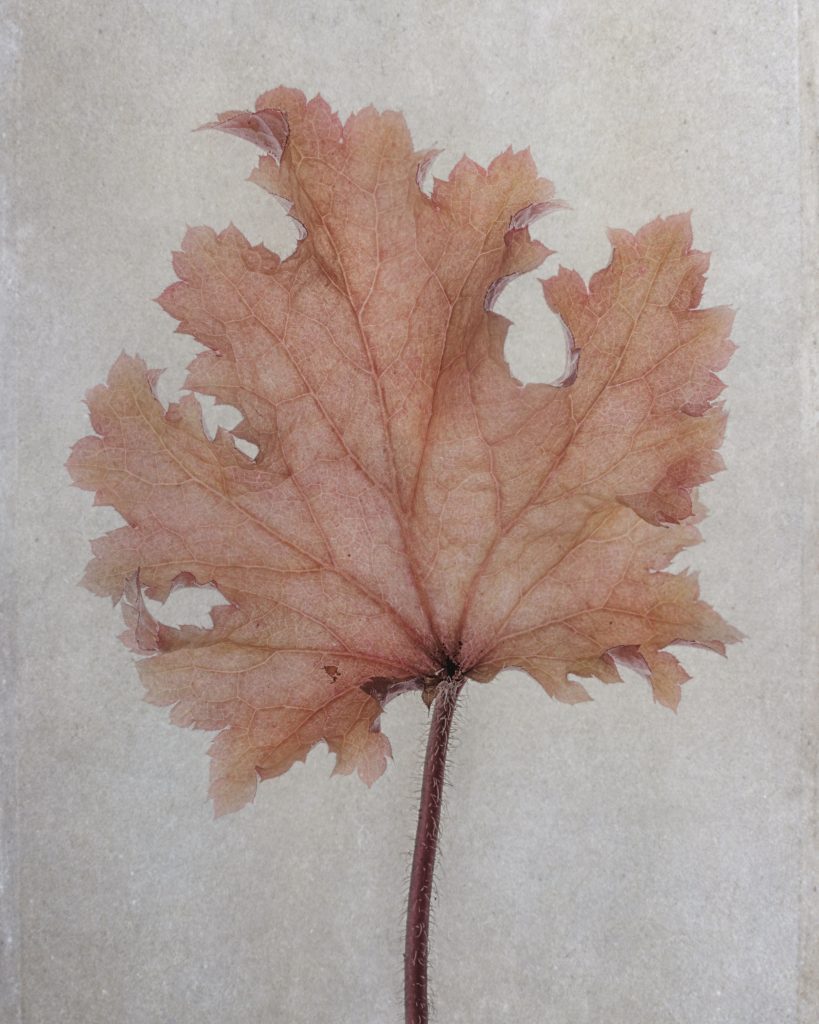
Heucheria leaf on a light box
So often I tried to image a Heucheria leaf. It doesn’t seem complicated. With less saturation the impression of a water color image emerges of a single leaf.
Going on with my Blossfeldt studies I need a background for this image. An image with background exerts a special charm. A paper structure fits well.
Only the conversion to black and white comes closer to the impression of a Blossfeldt macro.
-
Orchid X-ray fusion photo
It feels like very long ago. Harold and I were taking the shots and X-rays of new compositions last week of April this year. Our first try was an orchid with two stems. The transparency effect is very much augmented using an X-ray. A stem behind petals doesn’t show easily in HDR light box photography.
With a Phase One camera at my disposal a strong crop of the composition shows the tenderness of our orchid much better. With a resolution still sufficient.
-
Purple Clematis
Clematis is a reliably blossoming flower in our garden. Every year we look forward to her blooms for many weeks. Photographing flowers means sacrificing beautiful little things. It took me some time to go there.
With growing experience I feel less pain to sacrifice a bloom for artistic purposes. It relieves me a little, that I have the blooms swum after my photo and X-ray sessions in a soup-plate filled with water which is in the kitchen. Many people like the floating blooms in a soup-plate, if they are in a break.
The HDR series of my composition with three clematis gave me a hard time. Although a tripod is indispensable and always used, a small pixel shift between exposures was perceivable. After fixing this, light, color and structure was processed for an HDR image.
The X-ray of the three clematis was performed as mammography due to the size of my composition. The fusion image can be understood as a texturized HDR by means of a radiograph. But there is no unique solution to all compositions. The best solution has to be found out individually.
After all, the clematis look as light as a feather in this image. It was worth it.
-
Spring and X-ray fusion photos
First flowers in spring show up. With much support from my colleagues I’m able to do some fusion images. We all would like to have another calendar.
Preparing the lightbox, the X-ray machines, my camera and picking out the data is a bunch of hassle.
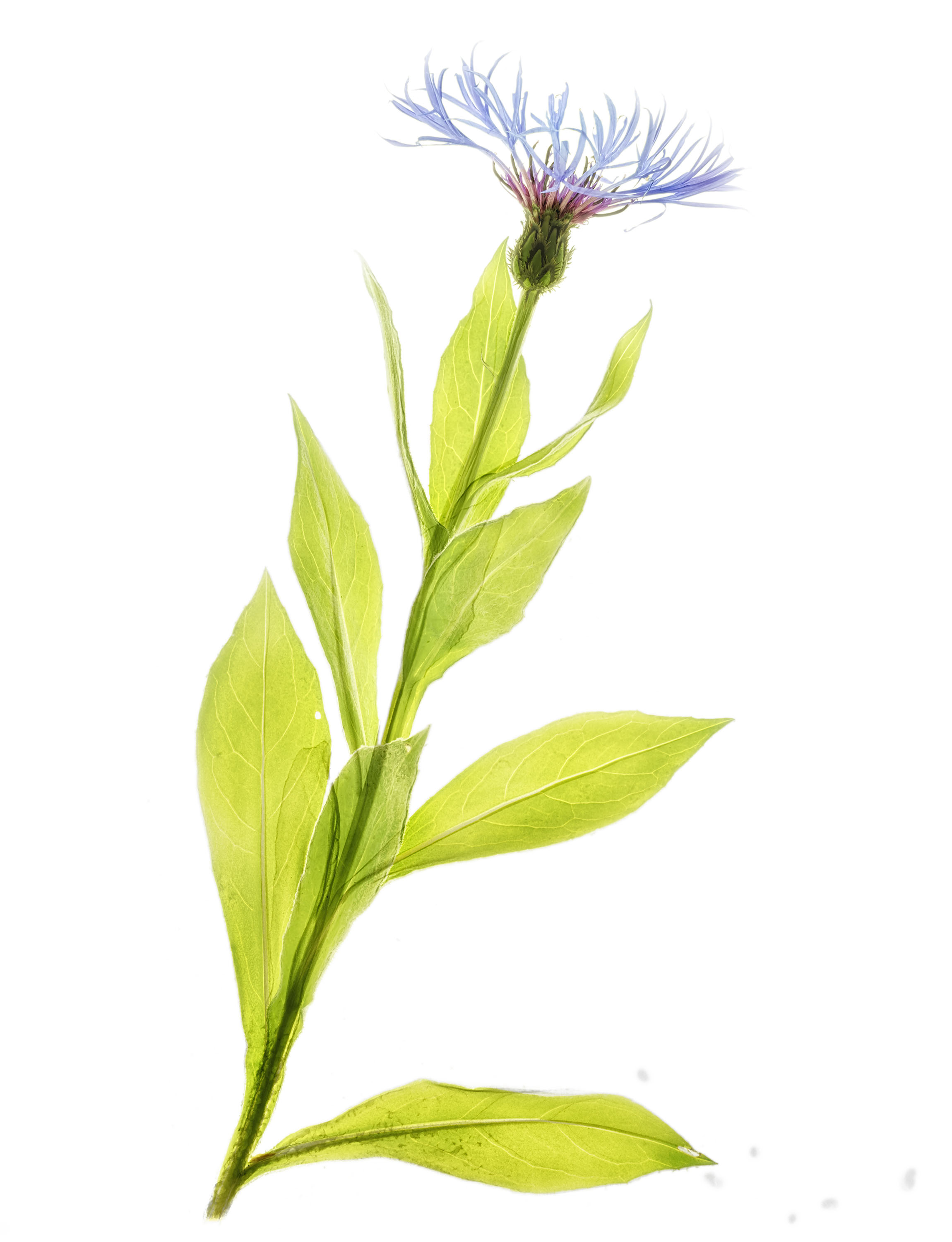
My personal favorite is the blue cornflower. It looks like a print of an old botanic book:
The next day I turned my attention to our white and blue Aquilegias. No chance to process the raw data yesterday. Eventually, there was a chance today, after quite a bit of tedious work at my desk:
-
X-ray fusion photo of a Nautilus
Fusion imaging can be done retrospective. My split Nautilus shell on a light box rendered with manual HDR shows already a nice structure of the inner parts.
The X-ray obtained a couple of days earlier easily fits onto the HDR with not a big deal of processing.
The meaning of the fusion image may be different to the flowers. But it’s feasible to do it retrospectively.
-
Primroses
I felt very much attracted by these primroses. They were close to purple and red and I could see them already as a beautiful print.
But how photographing them on a lightbox ? They always toppled over. Many efforts were useless. Blossoms tend to move, always.
On this photograph I put the blossoms top-down. Because any arrangement could be done then. It works !
A different color show the orange primroses. Composition with or without leaves ? Without gives more the impression of a painting.
-
Three vetches
X-ray images give an insight into the inner (or hidden) structure of a flower. HDR images on a light box are quite close to this.
Today I wanted to show the softness of petals and went to my dealer. She sold me three vetches, not really expensive for the purpose.
This is my third composition today of the three vetches on my lightbox. The play of the light in the petals resembles to some extent X-ray images.
-
End of wintertime
Our weather is more and more weird. Today was the second day with a warm sun and a blue sky. Nights are getting pretty cold, days up to 25 degrees Celsius.
Cleaning up our garden led us to some old physalis which were a little more than a skeleton. In autumn these fruits look like lanterns, now they resemble an X-ray.
I did this shot on a lightbox using manual HDR technique.In Lab color mode I obtained this image with a pur black background.
It’s an exoskeleton for the fruit inside which remains that way without bruises.
-
Mediterranean creatures on a lightbox
Today I put some tests on my cretean purchases from last September to evaluate their potential of being subject to fusion imaging. I bought three Nautilus shells and two sea snails, holding them in the store against the sun to check their transparency. My untidy studio accommodated these precious stones under quite a bunch of something.
The best representation is with a black background, i.e. with inverted L-channel in Lab colors. With a black background a soft shining light appears in the objects.
This snail has a shape a triangle and resembles a bear claw or an Apollo capsule in the late Sixties. The translucency is very little.
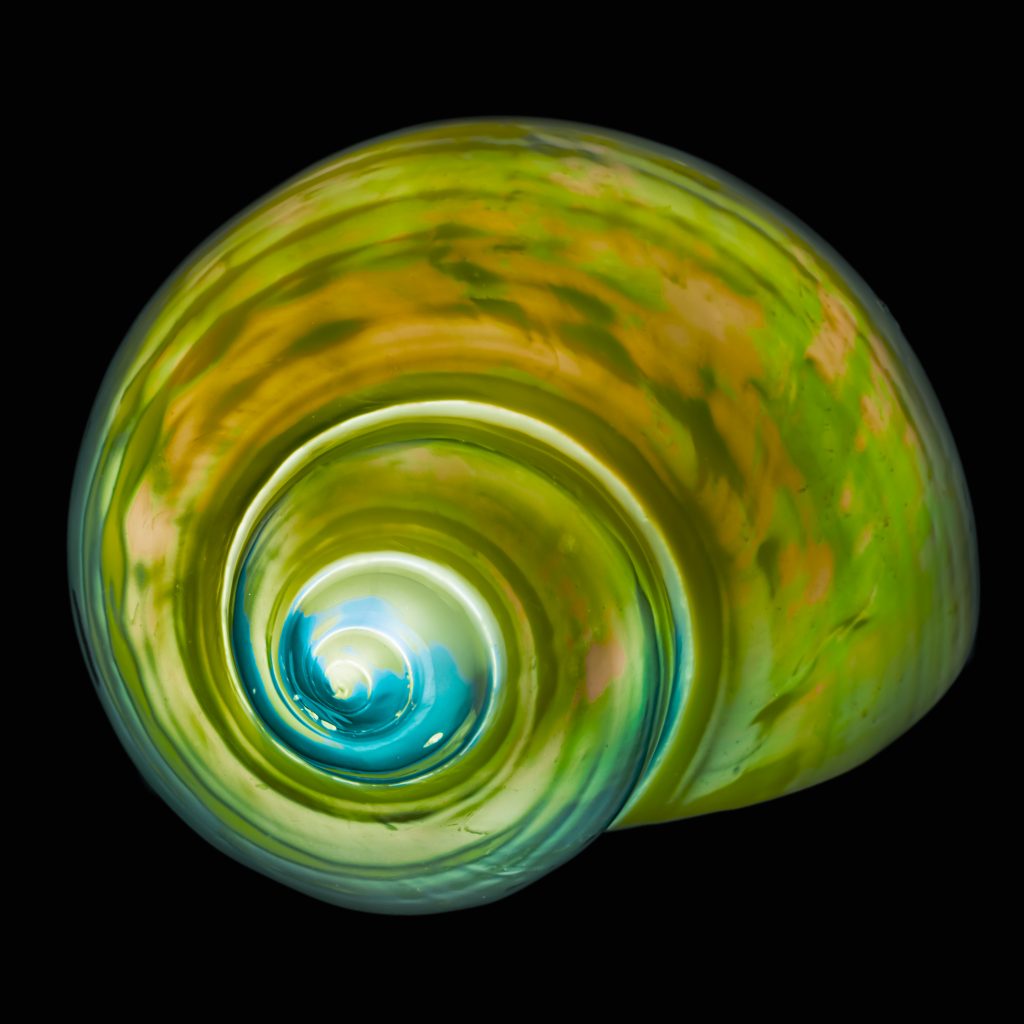
The following snail has a classic shape. With the black background it resembles a galaxy in outer space.
My first attempt with the Nautilus shells led me to a copper-like color representation with a single shot image. Lab colors is the key to this color and light distribution. Very attractive is the fact of two shells turning right and one left. Why did I wait so long to make this image ? Why do we miss important opportunities ?