Cranes have always fascinated me. When I was a little boy, I could watch her work for hours. When I arrived at the garden exhibition in Heilbronn, I initially only had eyes for the two harbour cranes that were unloading the cargo of sand from a ship.
The old cranes look historic, but were still in service. I especially liked their green and yellow and the many ropes with which the shovel from the boom reached into the ship to pack the goods.
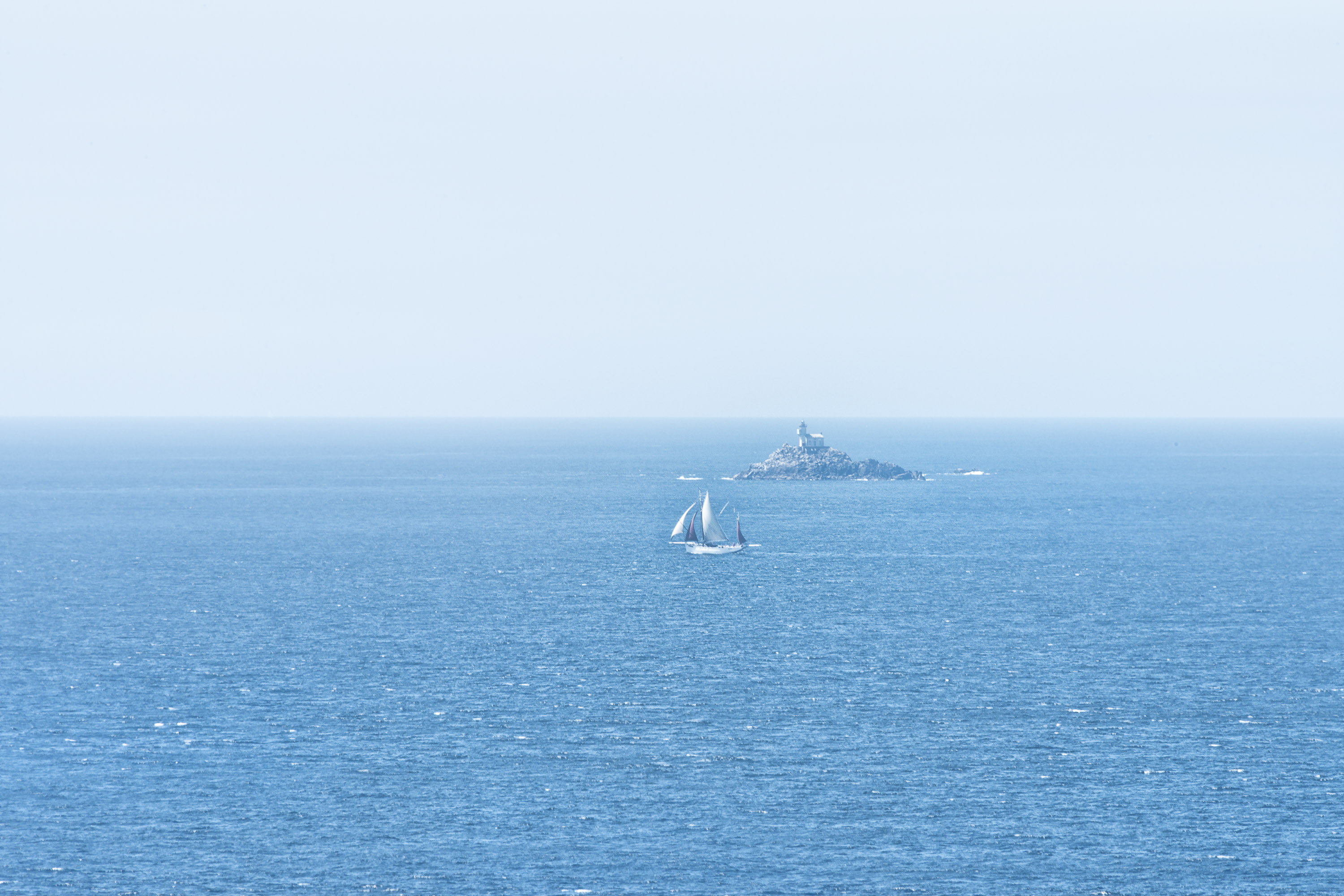
On a ball there is no such thing like an end or a beginning. Before the discovery of America the region we traveled to today was called „End of the world“ or „Finistère“ in French. The Atlantic Ocean shows its wild side here.
On our way from Camaret-sur-Mer to Pointe du Raz we came through many old villages of Brittany. St. Nic is such a place, where you can find a pretty church building.
After a short drive, first in a southerly direction and then in a westerly direction, you reach Pointe du Raz. At low tide the is a strong current in southern direction. The water is visibly swirled between the rocks. At this point, where the world ended 528 years ago, you can easily imagine a wild Ocean.
Camaret-sur-Mer is a place with a long history, which tells the former economic and military importance. Cabaret has been also the most important lobster port in France. The place is located on a peninsula of strategic importance for the security of Brest. The peninsula was therefore coveted by Great Britain and Spain in their fight against France.
The Vauban tower bears witness to France’s fight against the conquerors. I took the following image with my tripod in front an old warehouse of the former shipyard.
Every morning I photograph the rocks on the beach from our window. The atmospheric conditions change greatly whenever I look outside. The impression made by the rocks changes with the change of the atmosphere.
Since a car ride from Nantes to Caen more than 40 years ago I associate Brittany with clouds and fog. This time everything is different. The coolness of the country surrounded by the Atlantic refreshes us wonderfully after the heat wave in Heidelberg and Paris.
Traveling and painting was a great pleasure for me back then. How fantastic it is when every morning a painted landscape appears.
I love to look out of a train window. So many photo opportunities passing by – and no chance to capture one of them.
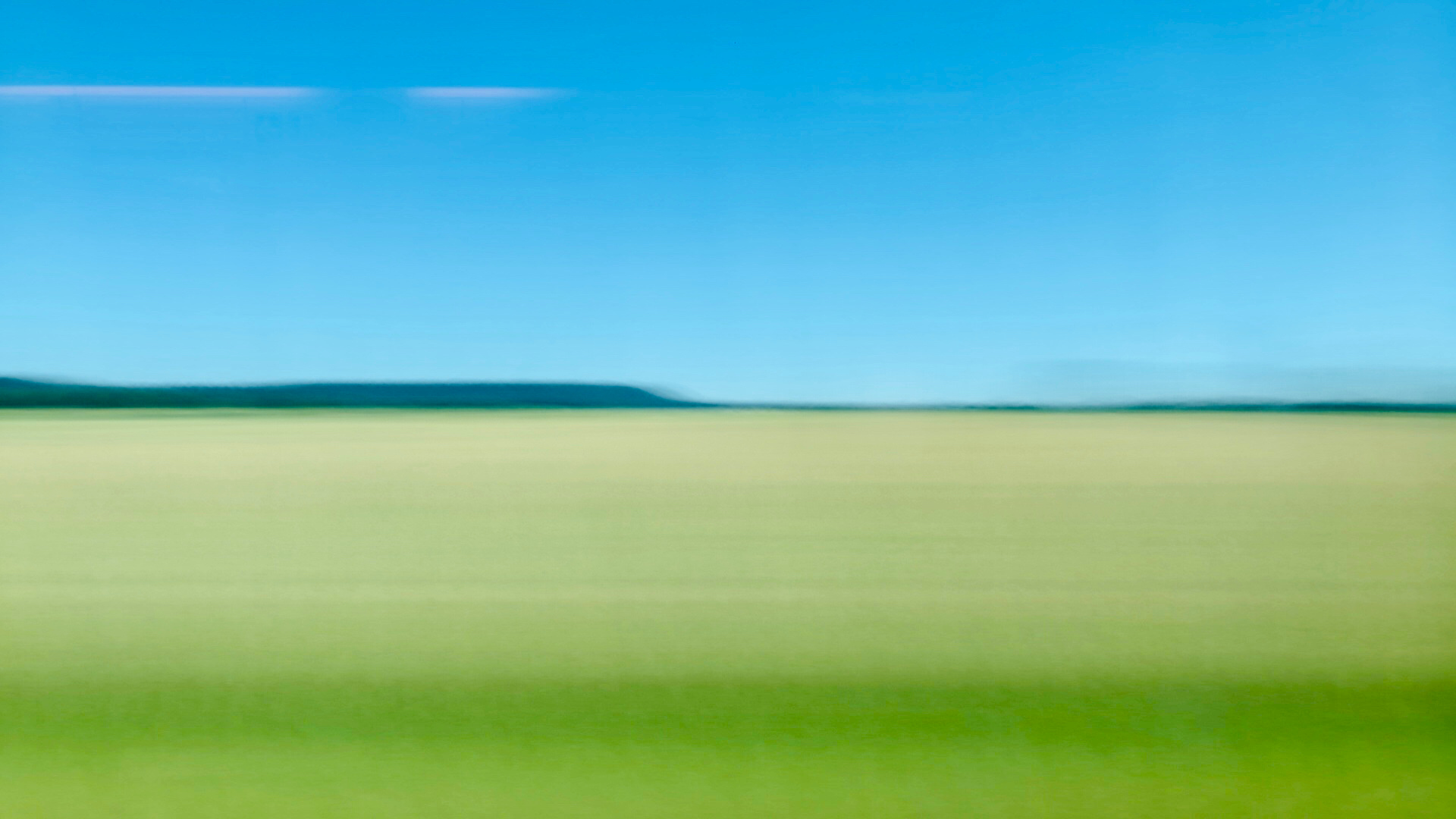
With my iPhone App „Slow Shutter“ on our way to Bretagne via Paris sitting in a TGV (train a grande vitesse) going at 300 km/h I shot this series of images. The GPS tags are approaching Paris clearly. The result is a motion blur image dominated by horizontal lines.
Oh: above 300 km/h the internet connectivity decreases its speed. What irony !
Leipzig has been a town since round about 1200. Many places were reconstructed after destruction during socialist dictatorship. The horrible blast of the Pauliner Church in 1967 lead to a beautiful and appealing reconstruction after 1989.
You never know in advance what it means to return to the place of childhood. On top of a 217m high television tower physically overlooking the years I spent near a forest in Stuttgart Gablenberg there was a feeling of returning or being at home.
A few memories to the first visit to this tower mixed with the fantastic view. My daughters had invited me to this evening as their birthday present to me. The waiter is friendly and brings us as a special exception a white tablecloth to celebrate the day. So it’s fun to get to know the carefreeness.
We enjoy delicious local food while the sun is getting lower and lower. Occasionally I feel a touch of fear of heights. Our table stands directly at the window with a view of the city.
Nevertheless, we go up to the higher viewing platforms to look and take pictures. Suddenly many other photographers appear out of nowhere and we take many pictures of the view and a spectacular sunset.
Since 1905 there is an X-ray meeting in Germany. It was the 100th time this year. Nowadays the convention takes place every year.
Besides the scientific news the convention offers the opportunity of caring for personal contacts. It is part of the beautiful things of the convention to meet old acquaintances and to exchange with them.
Leipzig fair is a great environment for this event. An agreeable tiredness affects me at the end of the day after many positive conversations. I left the celebration with relief.
It’s the primary goal of many photographer’s who travel to Heligoland: bird photography. For more than 20 years now the Northern Gannet populates largely the red rocks of the island.
A short walk leads to the rim where these birds are breeding amongst seagulls and guillemots. Birders populate this rock early in the morning or late in the evening close to the rim, where the birds are nesting.
Gannets like to fly like students roam around in their school yard. Very attractive to see. A long and late sunset close to the summer solstice enhanced the experience.
The birder population varies largely with the year as the bird population does. This January, empty nests and no birders on Heligoland. This evening we were attracted by a beautiful sunset. After the sunset no further bird photos could be made. What a pity !
After sunset the color palette turned into orange and turquoise. Turner in Venice used these colors in his last watercolors often. A power plant still was working a little bit.