-
Pulpo
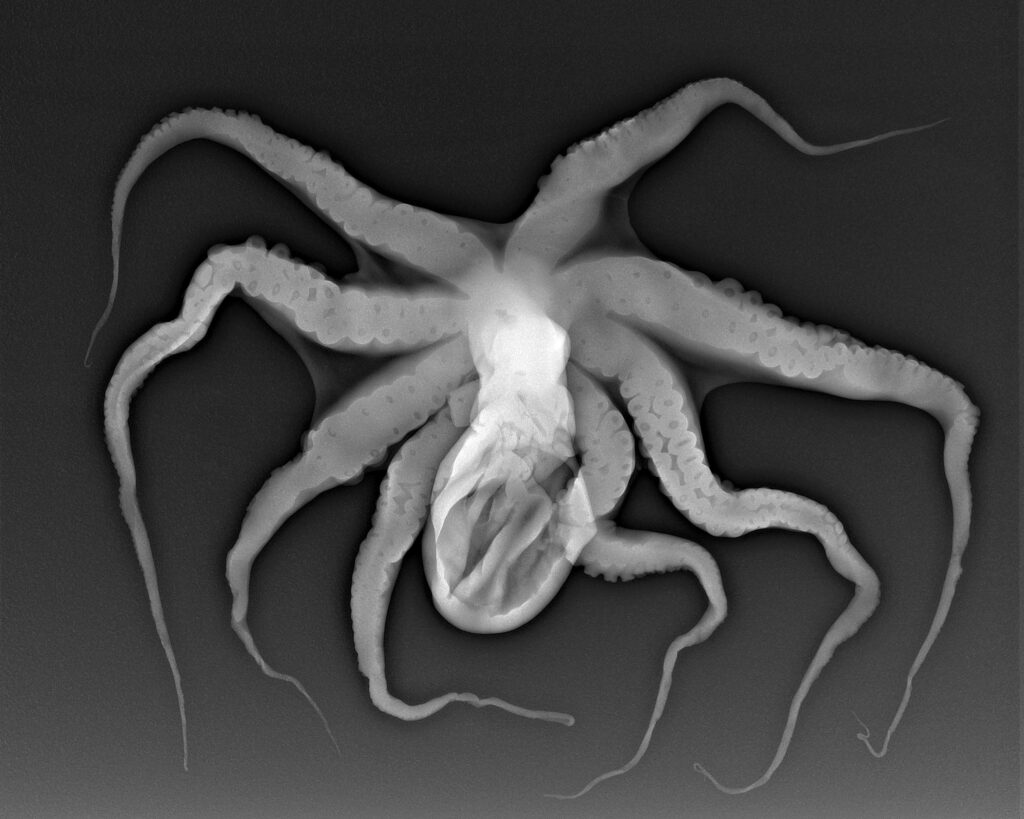
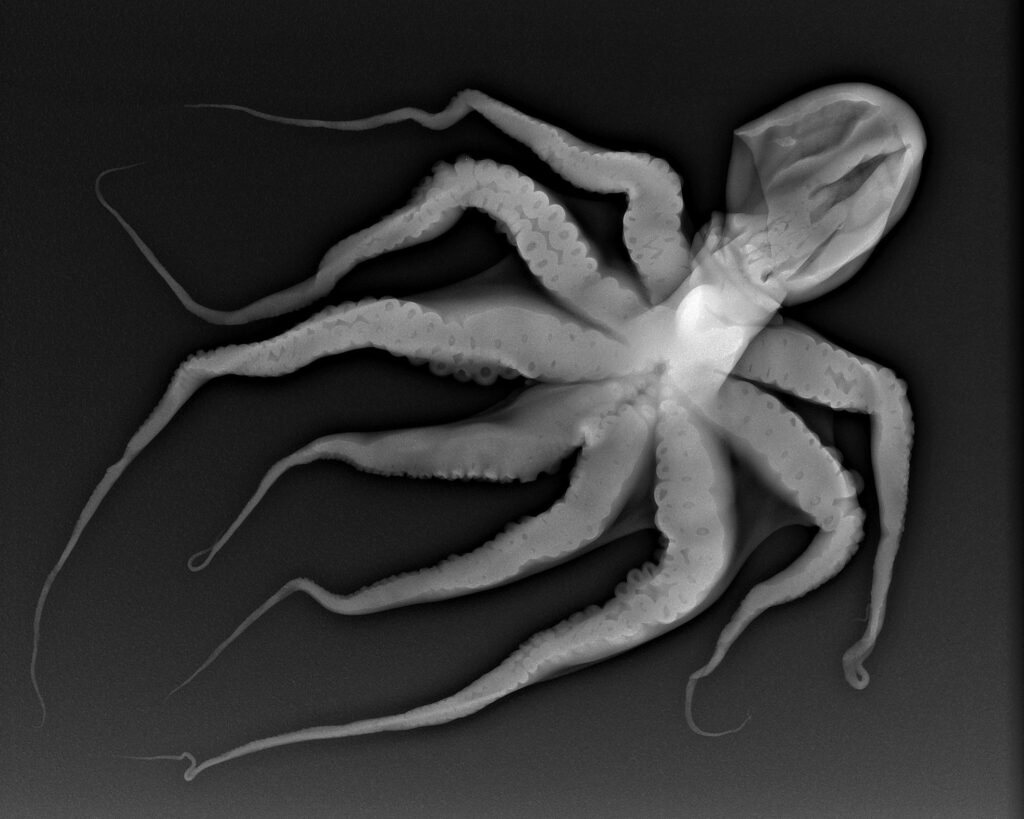
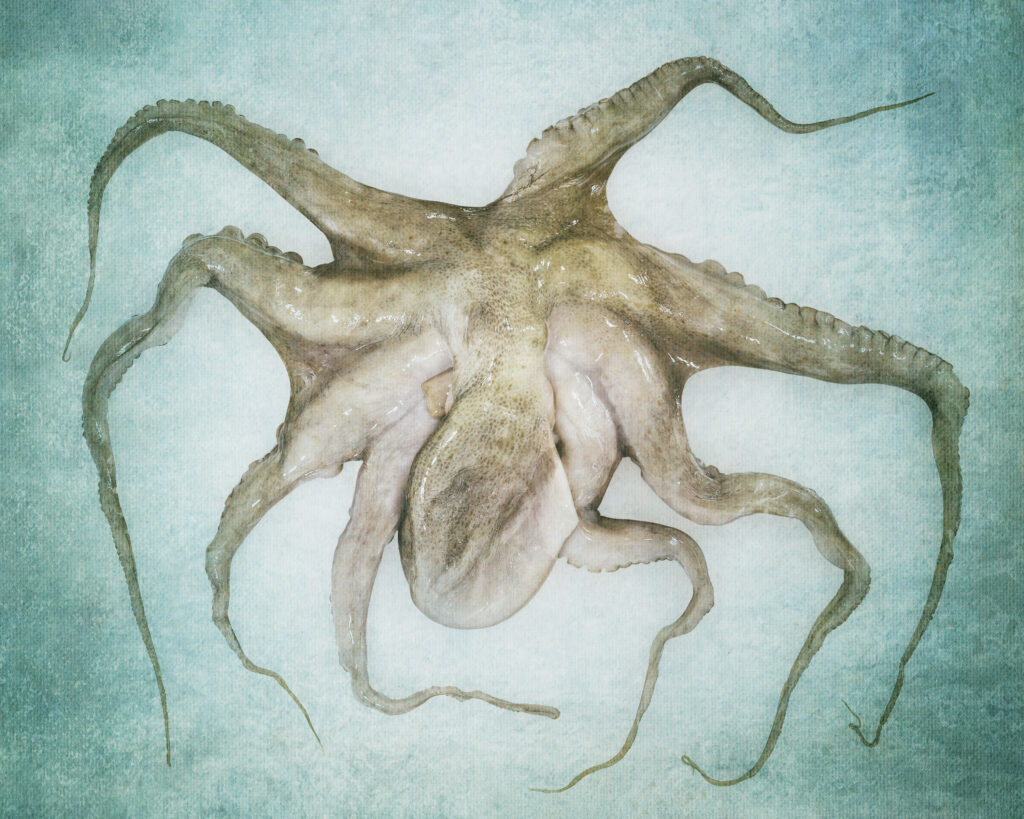
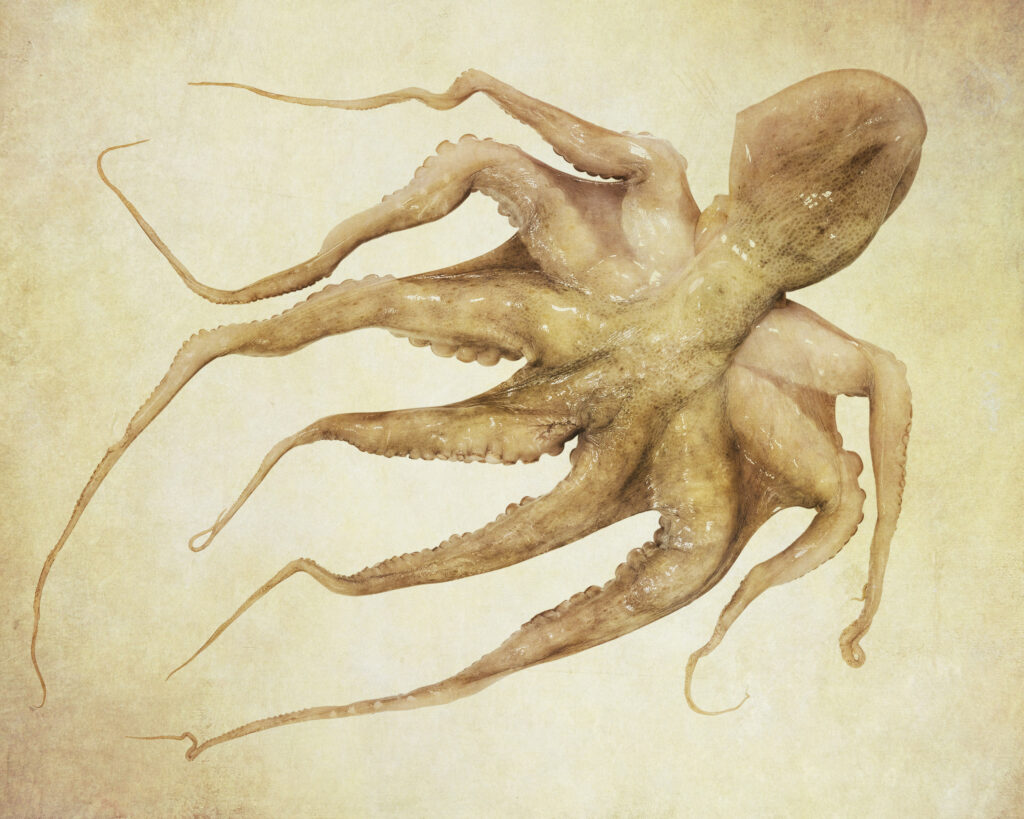
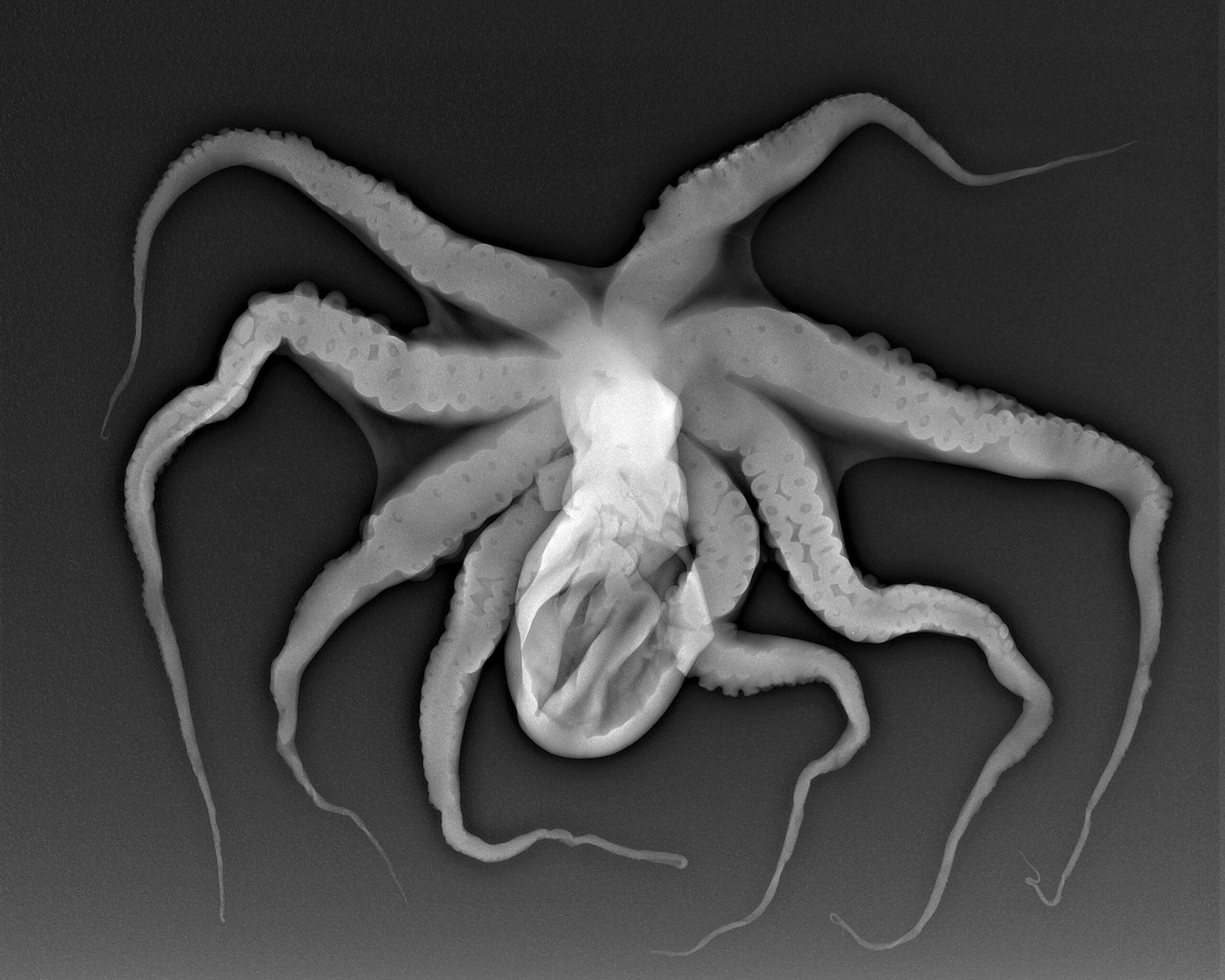
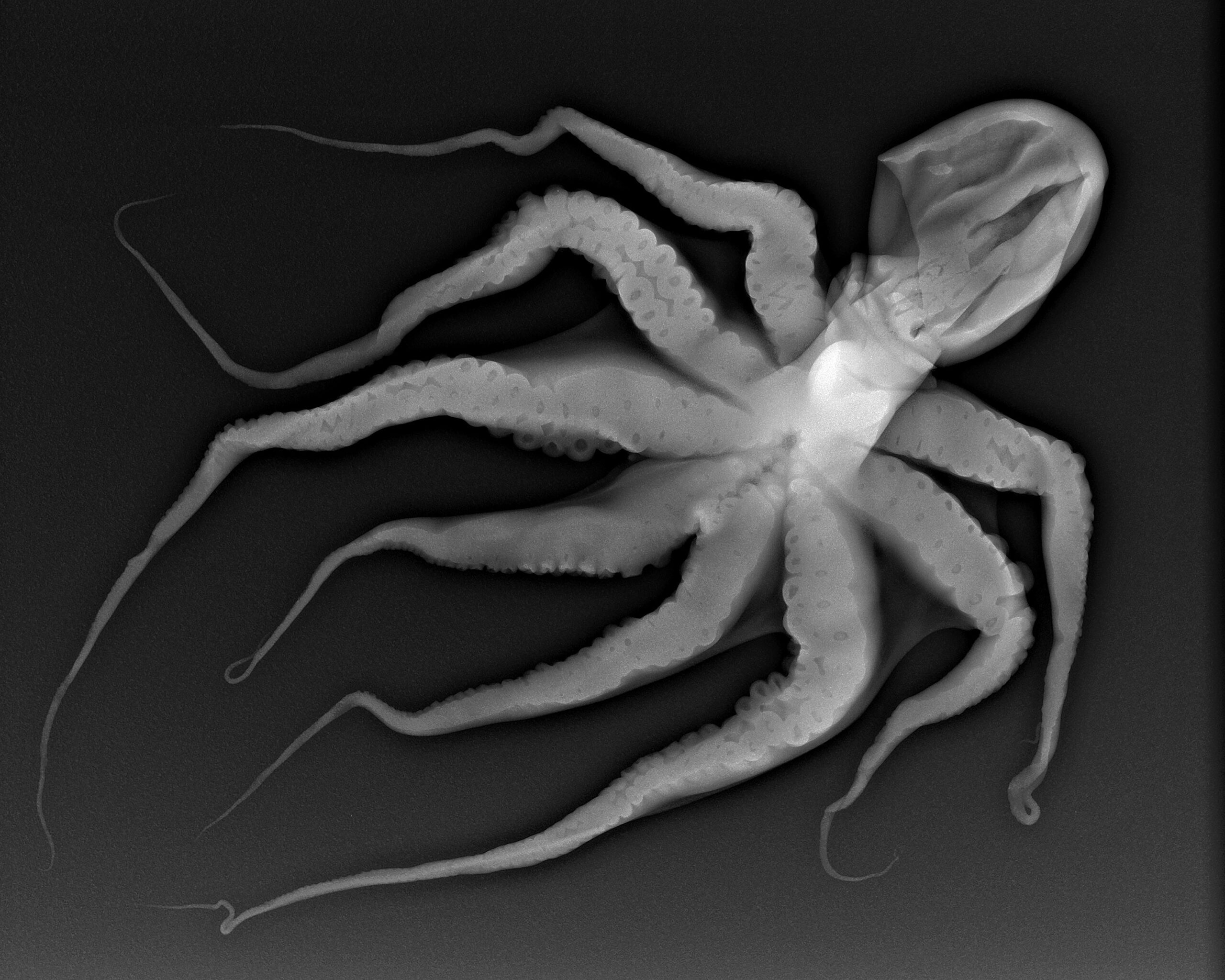
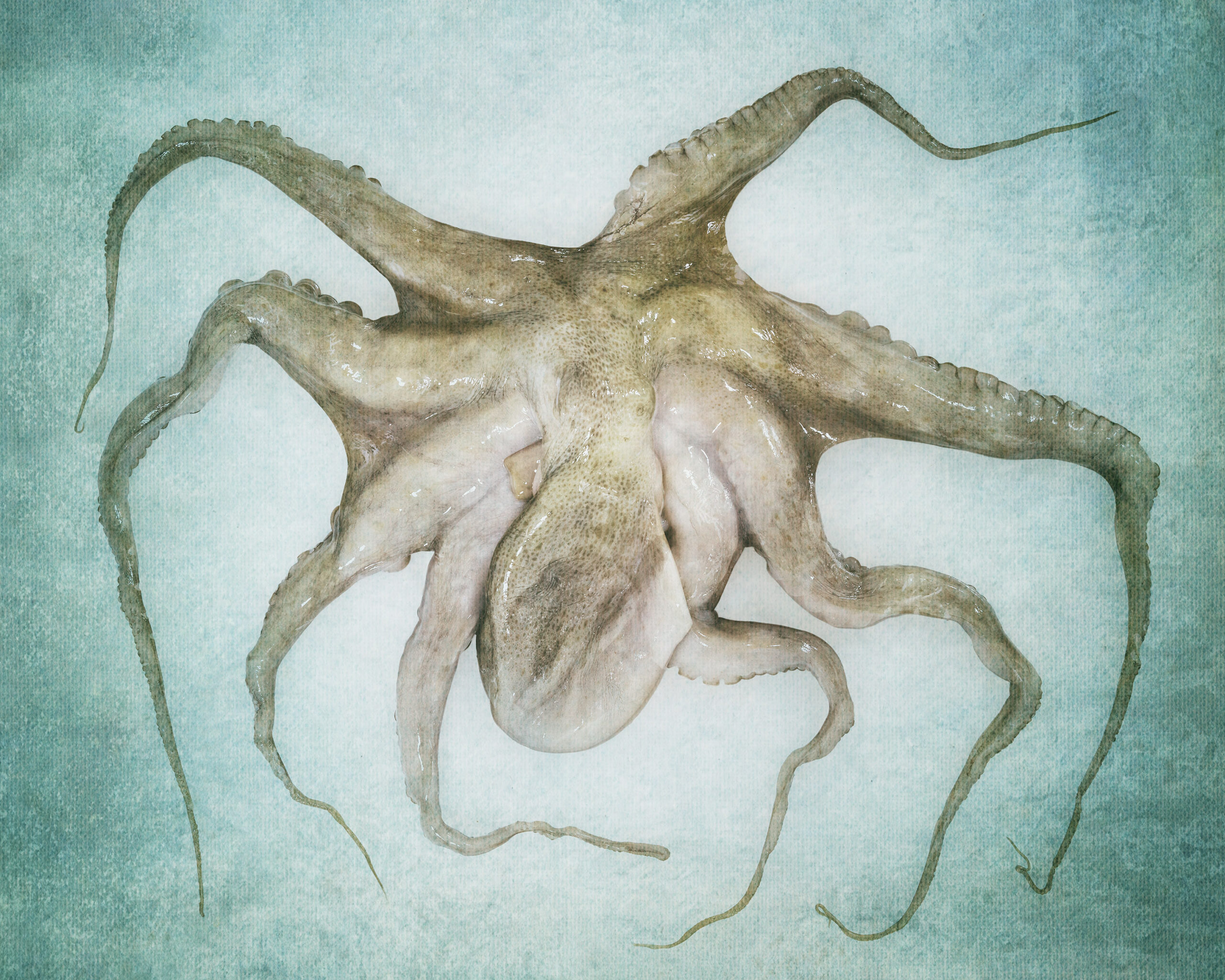
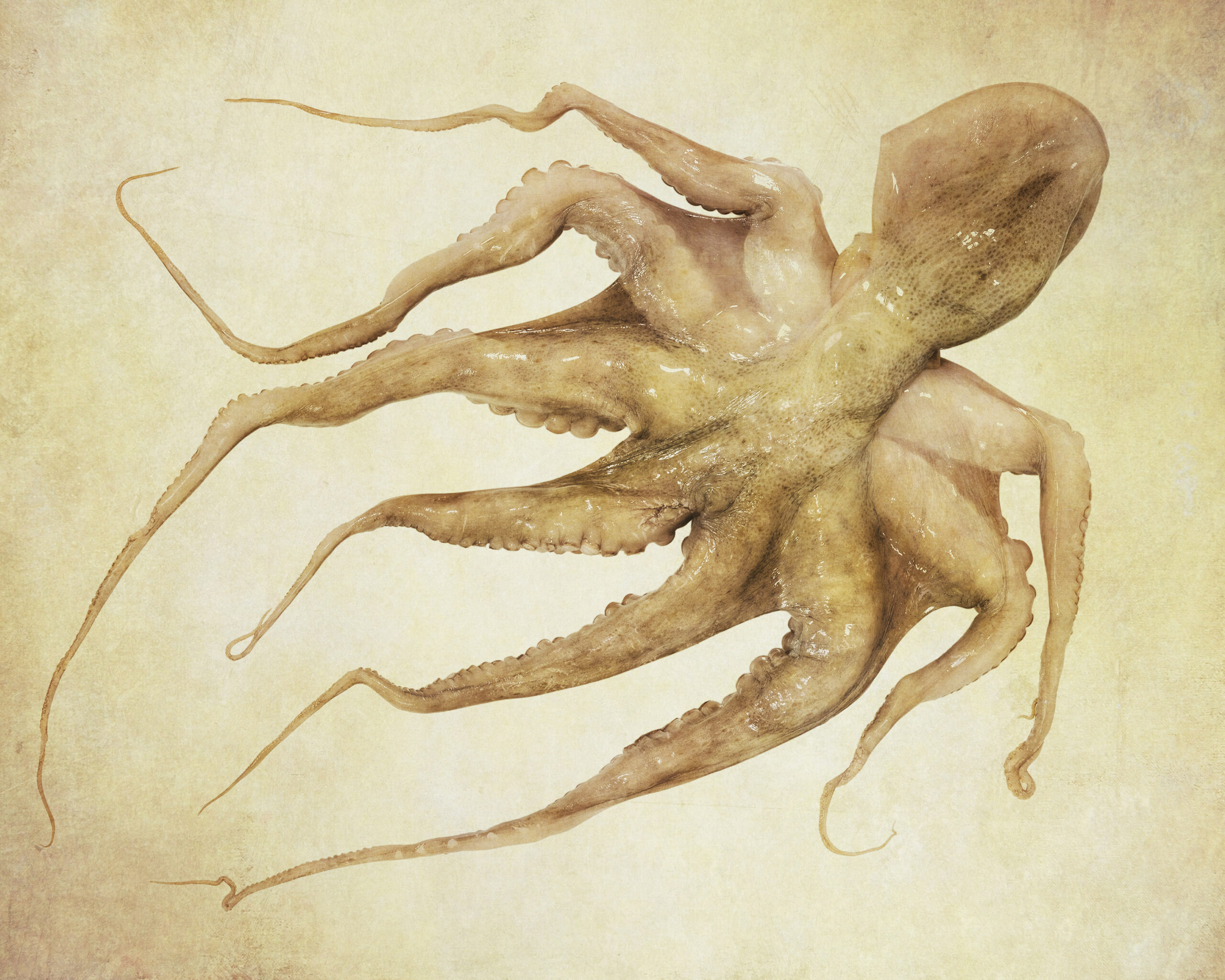
With their appearance and the way they move, octopuses are sure to attract everyone’s attention. Perhaps some people know these cephalopods as a starter. Whilst taking the X-rays, I constantly had in mind the ubiquitous depictions of these creatures in Mycenaean culture.
Her body does not show any strong contrasts on the X-ray. The suction cups still show the strongest contrasts on the X-ray. The composite image with the photograph gives only a faint hint of which images were used as a basis.
-
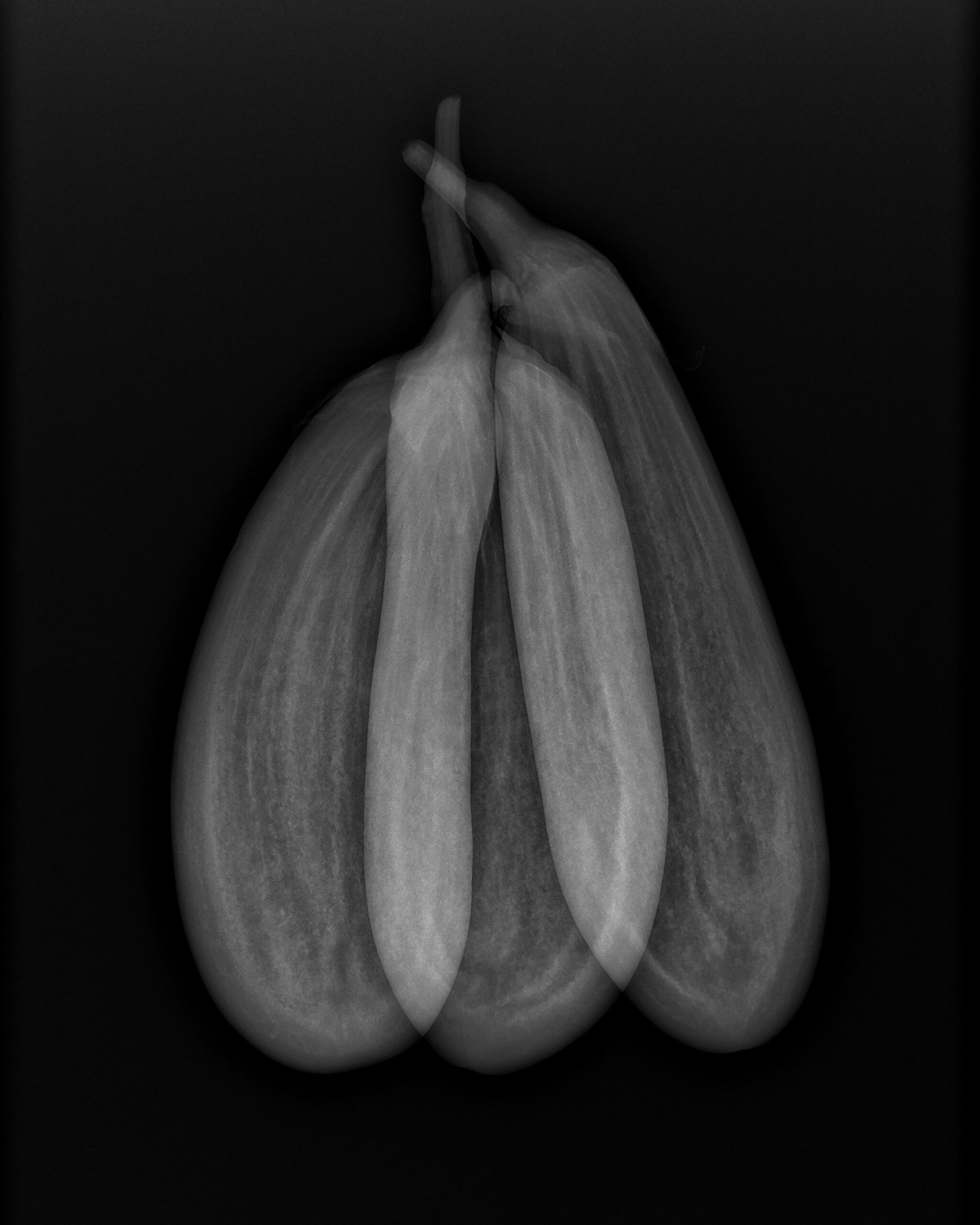
X-ray of vegetables and boxes
X-rays make a dense object appear see-through or transparent. We find it hard to look away from X-ray images because we are always discovering something new in them.
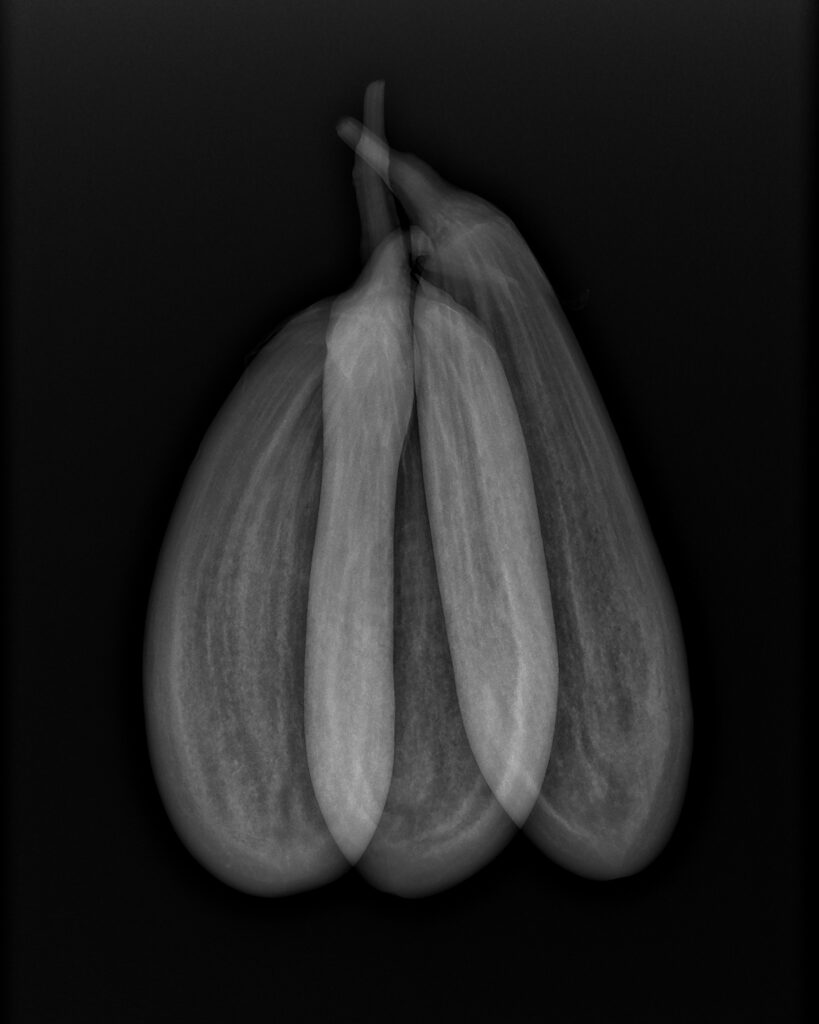
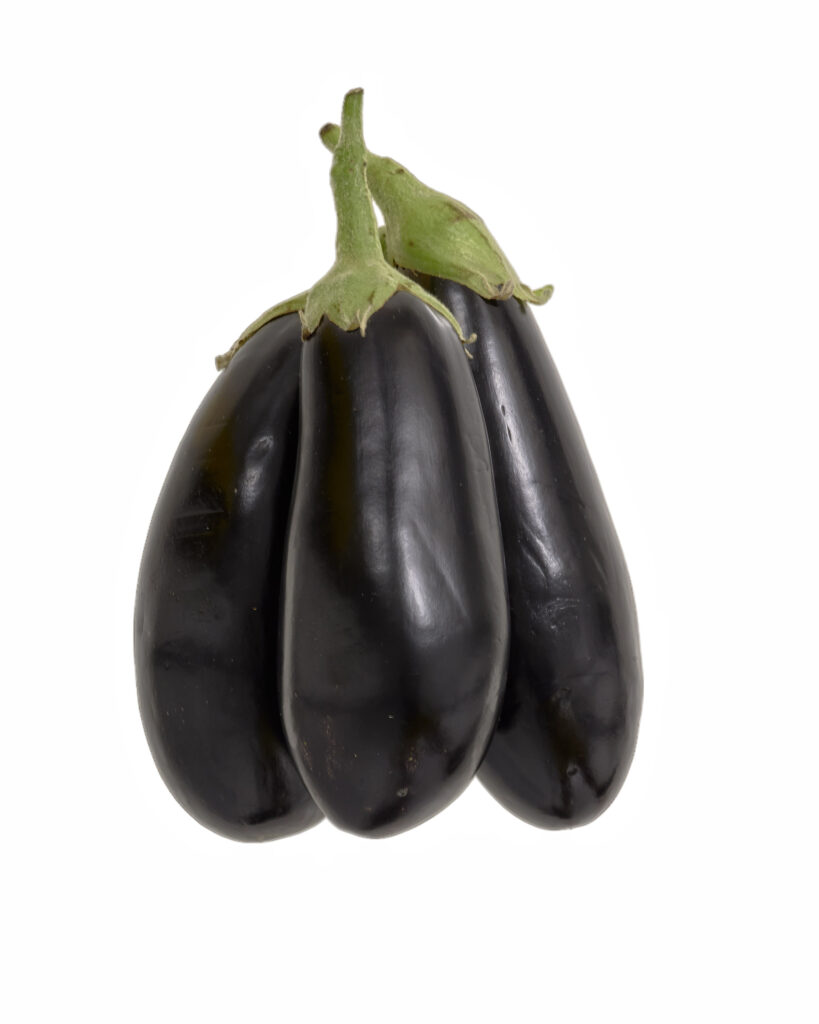
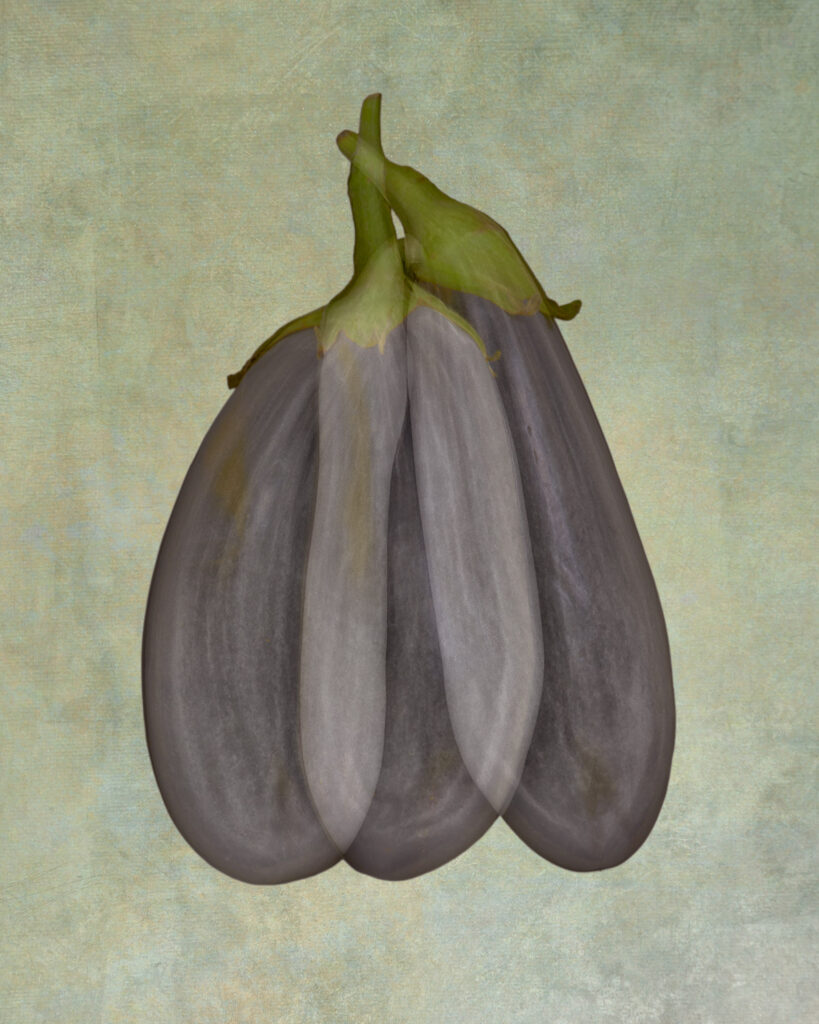
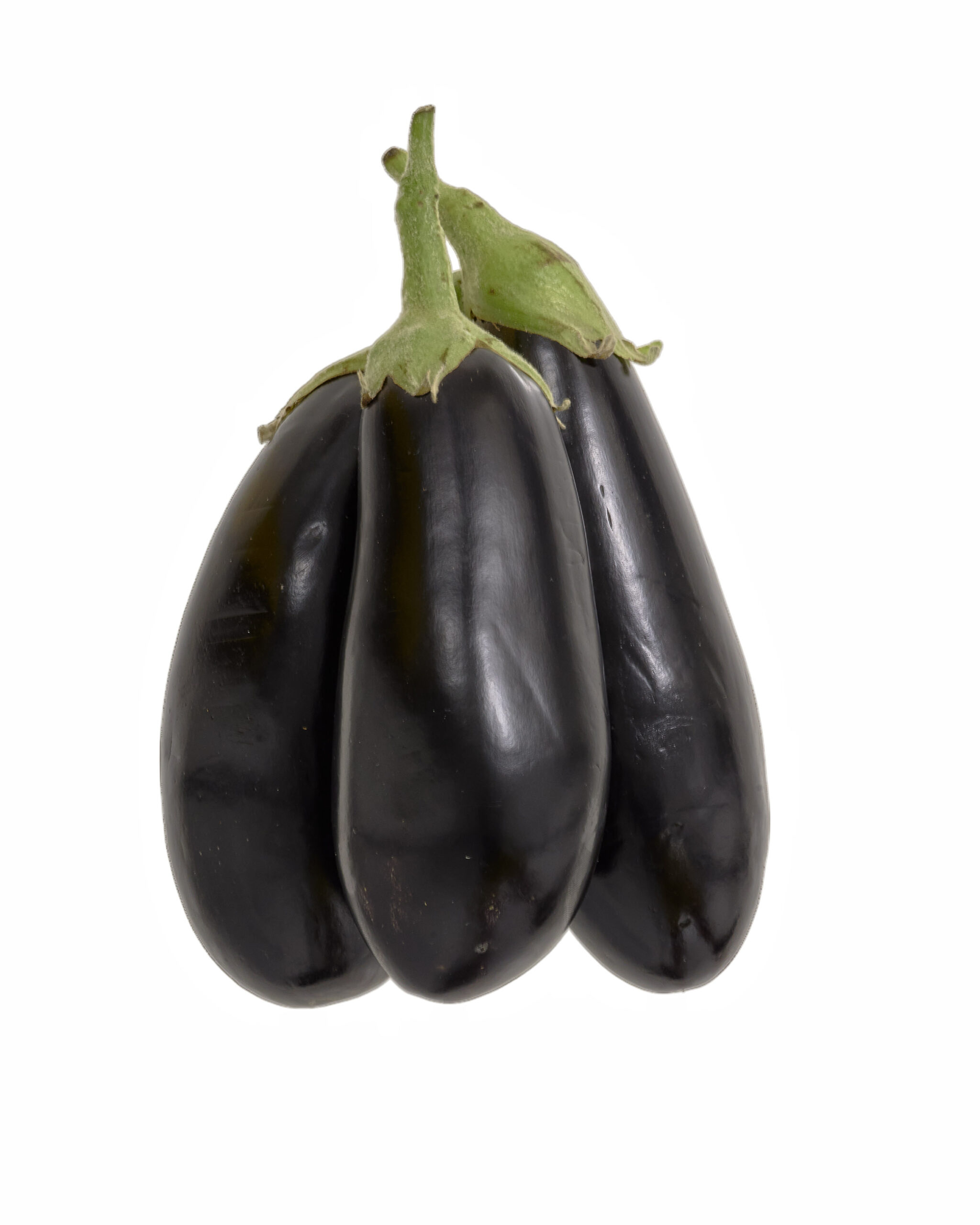
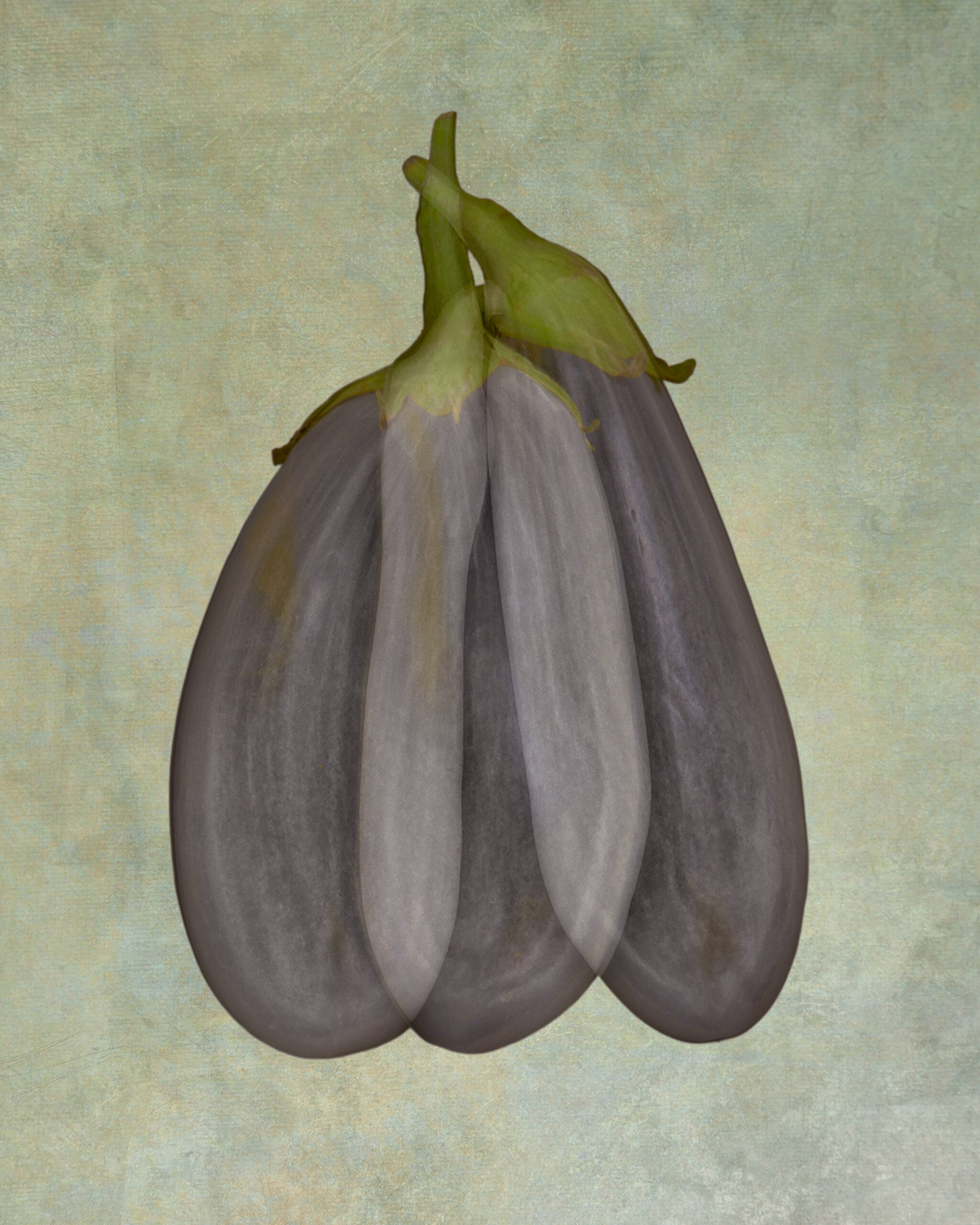
Combining an X-ray image with a photograph is therefore an approach that captures the viewer’s interest.There are some great recipes for aubergines; even served as thin slices with honey, they make for a real treat. The inside of these vegetables is of moderate interest on an X-ray. I’ve stacked them to introduce variations in density as an additional element.
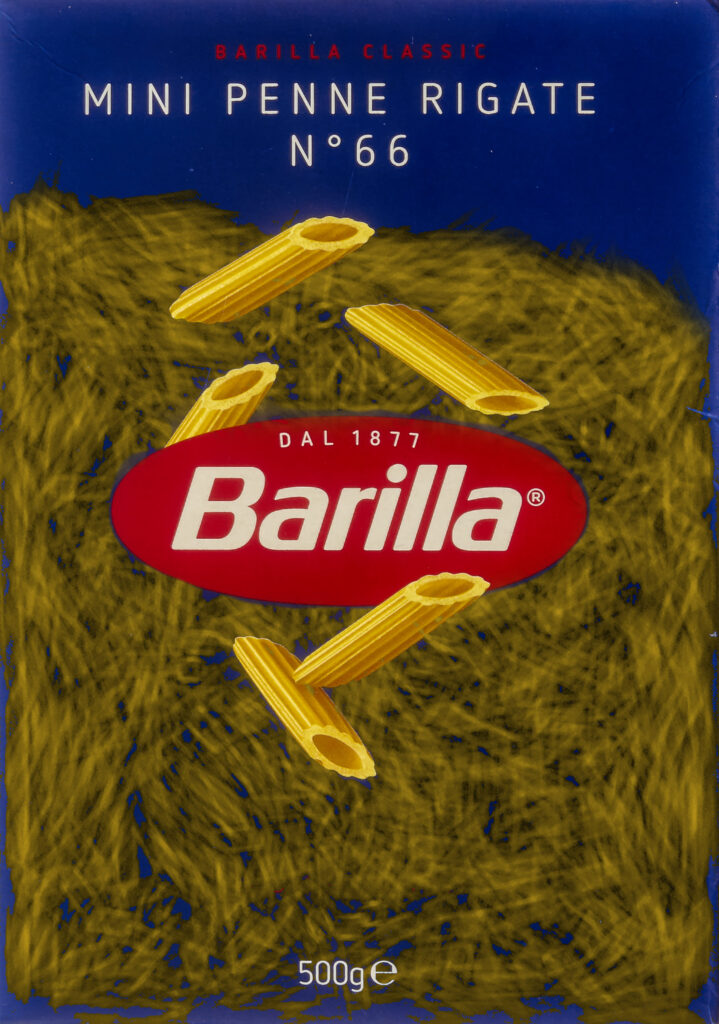
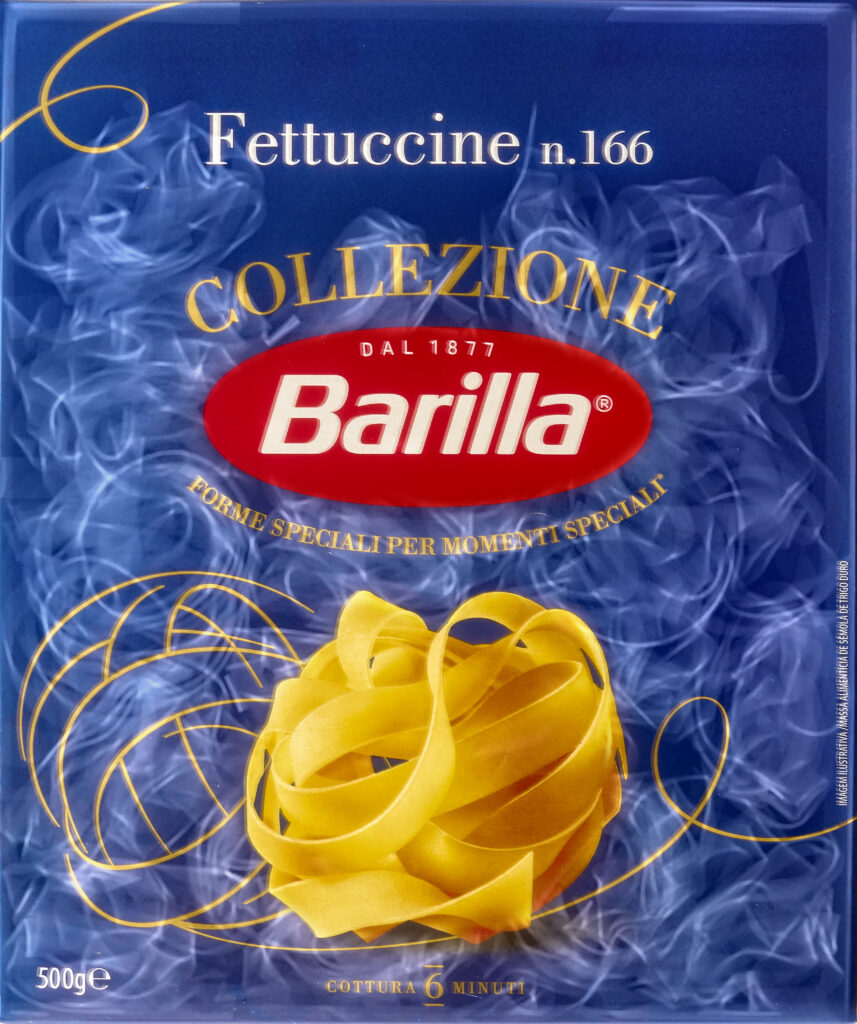
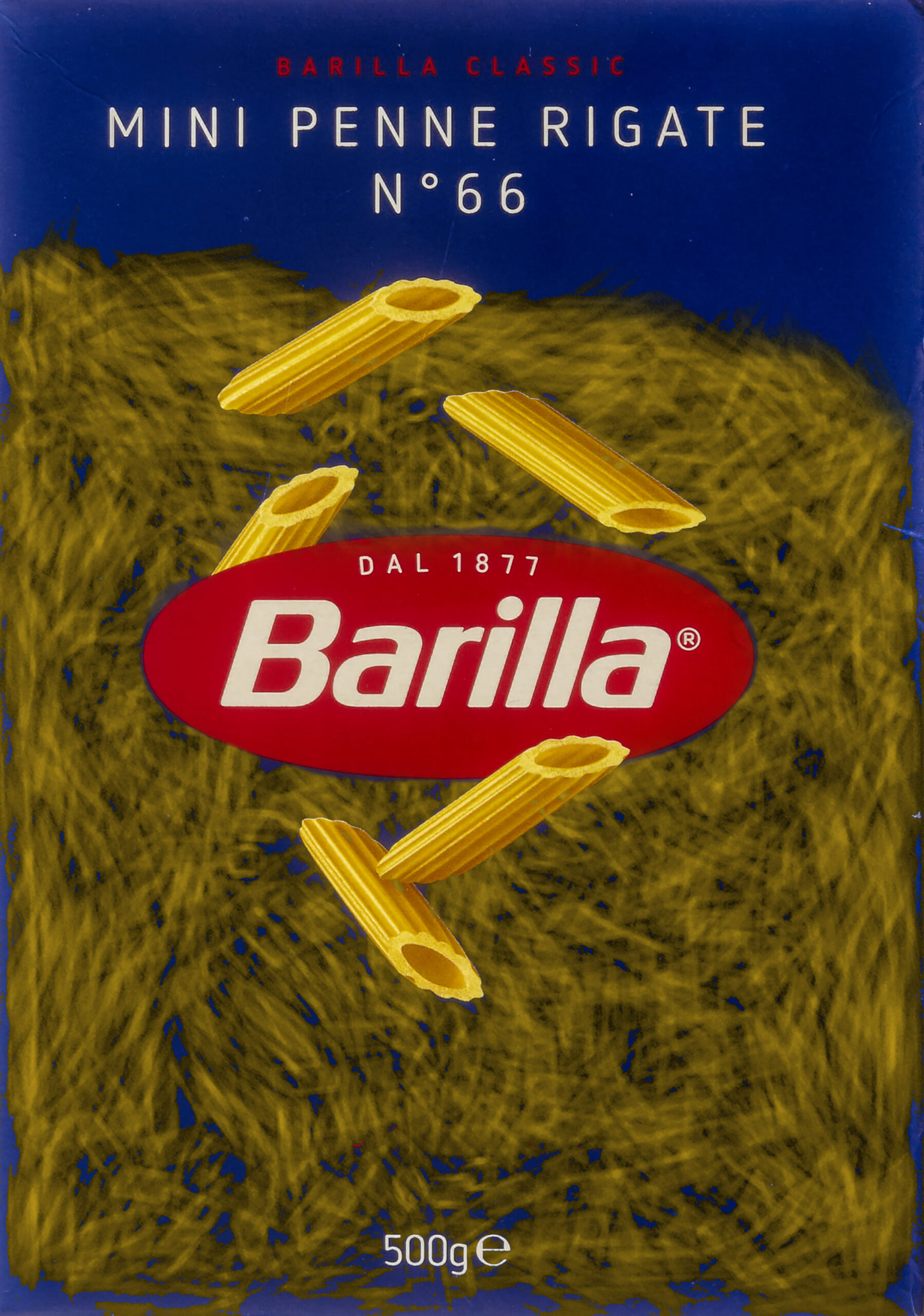
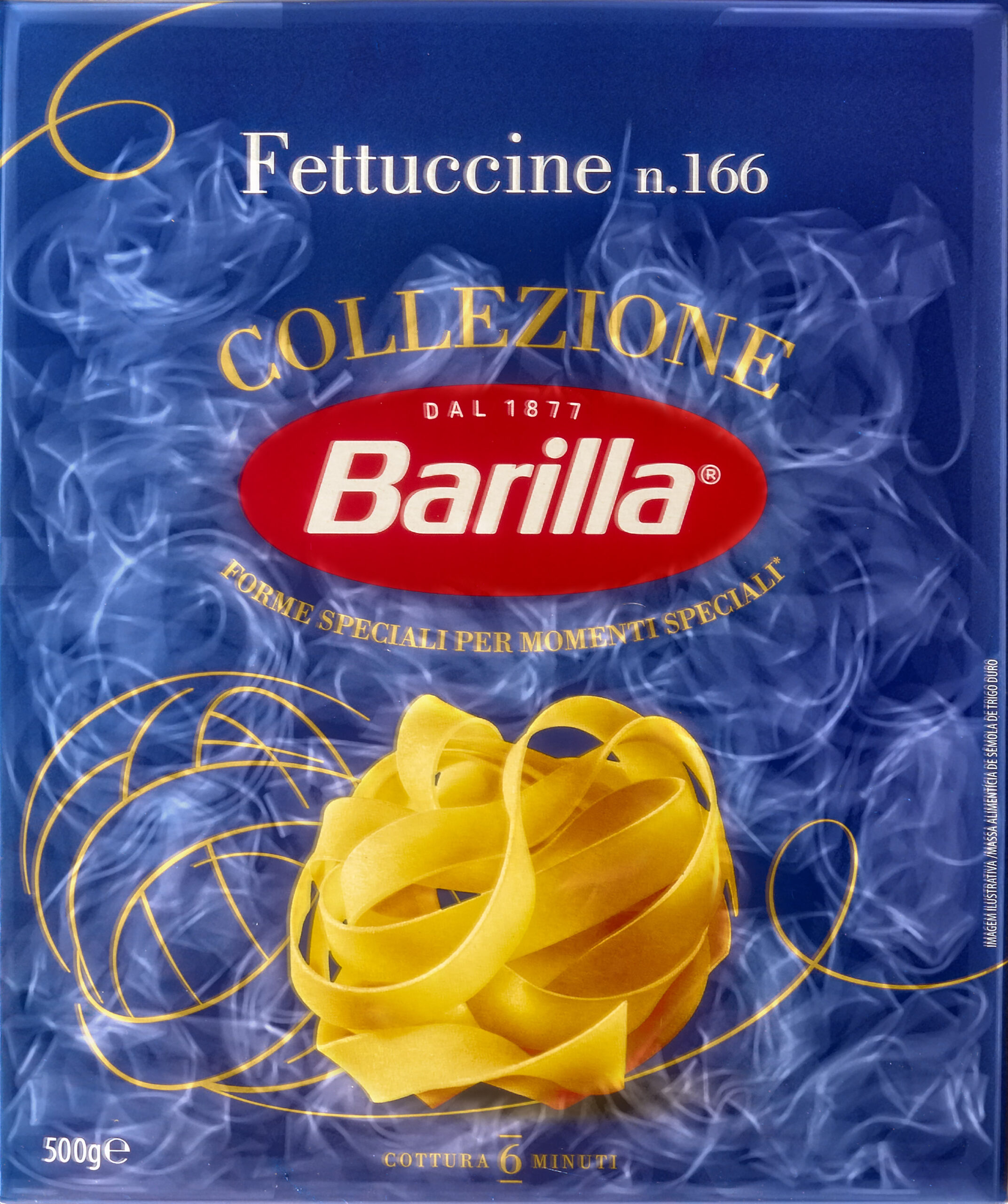
Going more wild with fusion images, you get a fresh perspective on packaging and its contents. What do the pasta look like? How are they arranged in the packet? How much is actually in there? Is it even any fun looking at pictures like that?
I haven’t yet found a definitive answer to these questions. Depending on how they are processed, the images can certainly be aesthetically interesting.
-
Varieties of fusion images using X-ray
Images produced using visible light and X-rays could not be more different. And not just because of varying the subject. The fusion of these two techniques already makes it possible to present the same source material in vastly different ways.
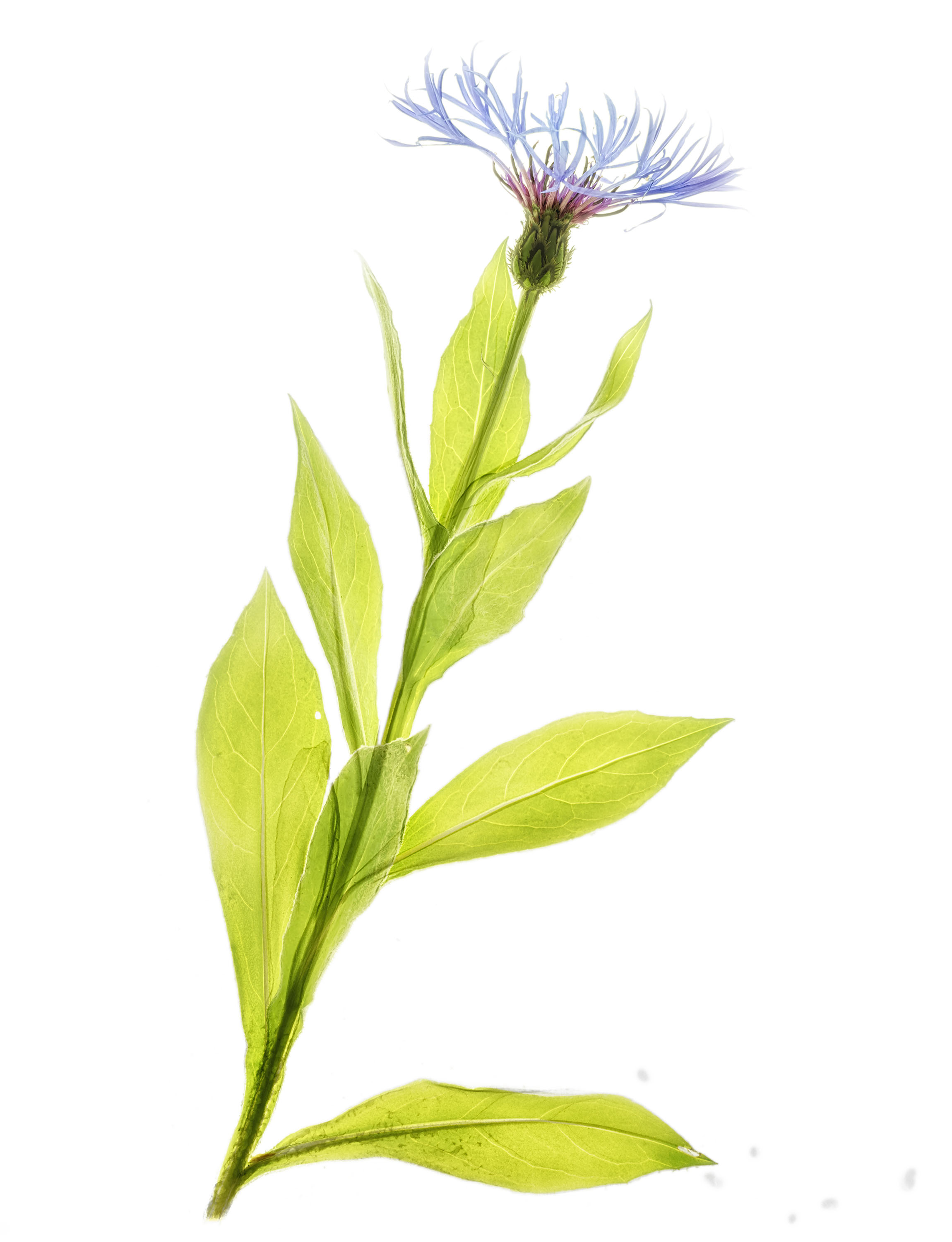
When I began developing this technique, I drew inspiration from a method of photographing flowers transparently, as practised and published by Harold Davis. My focus was on transparent flower photography and the ability of X-rays to penetrate objects seemingly without resistance.
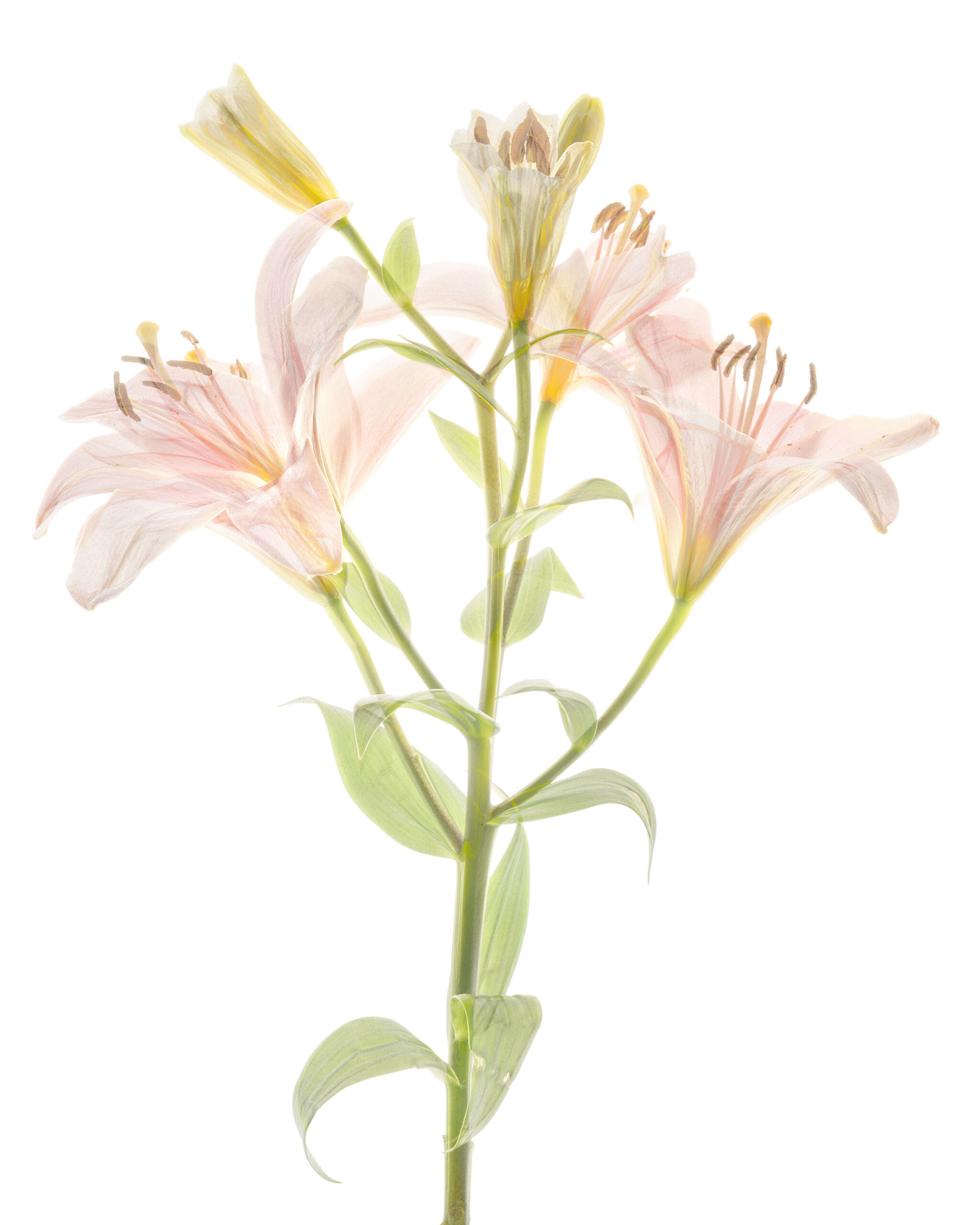
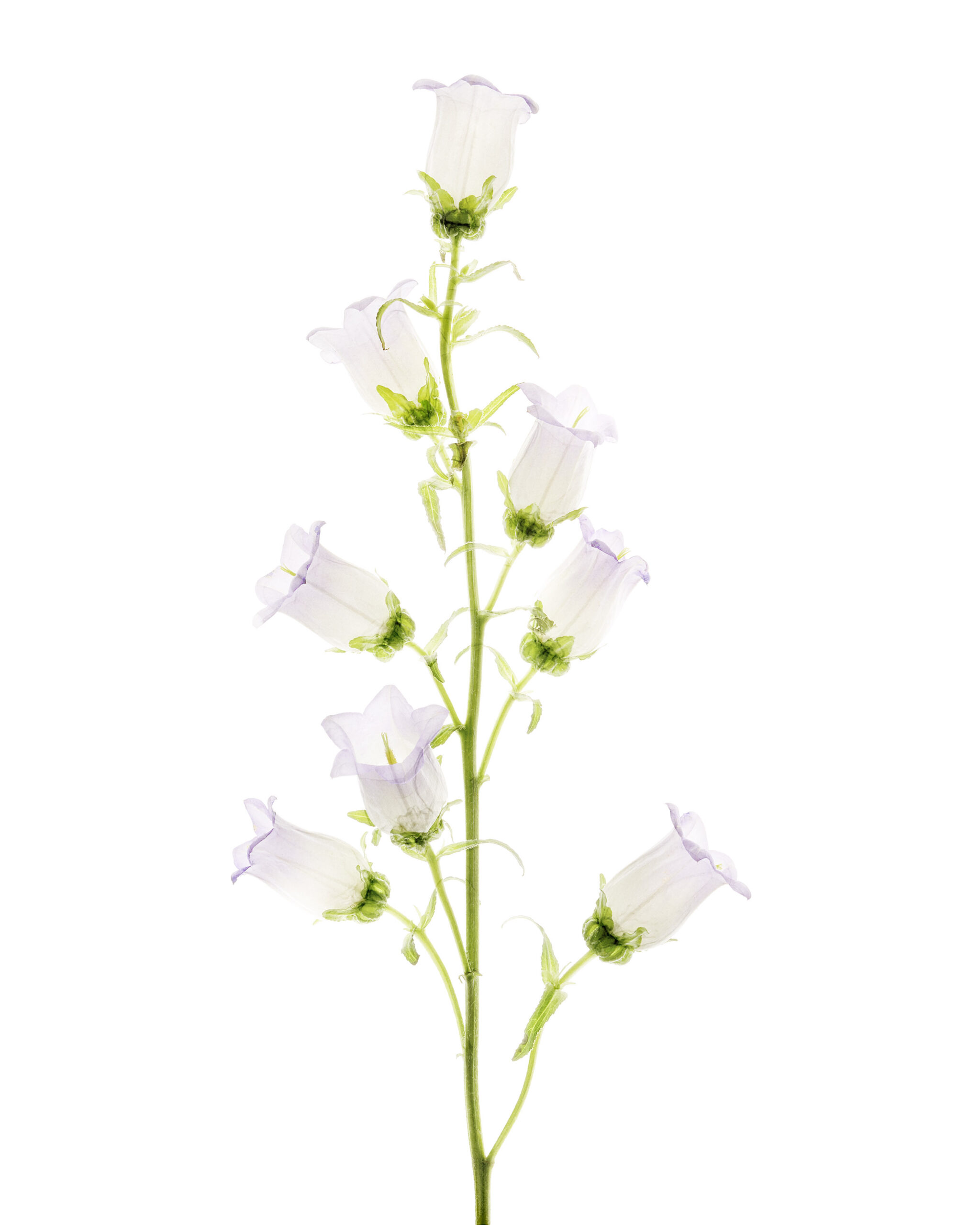
In the case of the flowers, the fusion of the X-ray image and the photograph reveals the translucency inherent in the photographic process and, moreover, conveys a delicacy—one might almost say a fragility—of the subject.
Using only the approach to depicting flowers derived from photography and the work of Harold Davis, fusion imaging can create a small universe. The fusion of the two types of radiation in the image is by no means straightforward and also depends on the object being imaged.
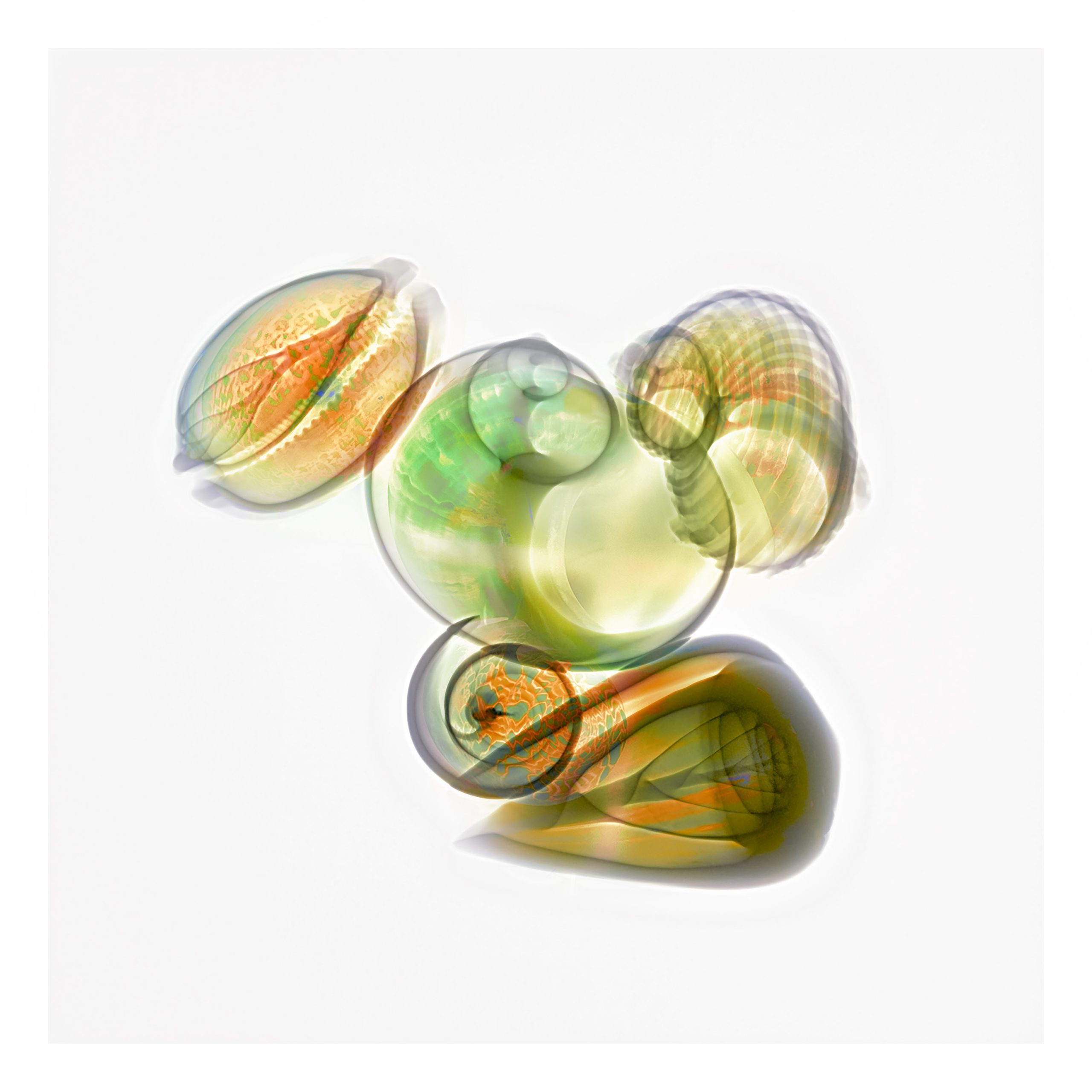
As well as flowers, there are interesting structures that never appear transparent or delicate in ordinary light. Nevertheless, they are well worth a closer look. Take, for example, the shells of snails or mussels. Under X-ray light, these become particularly striking. From the very beginning, I have also experimented with fusion imaging on these objects.
In this context, it is also true that image fusion does not follow a single, clear path, but is guided by artistic criteria. X-rays and photographs can produce vastly different effects, even when depicting the same object, depending on how they are processed.
Only a transparent object can be transformed into an image that appears transparent using a lightbox. This is inherent in the nature of how these images are created using an HDR process. This limitation can be overcome to a certain extent with the aid of X-rays.
Transcending the limits of visible light is not a straightforward process. With objects that become radiographically transparent, transforming them into an interesting composition is a demanding artistic task yielding variable results with no set formula.
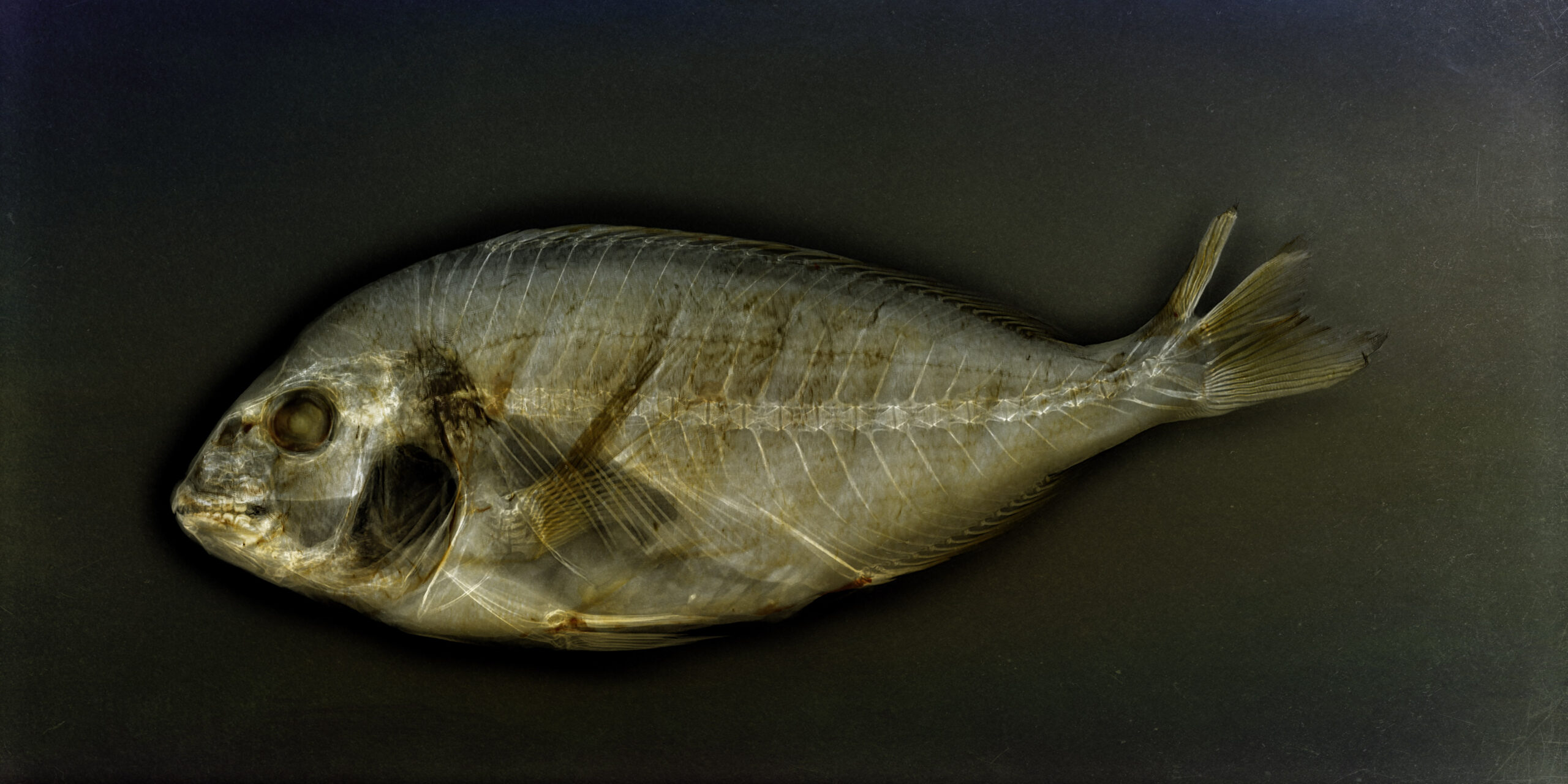
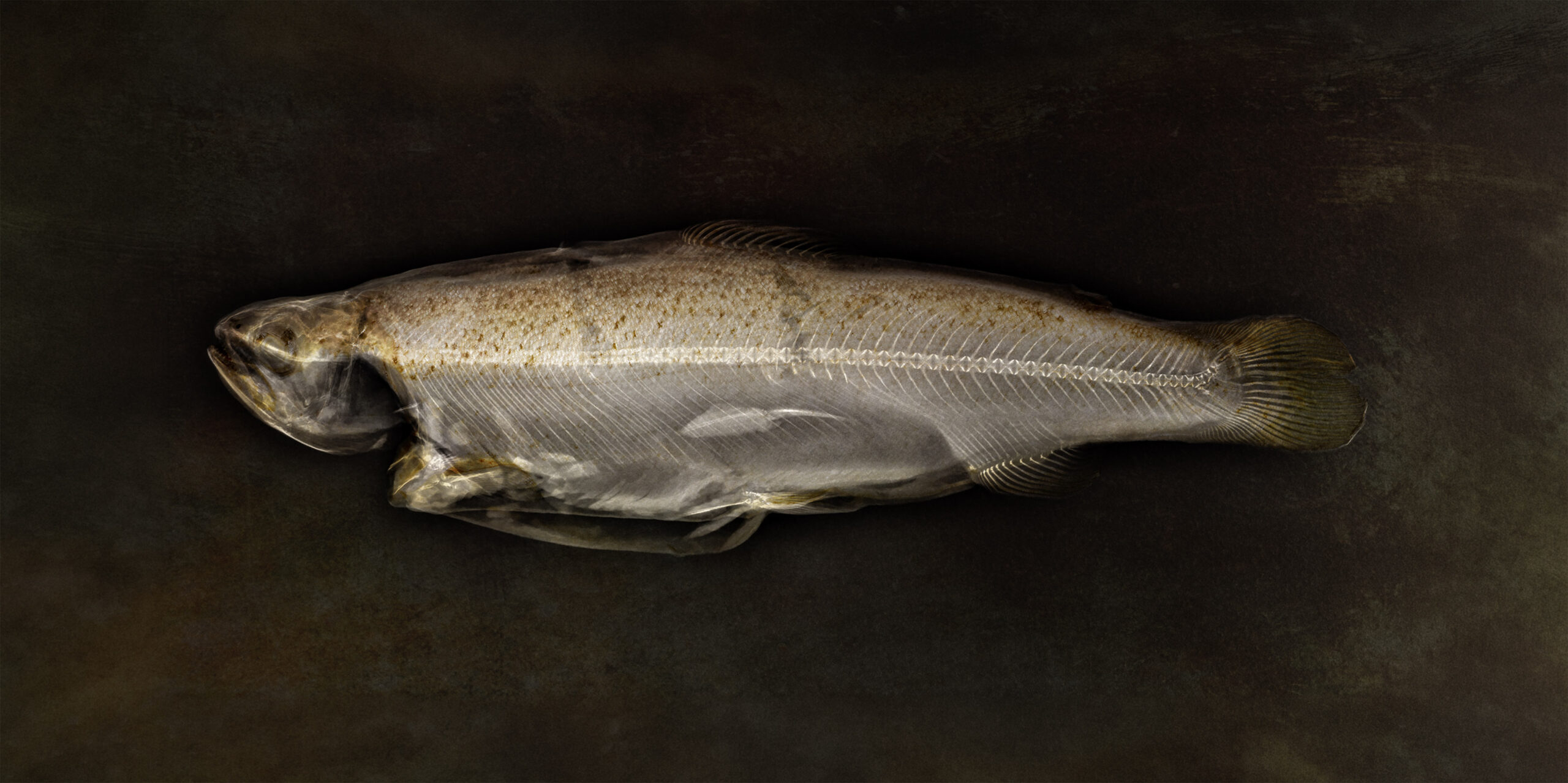
I bought these two smoked fish from a supermarket. On the left is a sea bream and on the right a trout. In this artistic fusion of photography and X-ray imagery, I added a background and some texturing. On closer inspection, you can see small tears in the muscle tissue of both fish caused by the drying out that occurs during the smoking process.
Fusion images can be created using objects that are not themselves transparent. They are visually appealing as a result of the artistic process and can sometimes even be surprising. There is no set method for creating a fusion image; instead, the approach is guided by the subject matter, the characteristics of the object being depicted, and the overall visual effect.
-
Transparencies
HDR photography of flowers with a light box creates the illusion of translucency, which is very attractive in itself. By fusing X-ray light and visible light in flower photography, one expands the photographic possibilities by reproducing the inner structures of the photographed plants or objects. The illusion of translucence is enhanced by the physical transparency of X-ray light. Even photographically non-transparent objects can be given the illusion of transparency by fusing X-ray light and visible light.
A publication by the dPunkt publishing house in „foto espresso“ gave me the opportunity to present this idea in the May 2023 issue.
-
Floral compositions
18. Februar 2023 /Floral compositions
Clockwork ornate styleClockwork of flowers: flower power © Julian KöpkeRed rose petalsRed rose petals © Julian KöpkeSix rosesSix roses © Julian KöpkeThree rosesThree roses © Julian KöpkeBlooming thistle at the former railroad tracksBlooming thistle at the former railroad tracks © Julian KöpkeDancing tulipsDancing tulips © Julian KöpkeDream of tulipsDream of tulips on a lightbox © Julian KöpkeThree purple tulipsThree purple tulips HDR photo © Julian KöpkeComposition with rosesComposition with roses on a lightbox © Julian KöpkeFloral Arrangement with FreesiasFloral Arrangement with Freesias © Julian Köpke -
Fusion Imaging of Flowers
12. Februar 2023 /Find some technical explanations in my FAQ section.
Composition with roses X-ray image fusion © Julian KöpkeComposition with roses X-ray image fusion © Julian KöpkeChrysanthemum X-ray fusion photography © Julian KöpkeChrysanthemum X-ray fusion photography © Julian KöpkeAmaryllis X-ray mammography fusion photography texturized © Julian KöpkeAmaryllis X-ray mammography fusion photography texturized © Julian KöpkeFusion X-ray photo Calla lilies IV © Julian KöpkeFusion X-ray photo Calla lilies IV © Julian KöpkeTwo roses fusion X-ray photo © Julian KöpkeTwo roses fusion X-ray photo © Julian KöpkeThree purple Clematis fusion X-ray photo © Julian KöpkeThree purple Clematis fusion X-ray photo © Julian KöpkeCornflower X-ray fusion photo © Julian KöpkeCornflower X-ray fusion photo © Julian KöpkeBlue aquilegia X-ray fusion photo © Julian KöpkeBlue aquilegia X-ray fusion photo © Julian KöpkeFusion X-ray photo Calla lilies IV. Black background using Lab inversion. © Julian KöpkeFusion X-ray photo Calla lilies IV. Black background using Lab inversion. © Julian KöpkeThree purple tulips fusion X-ray photo © Julian KöpkeThree purple tulips fusion X-ray photo © Julian KöpkeX-ray fusion image of yellow Calla Lilies © Julian KöpkeX-ray fusion image of yellow Calla Lilies © Julian KöpkeFusion image rose and pink dahlia © Julian KöpkeFusion image rose and pink dahlia © Julian KöpkeX-ray fusion image of a Gloriosa lilly © Julian KöpkeX-ray fusion image of a Gloriosa lilly © Julian KöpkeFusion image of a Bird of Paradise. © Julian KöpkeFusion image of a Bird of Paradise. © Julian KöpkeFusion image Hydrangea © Julian KöpkeFusion image Hydrangea © Julian KöpkeFusion image Dahlia © Julian KöpkeFusion image Dahlia © Julian Köpke -
Flowers
12. Februar 2023 / -
FAQ: X-rays
11. Februar 2023 / -
X-ray photography
11. Februar 2023 /Dahlia X-ray photogram © Julian KöpkeDahlia X-ray photogram © Julian KöpkeRose mammography X-ray positive photography © Julian KöpkeRose mammography X-ray positive photography © Julian KöpkeHow I can see my personal favourite chocolate before I open it © Julian KöpkeHow I can see my personal favourite chocolate before I open it © Julian KöpkeBlack swan: pumpkins and fir cones X-ray photo © Julian KöpkeBlack swan: pumpkins and fir cones X-ray photo © Julian KöpkeOak leaves with acorns X-ray photo L-inversion © Julian KöpkeOak leaves with acorns X-ray photo L-inversion © Julian KöpkeX-ray photo of a ball from snail shells L-channel inverted © Julian KöpkeX-ray photo of a ball from snail shells L-channel inverted © Julian KöpkeGrape X-ray photo © Julian KöpkeGrape X-ray photo © Julian KöpkeSpider conch (lambis lambis) © Julian KöpkeSpider conch (lambis lambis) © Julian KöpkeX-ray three tulips © Julian KöpkeX-ray three tulips © Julian KöpkeEnergy difference X-ray photo of a Nautilus shell. The fusion image is the difference of a 70kV and a 40 kV image in X-ray positive representation. © Julian KöpkeEnergy difference X-ray photo of a Nautilus shell. The fusion image is the difference of a 70kV and a 40 kV image in X-ray positive representation. © Julian KöpkeDigital X-ray photo of a sunflower (inverted representation). © Julian KöpkeDigital X-ray photo of a sunflower (inverted representation). © Julian KöpkeX-Ray positive of a Nautilus with flowers as Argonauts © Julian KöpkeX-Ray positive of a Nautilus with flowers as Argonauts © Julian KöpkeOdyssey (light inversion) © Julian KöpkeOdyssey (light inversion) © Julian KöpkeOdyssey © Julian KöpkeOdyssey © Julian Köpke -
Monochrome
11. Februar 2023 /