-
Amaryllis
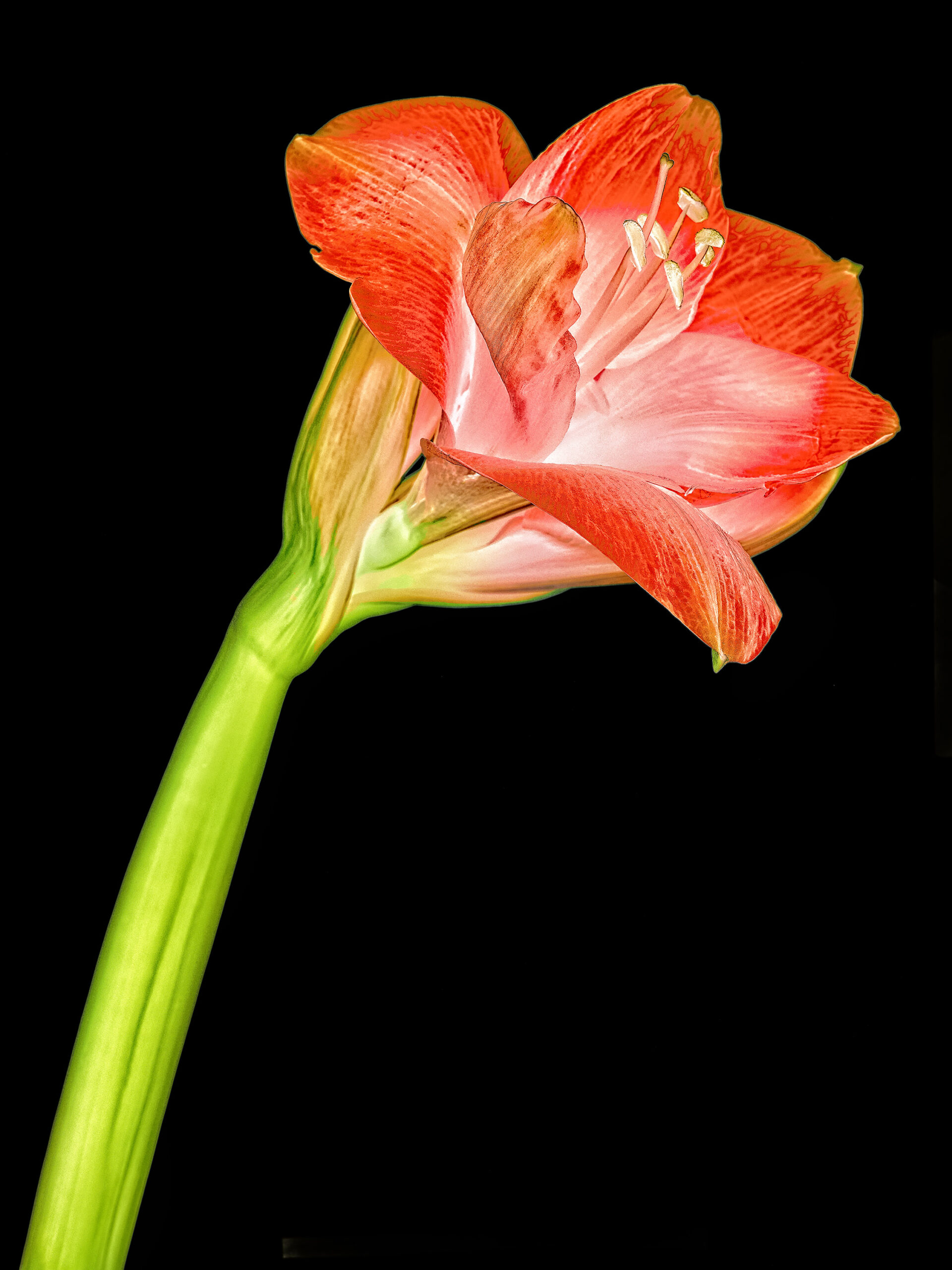
The format for recording an image can be very variable when fusion imaging is involved. In the example below, the image on the left is taken with a Phase One IQ4. The sensor size is 44mm x 55mm. The X-ray image on the right was taken with a Hologic mammography system with a detector size of 24cm x 30cm. The aspect ratio of both images is 4:5. The pixel size of the IQ4 is 6.5µm, the pixel of the mammography is 70µm long. Nevertheless, the images can be fused well.
I added some texture to the fusion image because it made it more appealing. Due to the fusion of the image from „visible light“ and the image with „X-ray light“, the definition of whether it is a medium format image or a large format image is no longer meaningfully applicable. It is simply an image.
-
Chocolate
4 bars of chocolate were meant as a reward for a calendar of the year 2023. To eat, of course. However, it is a special pleasure to subject them to an X-ray examination with the mammography before opening them. After three attempts, I placed them on top of each other, which is why their penetration with radiation required 20% more energy so that the image was not underexposed.
-
Black Forest
A picture I like turns my gaze inwards and I stop staring at it. It is not possible for me to give the reason why I avert my gaze. For it is no longer my eyes that look.
Is it a spell ? Has a string of my existence been made to vibrate ? Is it a vortex that draws me into its depths ?
The simple shot of a farm in the Black Forest can take on the attractiveness of a shot from the early days of photography by processing the lighting conditions. Immediately, the antennas on the roofs of the farm look like evidence of a long past, although they can be no more than 50 years old.
The first day of the new year ended at the little church of Maria Lindenberg with a warm sunshine that almost protectively enveloped the promenaders. The gaze inwards is lost in the apparent aimlessness of the walking movement.
The forest area, which takes its name from the effect its conifers have on the viewer, has not always been a Black Forest. The visitor becomes smaller to tiny when the fog makes the forest even more impenetrable.
The farm was named after an Ignaz, locally always with the associated diminutive Nazi, but this designation has since been banned from the signs as unacceptable.
-
Snæfellsness peninsula
In the meantime, 0.8TB of photo data has accumulated. It will be a challenge to process all these photos. Fortunately, I am concentrating on a few compositions, each of which will be studied in more detail. The themes of geometry, lines and planes stand alongside the theme of colour contrast, which is easy to focus on in Iceland.
The basalt rocks of Arnarstapi are ideal for this. With moderately homogeneous cloud cover, they lend themselves to long-term studies. The Phase One camera is able to do without the grey filter through frame averaging, which otherwise often leads to slight shifts in the composition.
I’m still not sure whether the basalt rocks of Lóndrangar look better in colour or in black and white. We had drizzle and fog again and again, but also very brief sunny moments. Icelandic weather has returned to normal.
-
From Latrabjarg to Arnarstapi
A low probability does not mean that something will not happen. For a brief moment, auroras could be observed at night at Hotel Latrabjarg. However, by the time the camera was set up, the phenomenon had already subsided. The night remained cloudless and starry, and the next morning the windows of our car were a little frozen.
This very sunny day with cool air was the start of the return journey, which we shortened by taking a ferry in the evening from Brjánslækur to Stykkishólmur.
The bird cliff at the headland of Latrabjarg was completely empty. Only a few seagulls were circling without landing anywhere. The puffins had already left for the Atlantic a week ago.
From this position you can see the rocks of the Westfjords of Iceland lined up one after the other.
Our lazy day ended in Brjánslækur. This is where the Vikings first wintered in the 9th or 10th century. A historical plaque refers to boathouses and storehouses that had been built. It must have been a Herculean task to dig depressions in this stony ground. A few tree trunks anchored in the ground are left this. In the background line up the mountains of Snæfellsnes peninsula.
Today there is a boathouse here again, with two old boats in it that nobody seems to want to use any more.
On a gentle hill, at the foot of a perhaps nameless mountain, stood another small church with a red roof. These buildings seem almost like a toy landscape when the mountains make them small.
The ferry ride was sweetened by a multi-coloured sunset. We drove between the small islands via Flatey to Stykkisholmur. The clouds, however, were to prevent the Northern Lights from appearing when we arrived in Boudoir.
-
Arctic Circle and Arctic Henge
After this hot year, it’s starting to get cool, although Iceland is also uncharacteristically warm at the moment. With twists and turns we finally reach the hotel in Raufarhöfn via the 870 with stops in Raudinupur, Skinnalón and the Arctic Henge.
To reach the lighthouse in Raudinupur we had to walk 6 km there and back. Just arrived, the sunny weather changed and a thick, icy fog surrounded us. We became unsure which would be the right way back. The chattering of the gannets did not stop.
My personal highlight of the day is the abandoned farm Skinnalón. It lies at 66 degrees and 31′ north latitude, which is only 1′ below the Arctic Circle, just a few steps from the Arctic Sea. The area was closed off to vehicles, the footpath uneven and a strange smell drifted over to me the closer I got to the former farm. My eyes quickly became irritated and a headache set in, as if an allergic reaction was taking place.
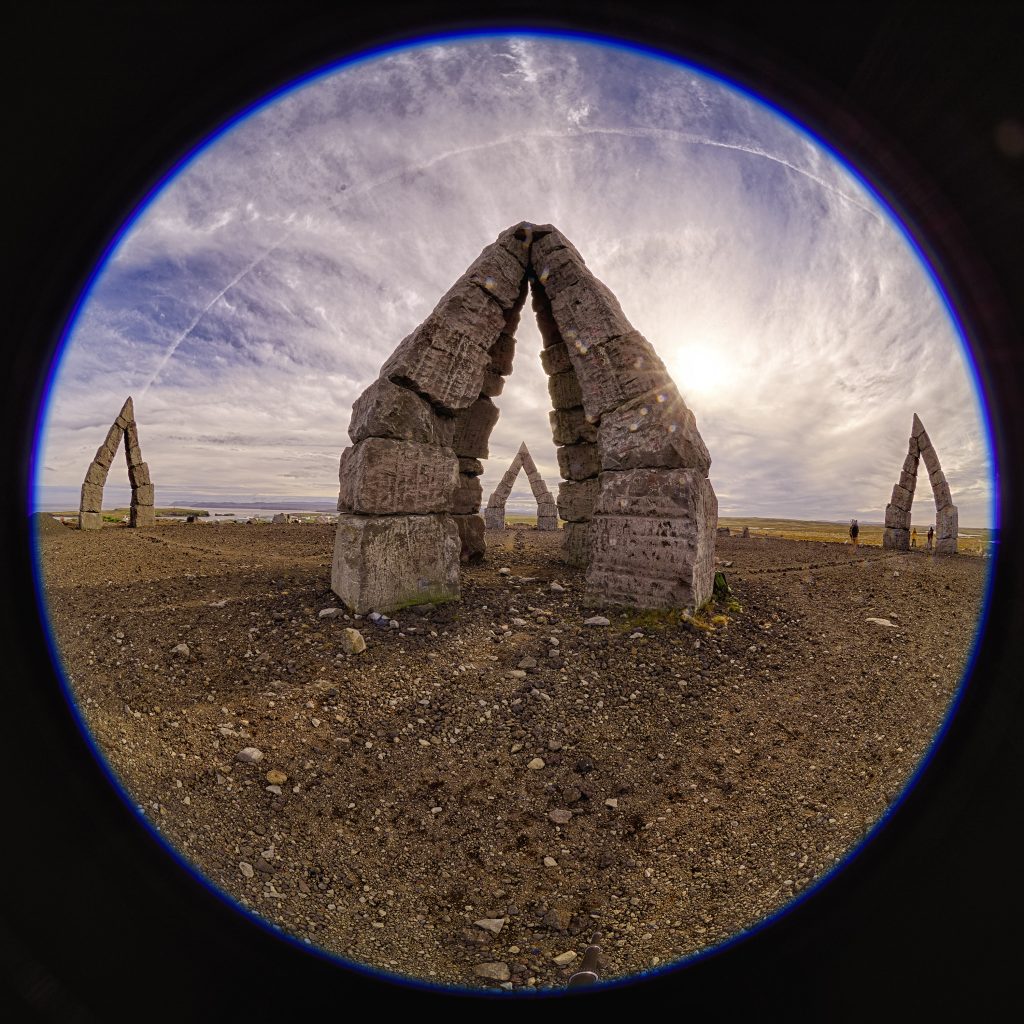
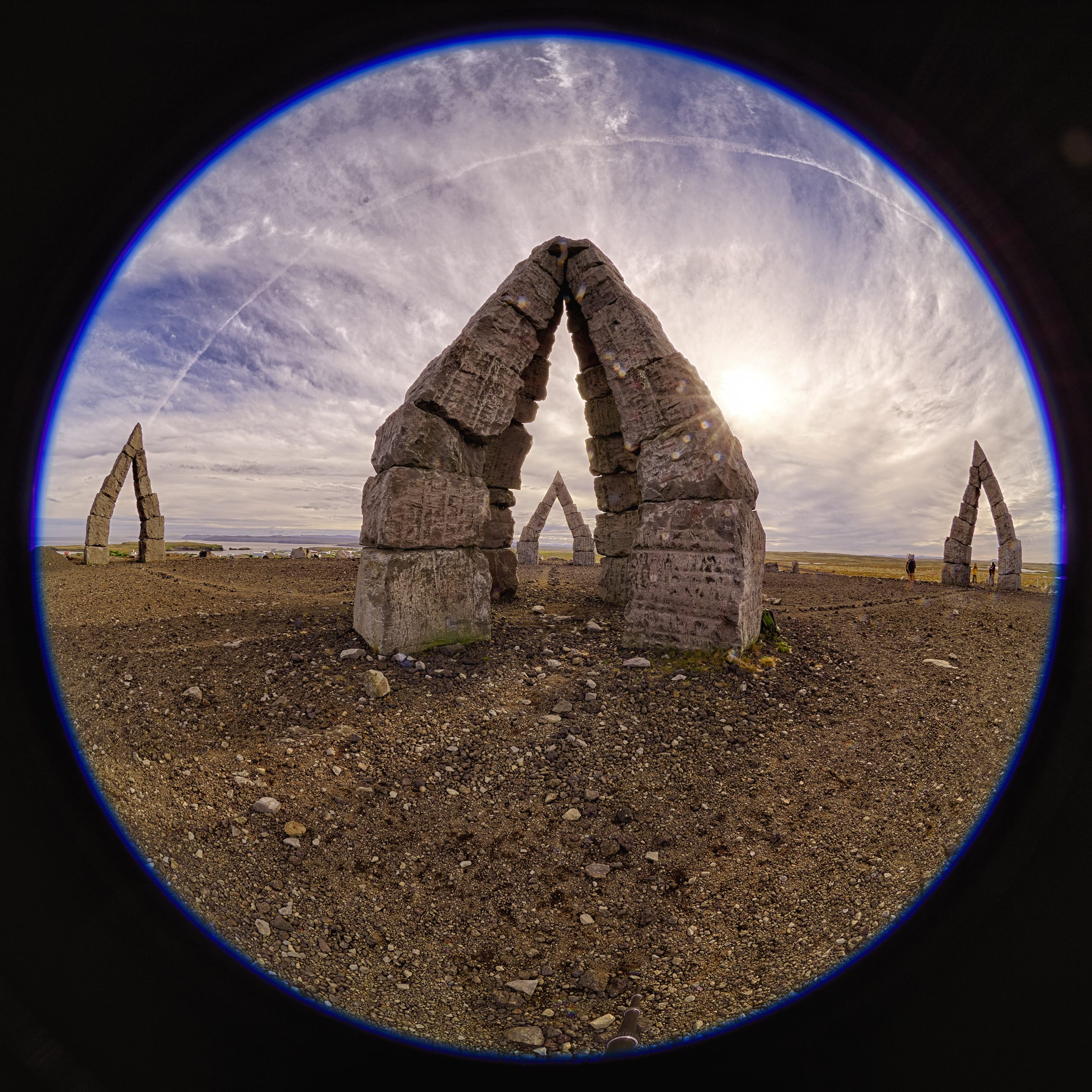
The Arctic Henge has been under construction as a work of art since 2002 and is unfinished. Somehow the goings-on at the construction site are reminiscent of the Sagrada Familia in Barcelona, perhaps because the stone arches are irregular, but geometrically very precisely arranged.
Arctic Henge in Raufarhöfn. Wikipedia tells: "The Arctic Henge is an Arctic monument planned in 1996 by the artist Erlingur Thorodsen, which has been under construction since 2002 and is up to 11 m high. The name Arctic Henge is based on the name Stonehenge. The Icelandic name is Heimskautsgerði." © Julian Köpke In the early evening, a fog began to settle over the place, so we went to Arctic Henge again at nightfall. For a long time I looked at the arch as a gate with a little moving person in the background. Only during post-processing did I recognise a stone.
-
White and purple orchid
My LED ceiling light, which I use as a light box for flower photography, can be dimmed and the color temperature is adjustable. The cold and extremely bright light can be tamed and turned into faint, warm light. Together with my tent of linen, I manage to control the light.
With LiveView, the composition is created and the focus is worked out. The camera is controlled by cable connection via laptop (tethered shooting) and the recordings are made with mirror triggering. The colors become better and the impression of the picture more natural and vivid. -
Floral experiments
Changing colors in flowers are attractive, especially if you approach them closely. A group of 3 flowers looks like a communicative group. With targeted overexposure and instant images on the laptop, the compositional decision is easier and the colors become more picturesque, without too much processing with the computer.
A curtain over the illuminated background behind the focal plane creates an effect reminiscent of nebulae in the night sky.
Photography of flowers in a vase in an exposure series (HDR) is complicated by their light sensitivity, which causes a change of position in short time scales. Plants constantly rearrange their leaves and blossoms. This results in blurring, which can be compensated for e. g. by repeating the shot series, shorter exposure time series or tools for aligning the images. Or you can do your image without HDR, because the dynamic range of the camera data is sufficient.
The center of a Gerbera blossom is richly structured. Due to the high resolution of the camera back (150 MP), it is possible to crop out the center still in good resolution.
The transparent representation of the petals is achieved by using a light box. The light should be relatively bright, but does not have to be fully homogeneous. The heat of the light does not matter, it is adjusted using RAW format in post-processing. More informations about this method see web-pages of Harold Davis, who invented this method.
-
Meeting friends
After 2 years of FaceTime and telephone conversations we see each other again, friends from Lucerne and us. Meeting point halfway between our two residences, near Hinterzarten near the Feldberg and Titisee. After more than 30 years of friendship, the time of hard separation due to borders and infection management had also been painful now and then.
With photography, we have approached in a new way, each with its own approach. With Monald the wildlife and landscape photography, with me the stars, the landscape, the portrait or macro photography. This weekend we used the few hours in the morning and evening for the countryside around the Feldberg, never letting ourselves be stopped by rain or marshland.
The picture at the beaver dam got an explore on Flickr.
At sunrise we placed ourselves with a view of the Titisee just below the Feldberg. Sunrise and fog alternated in rapid succession. Only for breakfast at 9 o’clock we were back in time at the hotel.
The trip to Todtnauer Hütte was longer than expected. Unfortunately, we did not find the hoped-for fog in the valley. There were plenty of autumn trees for this, the sun early behind the clouds.
My friend’s strong wish was an evening image of the Rhine valley at sunset. Above St. Mägen near Turner we found a parking lot and some meadows with a splendid view down.
The sunset plunged our spot into a red light that became more and more intense. The sun was slightly dazzled and diffused by clouds. Many people came to our parking lot, which is obviously well known to the locals.
-
Mürren
The peace in Mürren is almost intrusive. It is not disturbed by traffic noise. Only the occasional buzzing of the cable cars is reminiscent of normal life. The starry sky is great because at night very few lamps illuminate the village.
Autumn is already more advanced in Central Switzerland thanin Ticino. Temperatures in the shade are well below 10 degrees Celsius. The sun has a lot of power at 1600m, you can easily sweat when walking.
While searching for a location for my tripod slowly upwards, I meet individual hikers or groups of two. The large groups take the cable car to the summit and do not appear on the hiking trails. Surprisingly many fly into the valley by paragliding.